A timetable needed one clock, not dozens
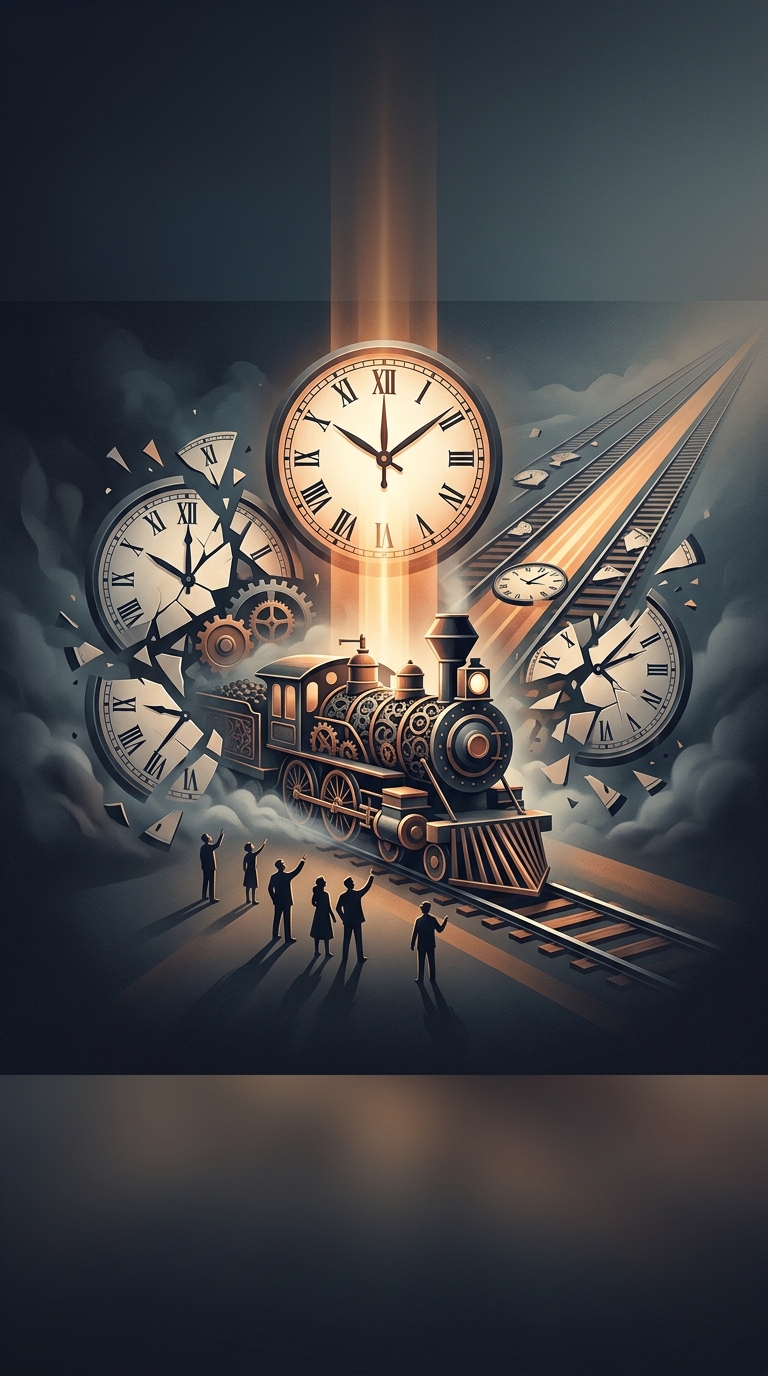
Before railway time took hold, a town’s clock usually reflected its own local solar time: noon was when the Sun reached its highest point there. Because the Sun appears to cross the sky at different moments in places at different longitudes, neighboring towns could have clocks several minutes apart. That was manageable when travel was slow. A fast train crossing several local time systems made a printed departure time much harder to interpret.
Railway companies responded by choosing a common time for their networks, usually Greenwich time. A station could then publish a departure and an arrival using the same clock standard, rather than requiring passengers and staff to translate between a chain of town times. The change also made it easier to coordinate train movements and signal procedures across routes.
How a distant clock became a shared standard
A common timetable was useful only if stations could keep their clocks close to the chosen standard. The electric telegraph made that practical: time signals could be sent along wires, allowing clocks far from the reference point to be corrected without someone carrying the time by hand. Railway companies adopted the practice at different times, and public clocks and local authorities did not all switch at once.
This was an important step toward standardized time, but it was not the same as the worldwide system of time zones used today. The railway era showed why large, connected networks needed a shared clock; later coordination extended that idea across countries. The lasting change was practical: once a train’s timetable named a common time, the Sun could still set the day, but it no longer decided what “the 10:15” meant at every station.