How fallen leaves turn rail into a slippery surface
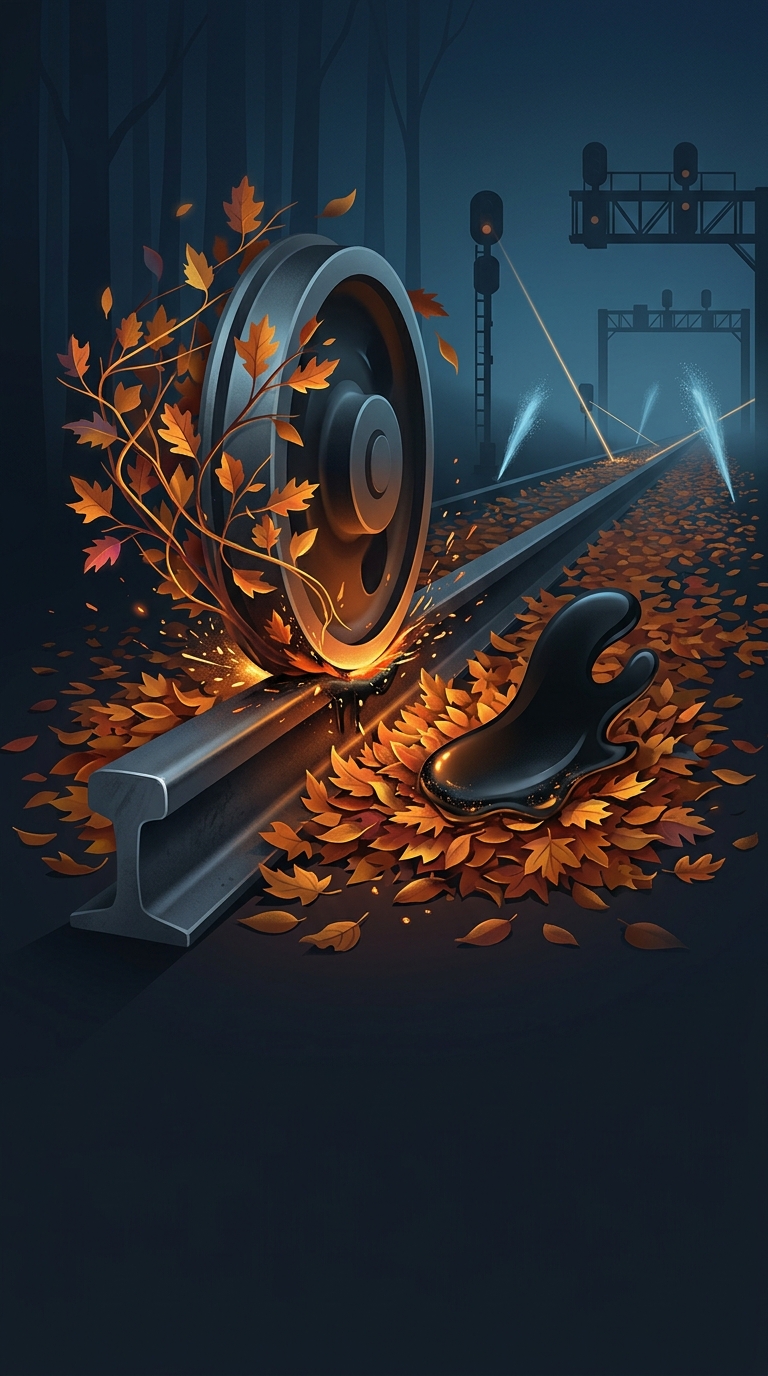
The culprit is often not a leaf sitting on the track, but the thin film it leaves behind. When train wheels crush wet leaves against the rail, the plant material can form a smooth, compacted layer. The rail may look clear, yet the steel wheel is now gripping that layer instead of bare steel.
That matters because trains depend on friction at the small contact point between wheel and rail. With less grip, wheels can spin while a train accelerates or slide while it brakes. A train that cannot slow as expected may need to travel more cautiously, leaving extra space between trains and disrupting the timetable behind it.
Why a little debris can affect a whole line
Railways have ways to manage low-grip conditions, including cleaning track and using equipment that improves adhesion. But leaves fall unevenly, and a train can carry residue along the rail, so the problem may recur after a section has been treated. The effects can also vary with moisture, temperature, and how much traffic has pressed the material into the track.
The disruption is therefore out of proportion to the object itself: a handful of leaves can create a persistent film in exactly the place where a train needs dependable grip. On a busy line, even modest speed restrictions or longer braking margins can ripple into delays for many services.