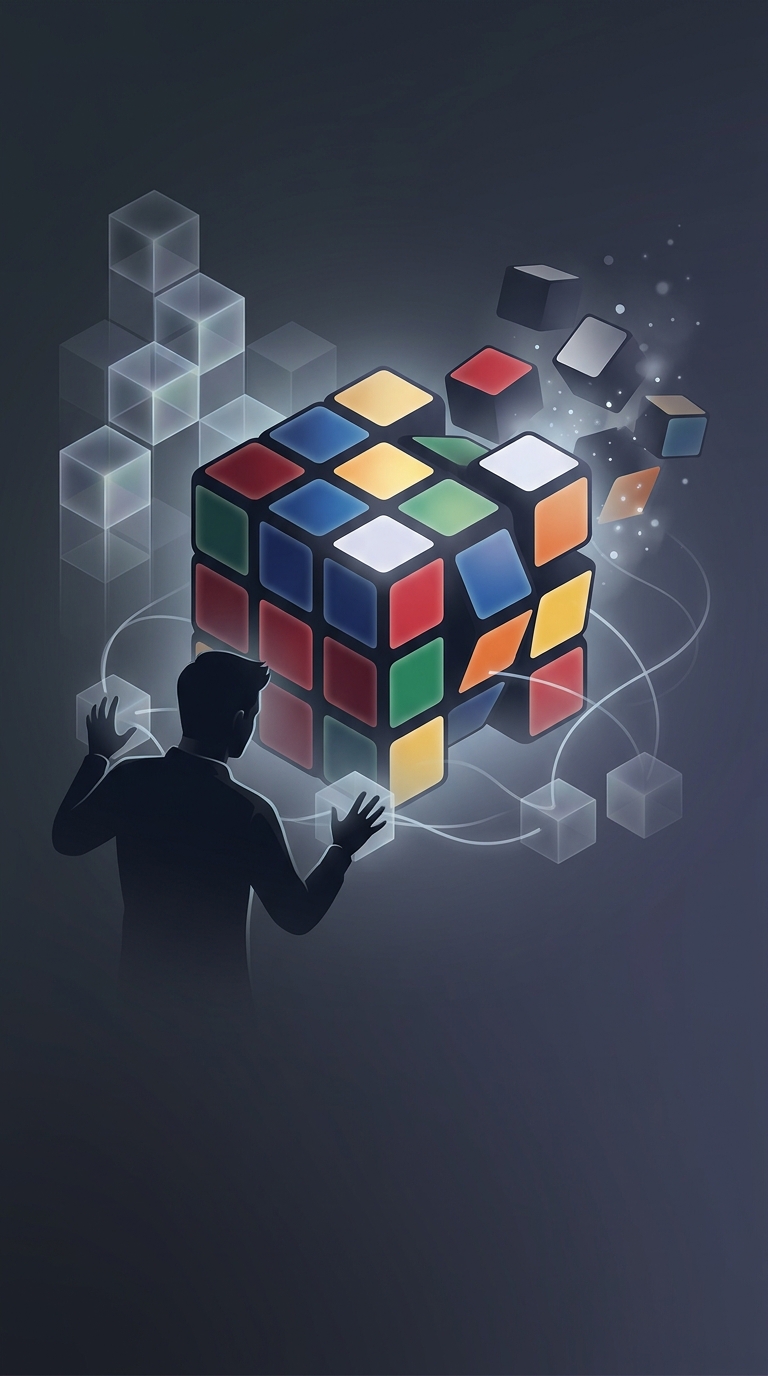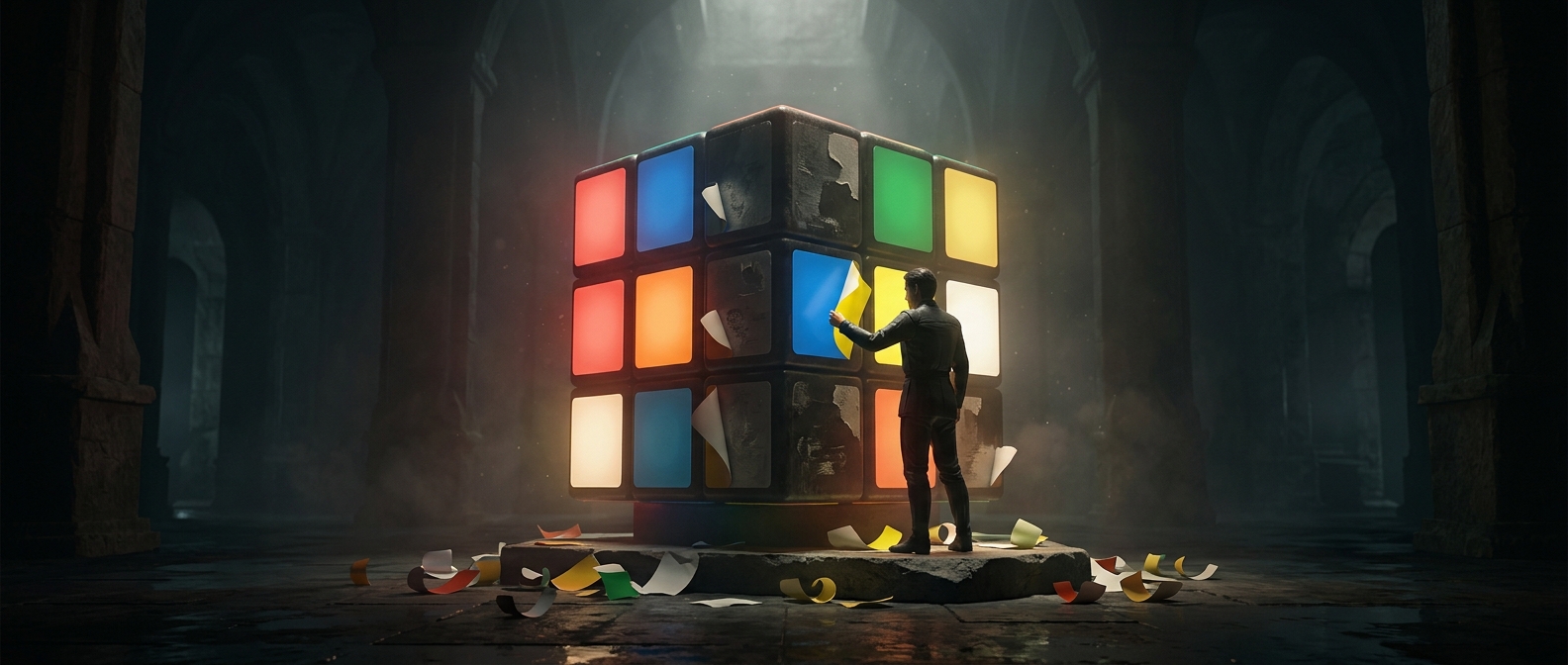
The stickers change the picture, not the puzzle
A twisty cube is more than a set of colored squares. Its pieces are linked by a mechanism inside the cube, so turning one layer moves several pieces together. A legitimate solution has to bring those pieces into the right places using that mechanism.
Peeling and swapping stickers takes a different route. It changes which colors appear on the outside without changing where the underlying pieces are. The cube may look solved, but its internal arrangement has not been solved by turning it.
Why the distinction matters
The challenge comes from the cube’s movement rules: each turn rearranges pieces in particular ways, and the solver must find a sequence of turns that reaches the solved arrangement. Stickers are just the visible labels that make that arrangement easy to recognize.
That is why the shortcut can fool the eye while missing the point. It produces the solved pattern as a picture, but bypasses the problem the cube asks you to solve. Put another way, it is like changing the labels on scrambled drawers instead of putting their contents back where they belong.