Why a Clear Elevator Can Look Like It Floats
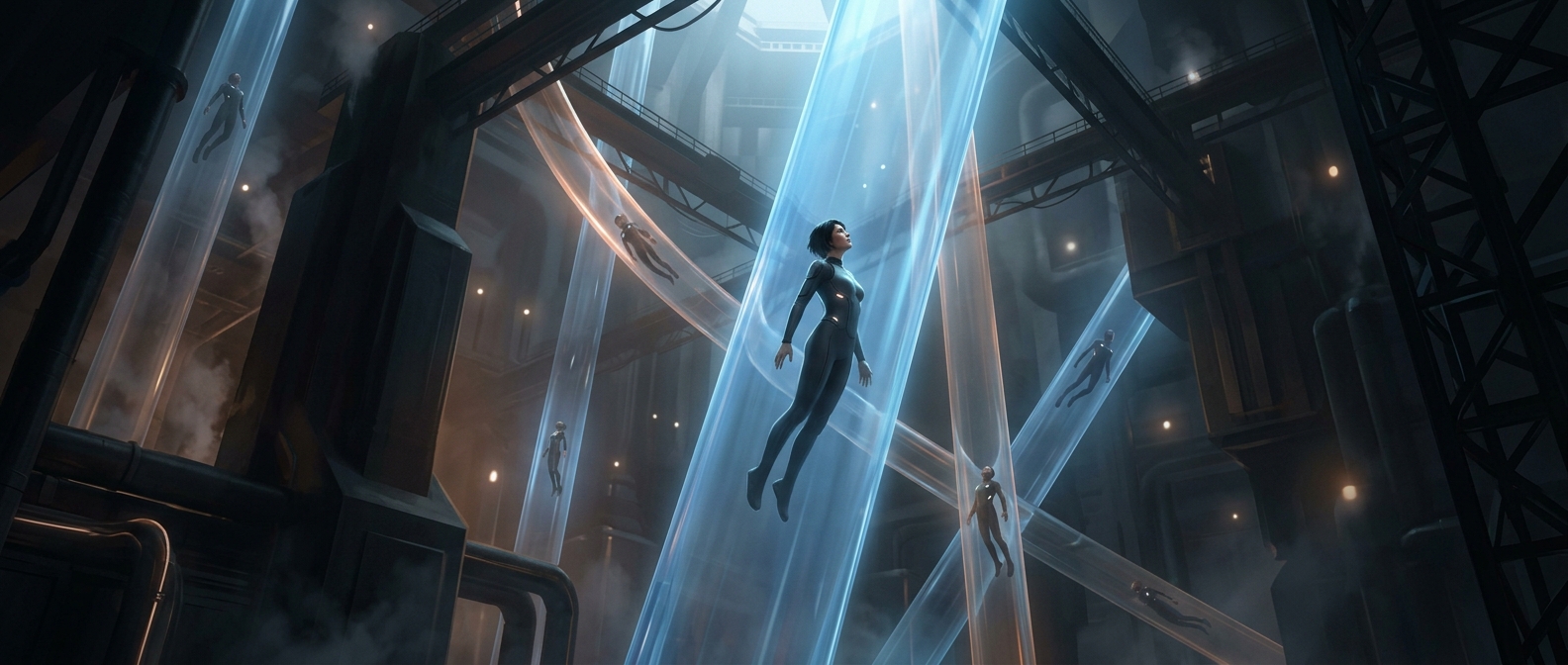
A conventional elevator gives your eyes several clues that it is moving: an opaque shaft frames the car, walls slide past it, and the door opening marks a clear boundary between floors. Put the car inside a transparent shaft and many of those cues disappear. The car remains visible against the factory beyond it, so the background can seem to drift while the elevator itself appears suspended in place.
The illusion is strongest when the shaft and the building behind it offer few crisp lines for comparison. Without an obvious wall moving relative to the car, the eye has a harder time judging which part of the scene is in motion. The lift’s steady upward travel can then read less like a vehicle following a route and more like an object gliding through open air.
The Route Is Still Precisely Constrained
Transparency changes what people see, not how the elevator is guided. A lift car travels along a fixed path, held in alignment by guide rails inside the shaft. Its drive system supplies the force to raise and lower it; the precise arrangement varies among elevators. The clear enclosure still has to contain the moving car and keep the path controlled—it simply lets the surrounding structure remain in view.
That contrast is the trick: the machinery obeys a rigid route, while the eye loses the usual frame that makes the route obvious. From the factory floor, a familiar piece of transport can momentarily look as if it has escaped the building’s walls.