Why a trickle follows the teapot’s curve
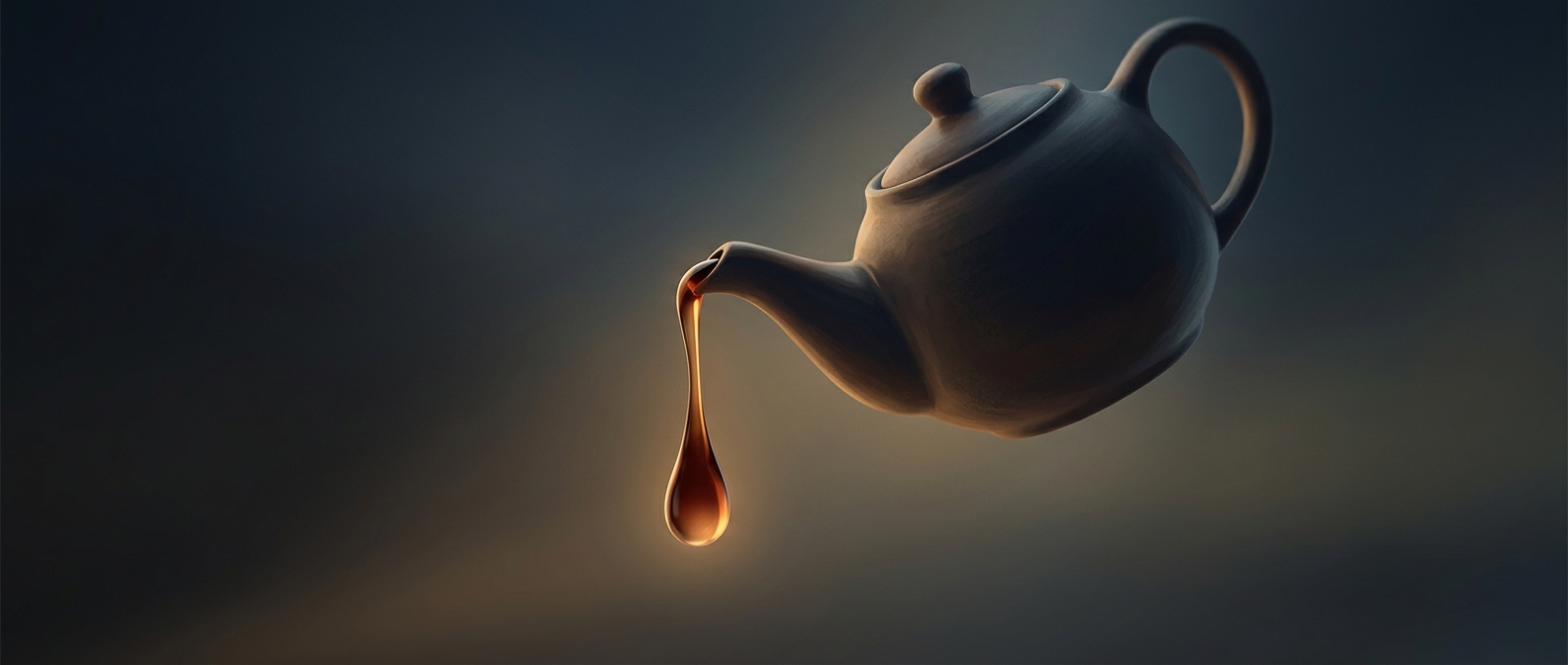
At a slow pour, water has little forward momentum. As it reaches the spout, it can wet the ceramic and follow the surface around the underside instead of separating cleanly at the edge. This is the teapot effect: a small stream clings to a curved lip and runs down the outside.
The outcome depends partly on the spout’s shape and how readily its surface gets wet. A rounded, easily wetted edge gives the water a path to follow; the stream may keep that path rather than break away toward the cup. Surface tension helps the water remain a connected stream, but the ceramic’s pull on the water helps determine where that stream goes.
Why pouring faster can help
A quicker pour gives the water more inertia—more resistance to changing direction. At the lip, that forward motion can carry the stream away from the ceramic before it curls underneath. Pouring faster does not guarantee a perfectly clean stream, but it can tip the balance between following the spout and leaving it.
That is why a hesitant trickle can be messier than a steady pour: the water moves slowly enough to follow the teapot’s surface, then drips down the outside instead of reaching the cup.