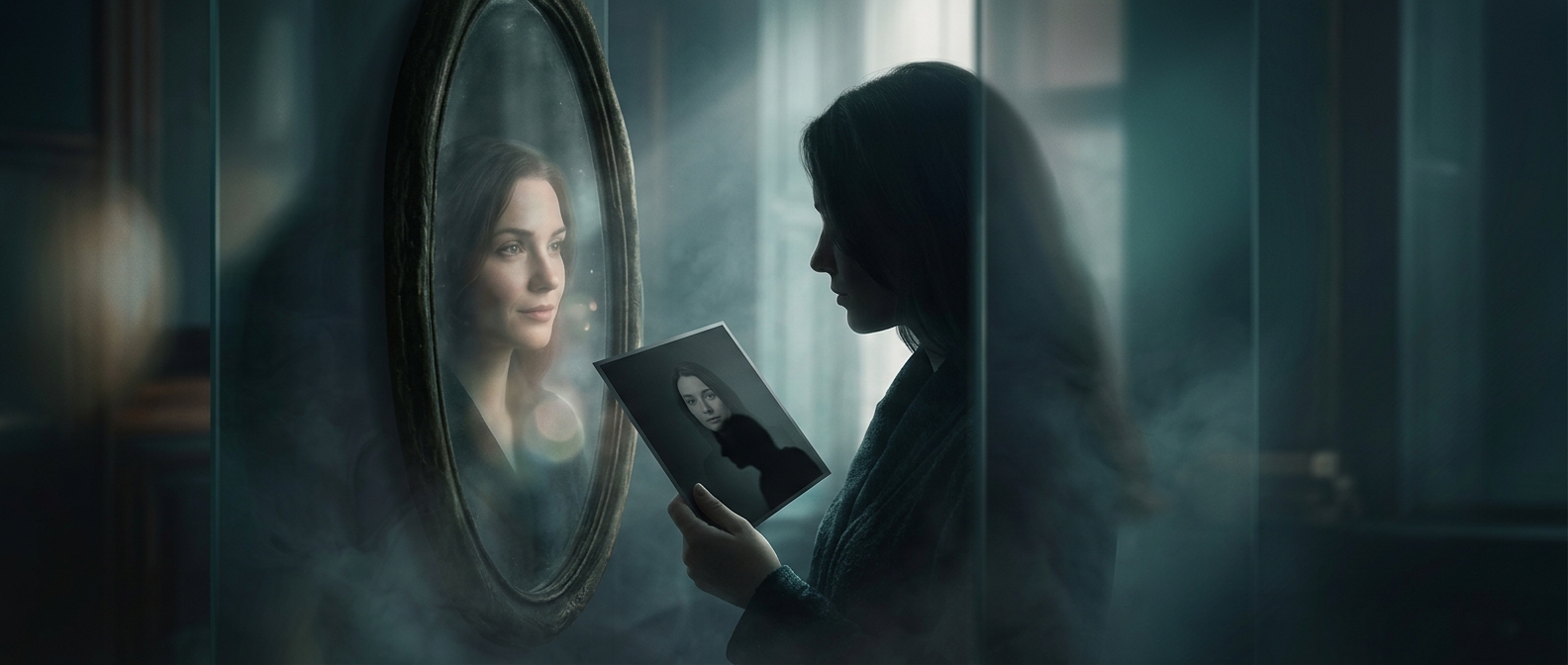
Why a familiar face can look unfamiliar in a photo
A mirror gives you a laterally reversed view: the features on your left appear on the right side of the image, and vice versa. Because you see that version of your face while getting ready, brushing your teeth, or passing a mirror, it becomes the arrangement your brain expects.
Most photographs show your face as other people see it, not as a mirror reflects it. That swap can make small, ordinary differences between the two sides of your face feel newly conspicuous. A brow may sit a little higher, or a smile may pull more strongly on one side. In the mirror, those differences are part of a well-worn pattern; in a photo, they appear in unfamiliar positions.
Familiarity changes what stands out
Faces are not perfectly symmetrical, and people learn the look of familiar faces through repeated exposure. With your own face, the mirror supplies a particularly consistent view. When a photograph changes the left-right arrangement, your brain has to process a version it has seen less often. The result can feel wrong or oddly unlike you, even though the photo has not revealed a hidden flaw.
That mismatch is only part of the story. A mirror shows you moving and adjusting in real time, while a photograph freezes one instant. Camera distance, lens perspective, lighting, and an unpracticed expression can all change how a face appears. A close phone camera, for example, can make the nearest features look more prominent.
The practical takeaway is that a surprising photo is not a verdict on how your face looks to everyone else. It is one unfamiliar, frozen view—and the mirror version feels more natural largely because it is the one you have spent years learning to recognize.