Why a face can change without being noticed
Seeing someone is not the same as continuously checking every detail of their face. Attention is selective: while talking, you may focus on what the person is saying, where they are looking, or what they are doing. Your visual system still registers the scene, but it does not preserve a perfect, constantly updated record of every feature.
When attention is diverted at just the wrong moment, a change can slip through. Psychologists call this change blindness: difficulty noticing a visual difference when the change occurs during a brief interruption, such as a blink, a shift in gaze, or an obstacle passing between you and the scene.
The mind fills in continuity
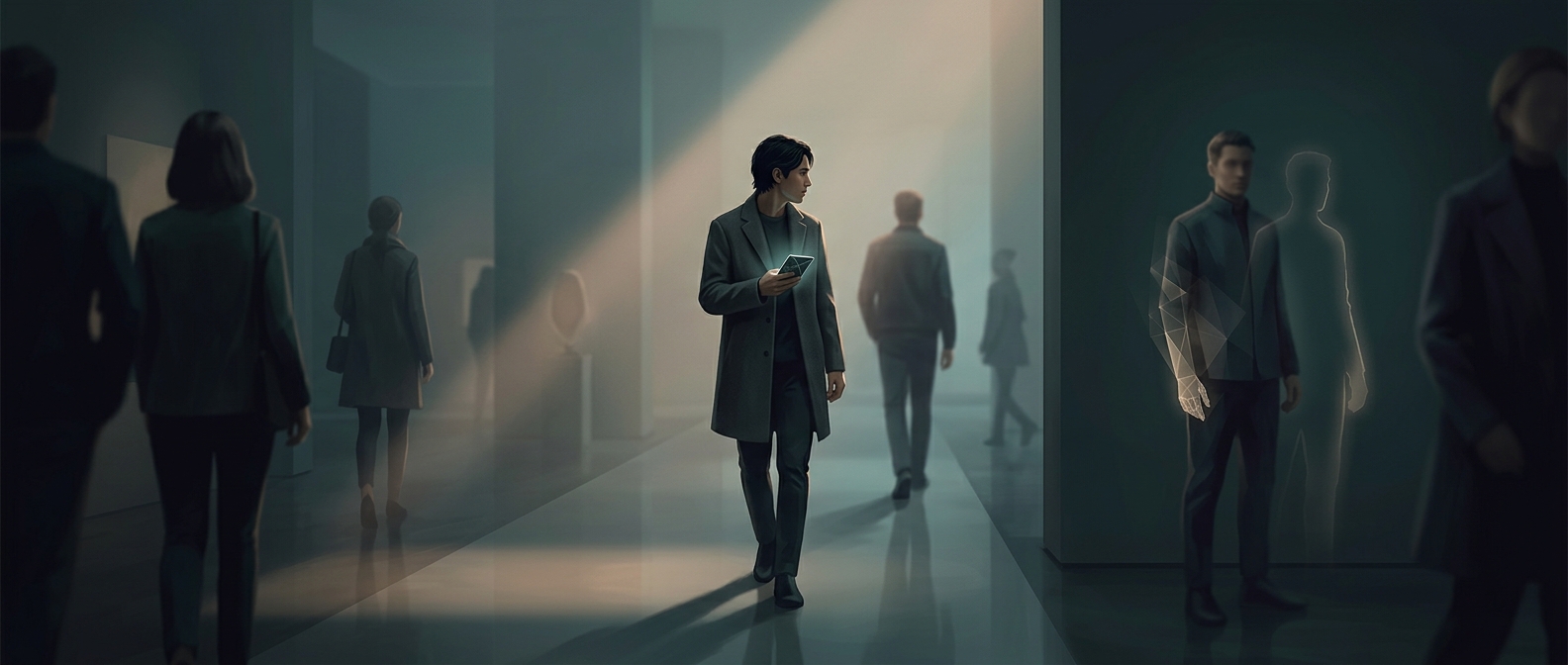
To make sense of a busy world, the brain generally treats a scene as stable unless it receives a strong reason to revise that interpretation. If someone moves behind a doorframe and a different person appears on the other side, the interruption can hide the transition. Because the conversation and setting continue, the mind may accept the new face as part of the same ongoing encounter rather than compare it carefully with the first.
This is not a literal identity check that the brain performs and fails. It is a consequence of limited attention and memory: details that were never closely examined are hard to compare afterward. A person can feel familiar because the interaction has remained coherent, even if a visual detail changed.
When the effect is most likely
A swap is easier to miss when the interruption draws attention elsewhere, the two people look broadly similar, or the observer is absorbed in a task. It is less likely when the face is the focus, the transition is unobstructed, or the difference is striking. The practical lesson is that confidence in having seen a continuous scene can exceed how much visual detail was actually tracked.