A Chain of Short Sprints Across a Continent
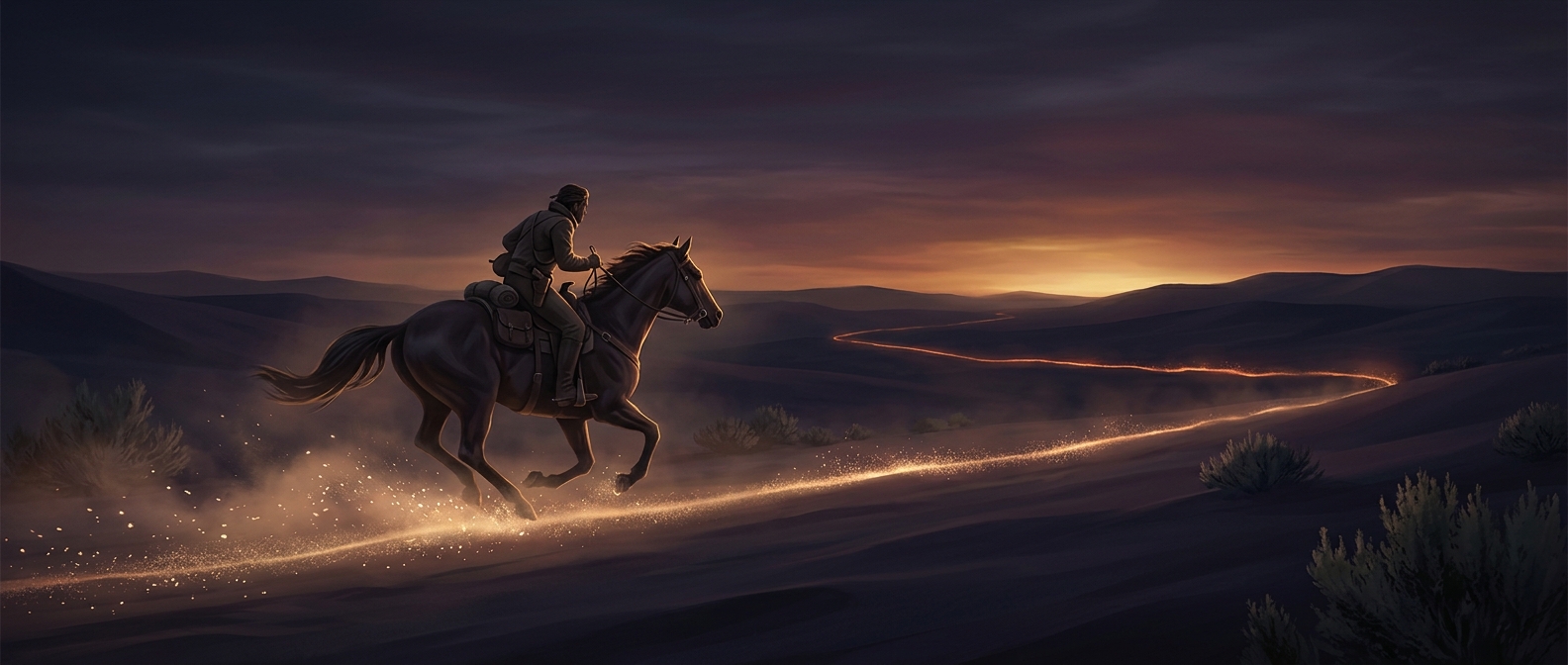
A horse can gallop quickly, but it cannot sustain that pace over a very long journey. Relay mail systems worked around this limit by breaking a continental route into stages. At a station, a rider could transfer the mail to a fresh horse and continue before the animal beneath him became too tired to keep up a fast pace.
The mail itself was often carried in a compact pouch, making it easier to move from one horse to the next. The handoff mattered: instead of asking one horse to carry a rider and mail for an exhausting distance, the system spread the work across a succession of animals and stations.
Speed Depended on Infrastructure
A relay route was more than a line on a map. Stations had to be placed along the way, supplied with usable horses, and kept ready for arrivals. Riders and station workers formed a coordinated chain: if a horse was missing, exhausted, or delayed, the next stage could not begin as planned.
That made speed costly. The system required animals, labor, and support in places where travel could be difficult. Terrain and weather still slowed the journey, and the route could only move as quickly as its slowest stretch allowed. Fresh horses reduced one major constraint—fatigue—but could not eliminate the obstacles between stations.
The Tradeoff Behind the Handoff
The design exchanged endurance for coordination. A single horse was not expected to cross the whole distance at top speed; the route’s network of handoffs supplied the endurance instead. Each station turned a long, demanding ride into a sequence of shorter efforts, allowing urgent letters to keep moving across rugged country.
The striking part is that the relay’s speed came not from one exceptionally tireless horse, but from keeping the next rested horse ready.