How a Football Broadcast Keeps 120 Views Usable
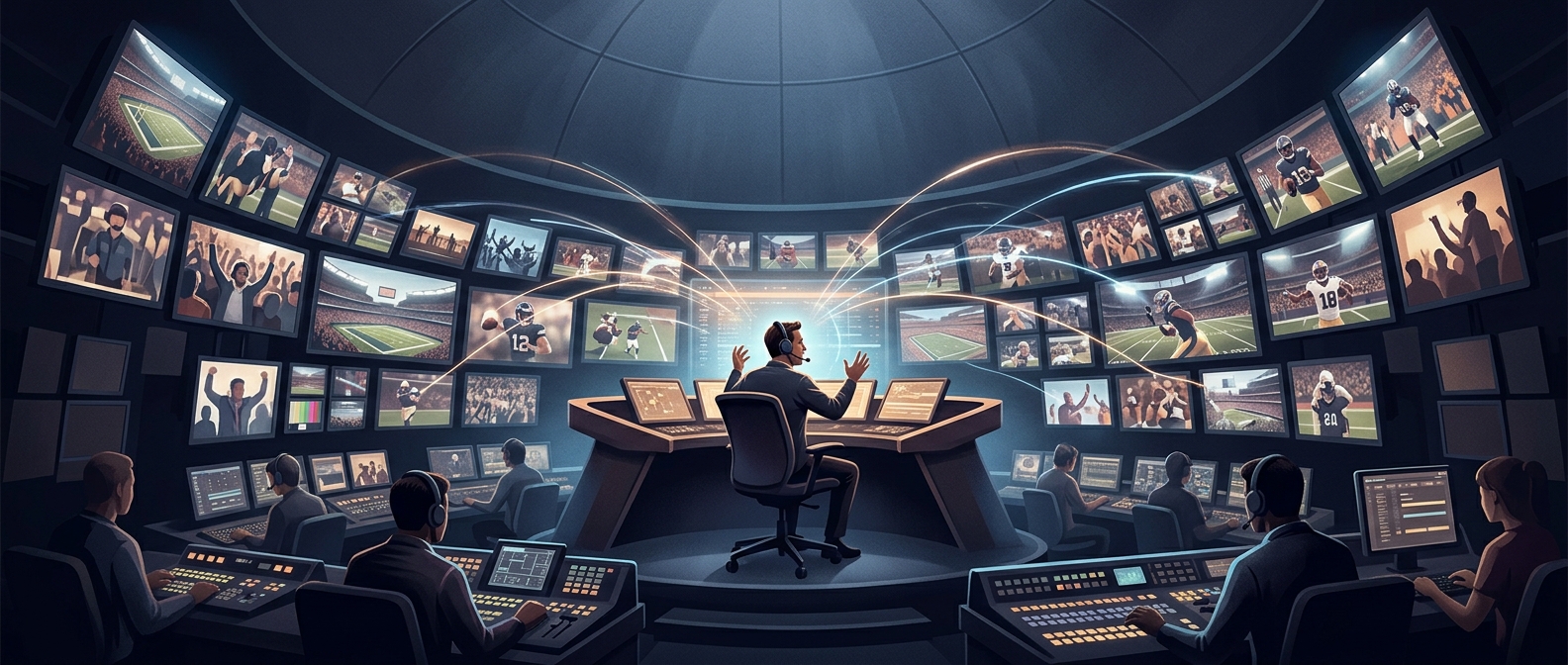
A stadium full of cameras would be chaos if every picture went straight to viewers. Instead, each camera sends a separate feed into a production system, where operators can monitor many angles and choose which ones are ready to air. A control room—often a production truck parked outside the stadium—becomes the hub connecting those feeds to the live program.
The director calls for the picture the audience needs: perhaps the wide view that establishes a formation, a tight shot of a receiver’s feet, or an angle that shows where a runner was tackled. The technical director operates the video switcher, the panel that changes the broadcast from one source to another. That handoff can happen almost instantly, but only because the crew is watching, cueing and coordinating the options before they are needed.
Why So Many Angles Matter
Football’s action is fast, spread across a large field and governed by details that can be hard to see from one viewpoint. High and wide cameras show how a play develops; low sideline angles can reveal a close boundary call; specialized views may help explain a route or a collision. No single camera can provide all of those kinds of information.
The extra feeds also serve different moments. The live cut follows the play, while replay operators can review recorded angles and assemble a clearer sequence after it ends. Keeping those jobs separate lets the broadcast return to live action while a replay is being prepared.
The Tradeoff Behind the Spectacle
More cameras offer more chances to show the decisive detail, but they also create more pictures to monitor and more coordination for the crew. The skill is not simply having a huge collection of views; it is choosing the right one without losing the action. When a play unfolds in seconds, the audience sees a seamless sequence of shots, while the production team is managing a crowded set of alternatives behind it.