Why an X Became the Obvious Place to Dig
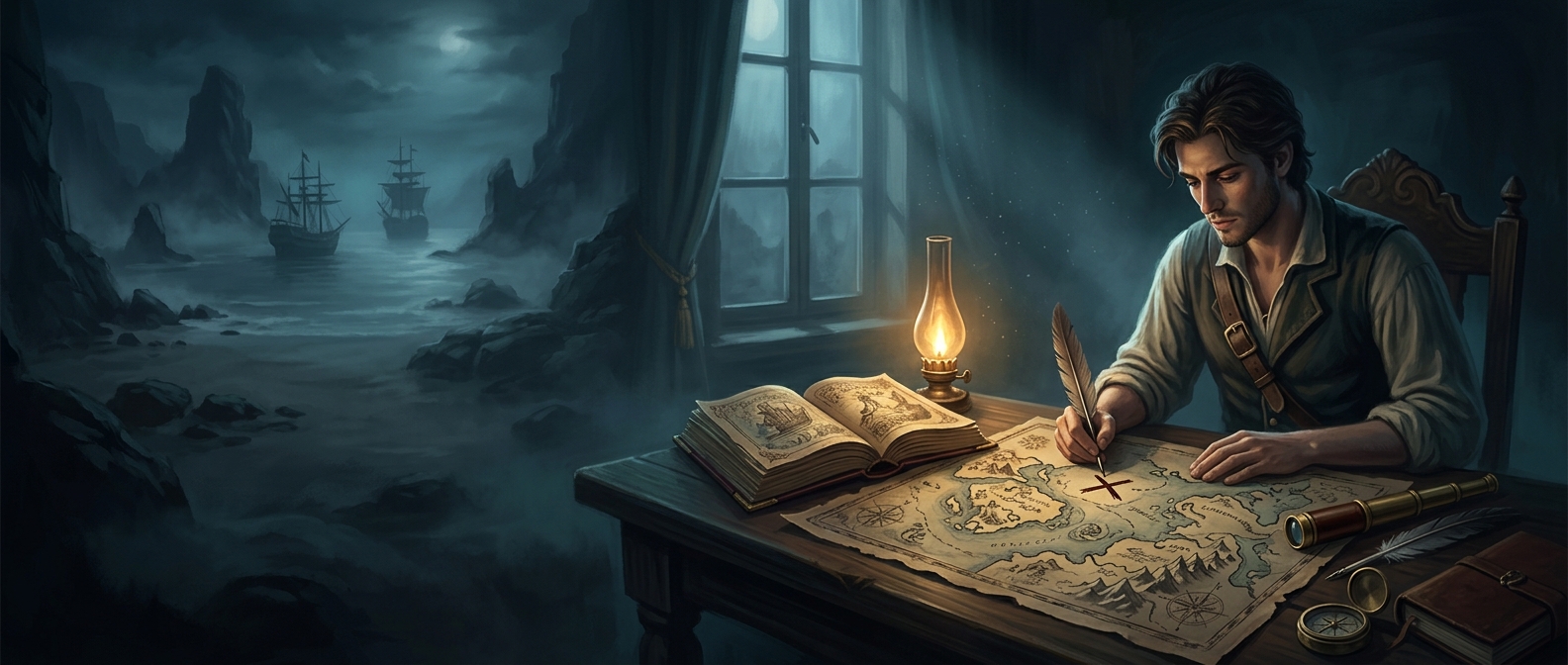
A map needs a way to distinguish a destination from everything around it. An X is unusually efficient: it is simple to draw, hard to overlook, and instantly understood as “here.” In a story about buried treasure, that clarity turns a search into a scene. The characters find the mark, pick up shovels, and the audience knows what comes next.
A Storytelling Shortcut, Not a Pirate Convention
There was no standard pirate map symbol that reliably marked buried loot. The familiar X belongs to the visual language of adventure fiction, which helped make a complicated hunt legible at a glance. Robert Louis Stevenson’s 1883 novel Treasure Island was an important part of that association: its treasure-map imagery helped fix the X in popular ideas of pirate treasure.
That does not mean every later image copied one exact detail from the novel. Rather, writers and illustrators had a useful convention ready to reuse. Once viewers learned that an X meant buried treasure, a map could communicate the promise of a discovery without stopping to explain it.
Why the Mark Endures
The symbol works because it compresses a whole sequence into one sign: someone hid something, someone else found a clue, and a dig is about to begin. Real directions to a hidden object would need more than a cross—landmarks, distances, or other clues to locate the spot. Fiction can skip those complications. On the page or screen, the X is less a practical map key than a cue for the next dramatic action.