How the Track Turns Engine Power Into Motion
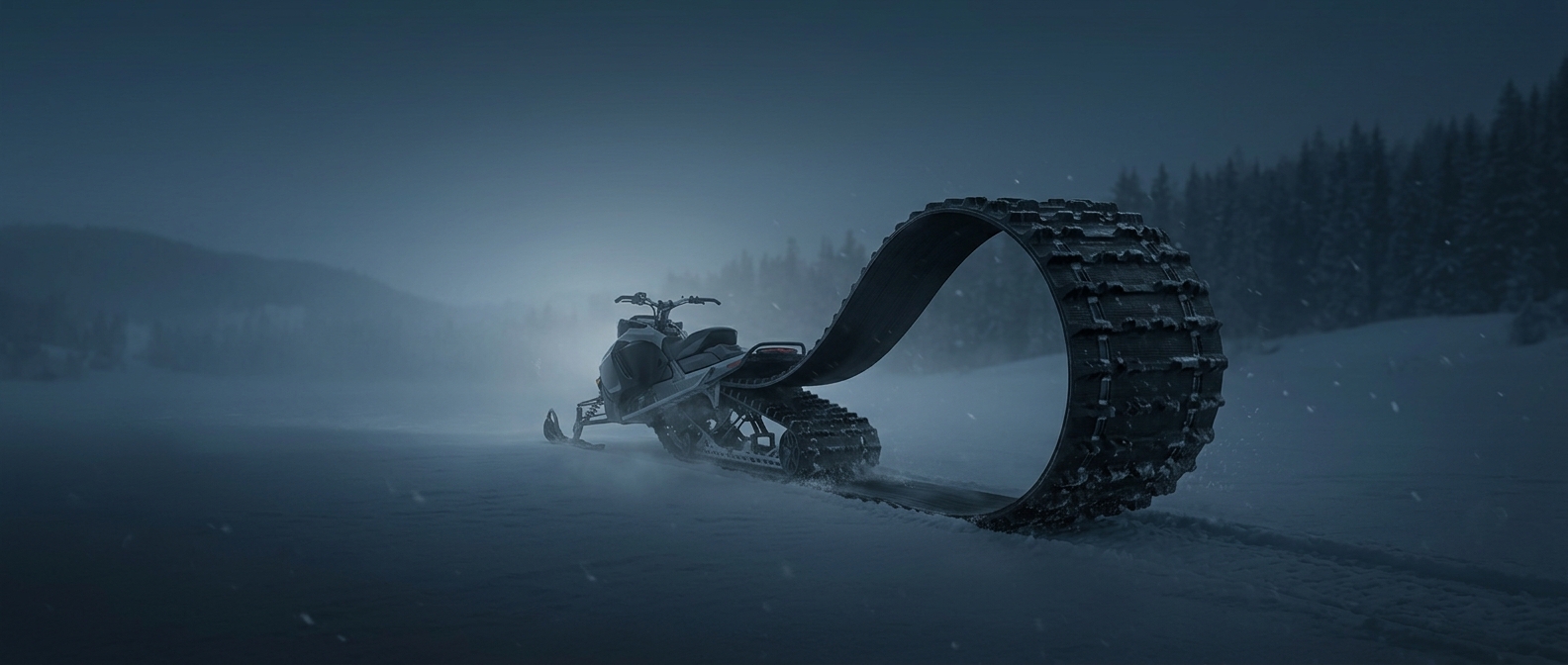
A snowmobile’s track is a continuous loop, but it does not simply drag along behind the machine. The engine turns a drive shaft fitted with sprockets—wheels whose teeth engage openings or molded features in the track. As the sprockets pull the loop around, the track’s lower surface moves backward against the snow. The snow pushes back, moving the snowmobile forward.
Raised lugs give that moving surface something to grip. Without them, a smooth belt would tend to slip on loose snow; with them, the track can press into the surface and push snow rearward. The lugs also flex as the track bends around the wheels, helping it stay in contact with uneven ground.
Why a Wide Belt Helps—and What It Costs
The track’s broad contact area spreads the snowmobile’s weight over more snow. That lowers the pressure at any one point, making the machine less likely to punch through soft snow. The same principle explains why a narrow, hard wheel can sink where a wider surface stays on top.
But the track does not steer the machine by itself. The front skis guide it, while the rear track supplies most of the drive. That division lets the machine travel across snow without relying on tires for traction, but it also makes the track a major moving part: it must stay aligned and under tension as it loops around the suspension. The payoff is a belt that can both carry the machine over yielding snow and keep pushing against it to move forward.