The soft palate closes a passage, not a valve in the uvula
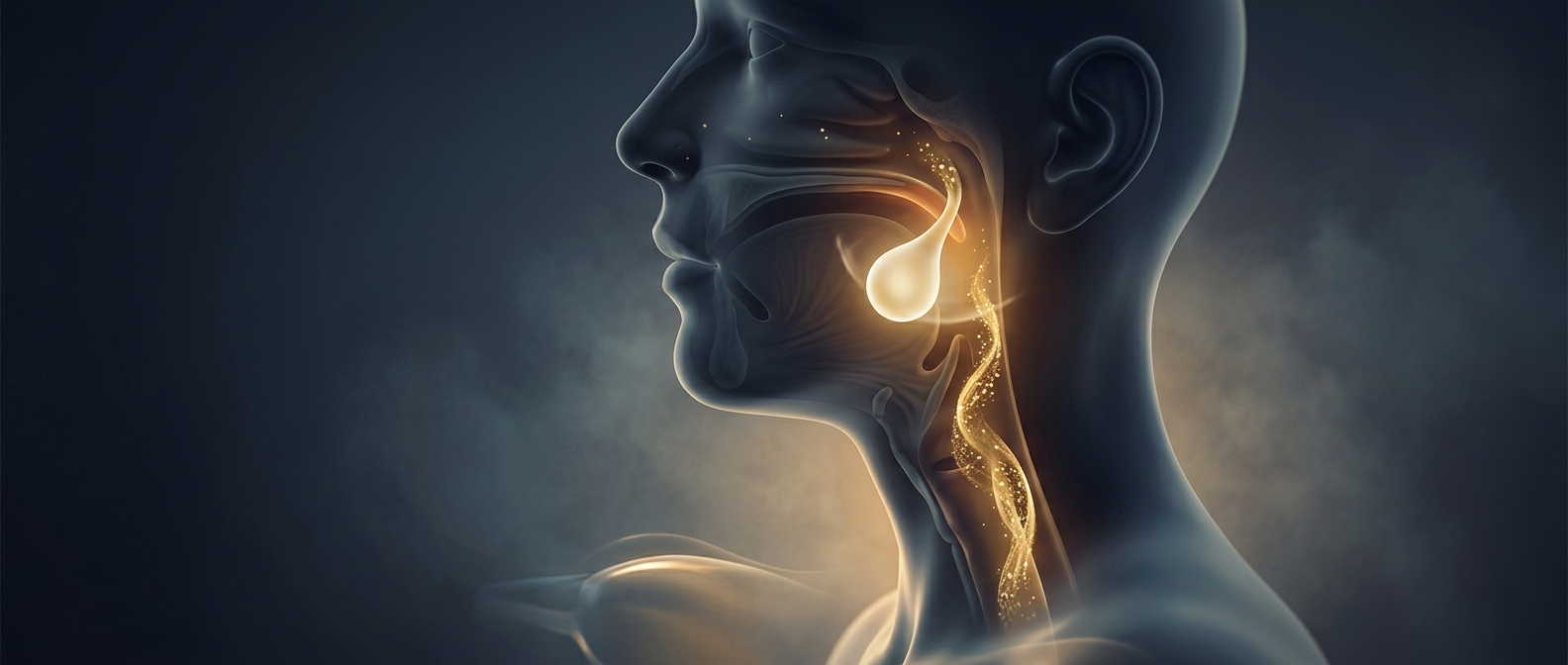
Behind the mouth, the throat branches upward toward the nasal cavity and downward toward the esophagus. The upper branch is the nasopharynx, the space behind the nose. During a swallow, muscles lift the soft palate—the flexible rear part of the roof of the mouth—and draw it toward the back wall of the throat. The uvula, the small piece of tissue hanging from the palate, rises with it.
Together, these tissues make a temporary seal across the opening to the nose. The uvula helps form that barrier, but it does not work alone: the palate and throat muscles do most of the coordinated lifting and closing.
A brief detour is blocked at the right moment
Swallowing is a tightly timed sequence. As food or liquid moves from the mouth into the throat, the route upward is closed while the route toward the esophagus remains open. This keeps a sip from being forced into the nasal passages, where it can sting and cause the familiar sensation of liquid coming out through the nose.
The seal matters for more than drinking. The same palate movement helps keep swallowed food from entering the nose and helps direct air through the nose when a person is breathing or speaking. If the closure is incomplete, some liquid may pass upward; that can happen temporarily when swallowing is disrupted, and recurring difficulty deserves medical attention.
The useful detail is that the uvula is a visible marker of a larger piece of teamwork: a small movement at the back of the mouth helps keep two neighboring routes—one for air and one for food and drink—from getting crossed.