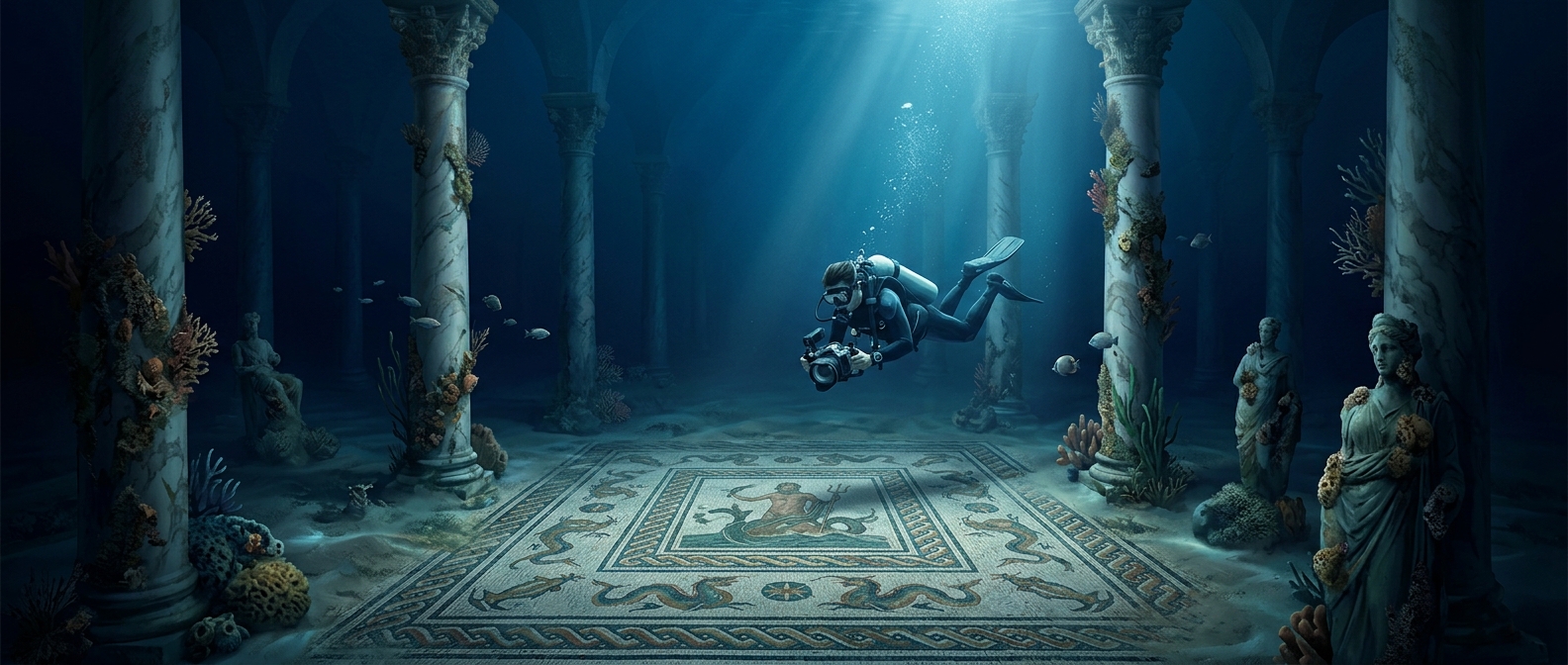
A Roman shoreline that slowly sank
The submerged resort lies near Baiae, on the Bay of Naples, where Roman elites built villas, baths, and gathering places along the coast. The ground here is part of a volcanic system. As pressure and fluids shift beneath the surface, the land can rise or sink over time—a process called bradyseism. It is gradual, not the sudden collapse of an earthquake, but over many generations even a small change can move the shoreline across buildings.
As the coast sank, rooms and courtyards that once stood on dry land ended up underwater. The water did not erase the layout: walls still outline spaces, and decorative floors and sculptures show how richly the resort was furnished. For divers, the remains make the vanished shoreline unusually legible—you can move through parts of a built landscape rather than merely look at scattered ruins.
Water as both threat and shelter
Submersion damaged some surfaces, but it also covered and protected parts of the site from later construction and disturbance on land. The result is an archaeological landscape shaped by two forces: Roman builders adapting the coast for leisure, and volcanic ground movement gradually taking that coast back beneath the sea.
That change also gives the ruins a rare kind of context. Their position underwater records how the local ground shifted, while their arrangement preserves traces of how people used the resort. What looks like a submerged attraction is also a cross-section of a changing coastline: the bathhouse and villa spaces mark where the Roman world met the sea before the land moved.