What a New Moon Actually Changes
A new moon is a matter of geometry. The Moon travels around Earth, and during this phase it lies roughly in the direction of the Sun. Sunlight still illuminates half of the Moon, but that lit half faces mostly away from Earth, leaving the near side dark to our eyes. The Moon has not vanished; it is simply hard to see against the bright daytime sky and, at night, contributes little moonlight.
Why the Sky Gets Darker
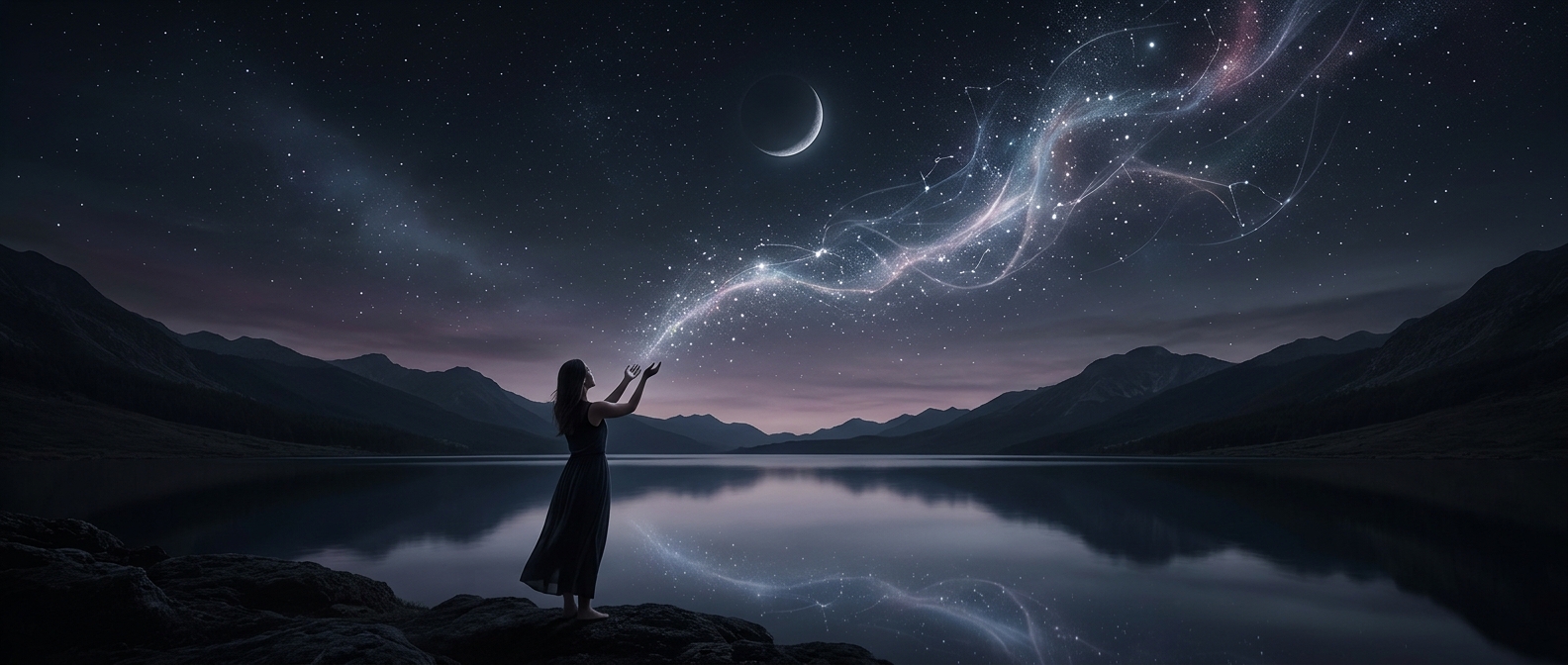
With less moonlight washing out the sky, faint stars and other dim objects can be easier to notice, especially far from city lights. The effect depends on weather, location, and artificial lighting. It changes what observers can see—not the physical forces acting on a person’s plans or the likelihood that a wish will come true.
From Intention to Outcome
A goal becomes more attainable through steps that connect intention to action: deciding what to do, making time for it, and responding when obstacles arise. A dark sky may offer a quiet moment to reflect or choose a starting point, but the useful part is the decision that follows. The Moon’s phase marks a point in its orbit; turning a wish into a result still takes human effort.