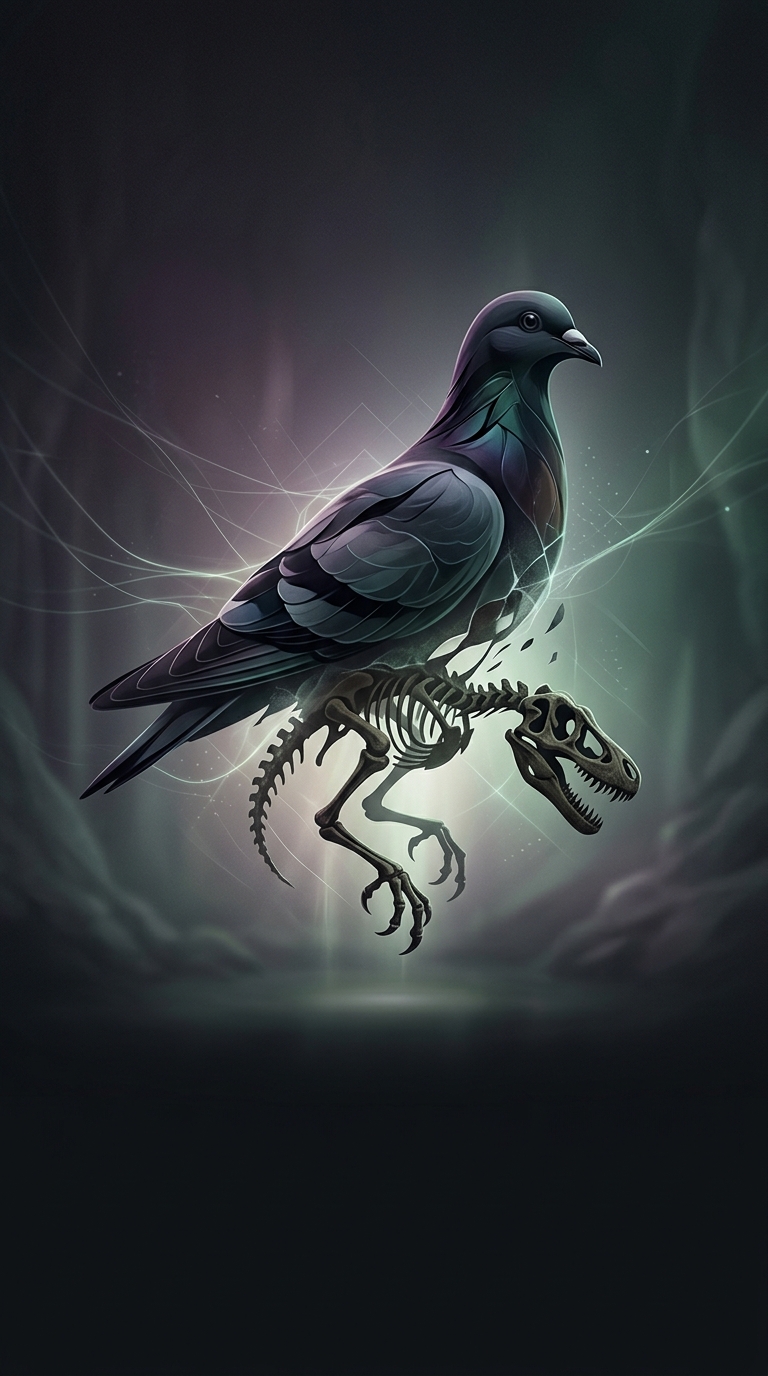
A pigeon is a living dinosaur
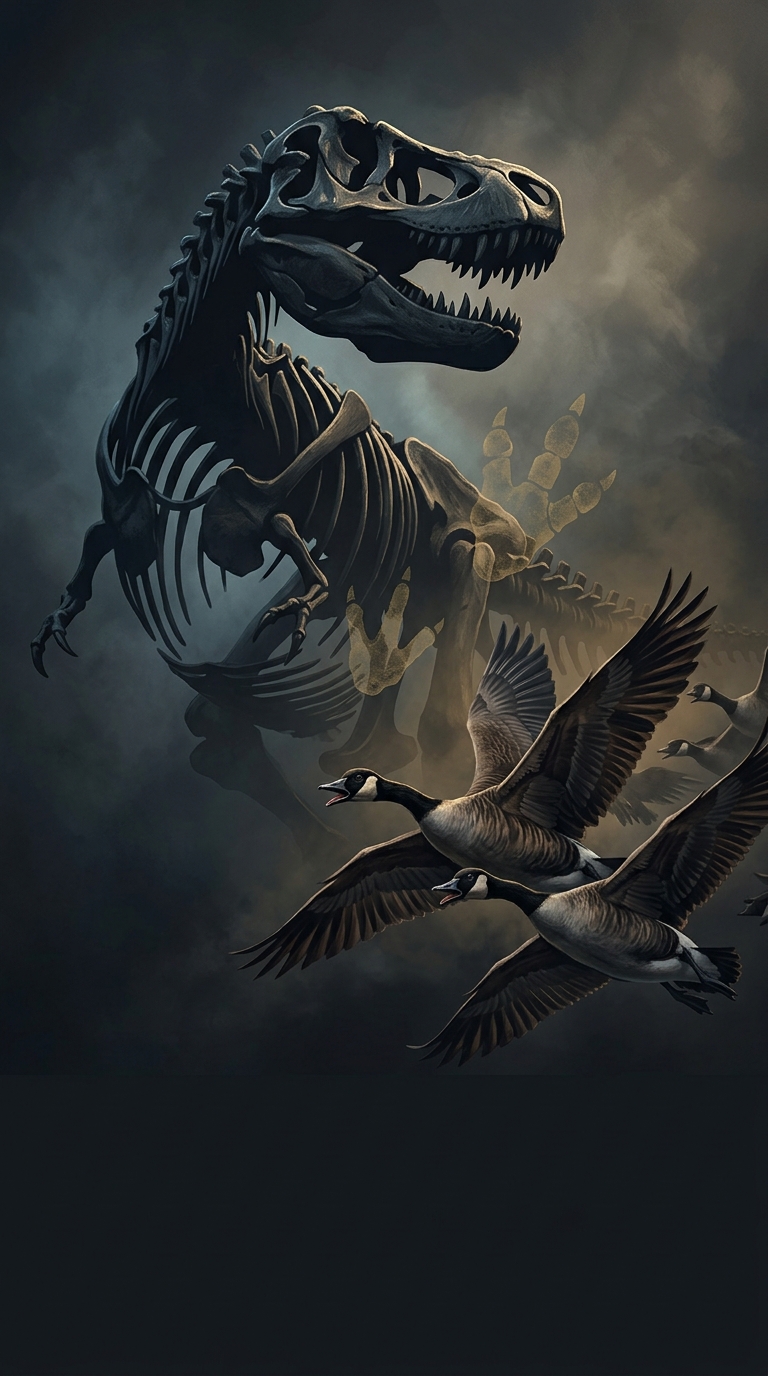
In modern evolutionary classification, a pigeon is not merely a bird that resembles a dinosaur: it belongs to the dinosaur lineage. Birds evolved from small, feathered theropod dinosaurs—the group that also included Tyrannosaurus rex—and are the only dinosaur branch whose members survived to the present day.
That placement follows shared ancestry, not a judgment about appearance. Paleontologists compare anatomical features and fossils to reconstruct branching relationships. Evidence such as feathers, wishbones, and similar bone structures links birds with theropods. The more precise family tree nests birds inside the broader dinosaur group.
The category includes the survivors
This can sound like a change in labels, but it reflects a change in how scientists define groups. In older everyday usage, “dinosaurs” often meant only the extinct, non-bird animals. In evolutionary classification, a group includes descendants of its common ancestor. Since birds descend from dinosaurs, excluding them would leave out one branch of the family.
So a pigeon is both a bird and a dinosaur—specifically, a living avian dinosaur. The pigeon on a city ledge is not a distant look-alike of dinosaurs; it is a present-day member of their surviving lineage.