When sound becomes vibration
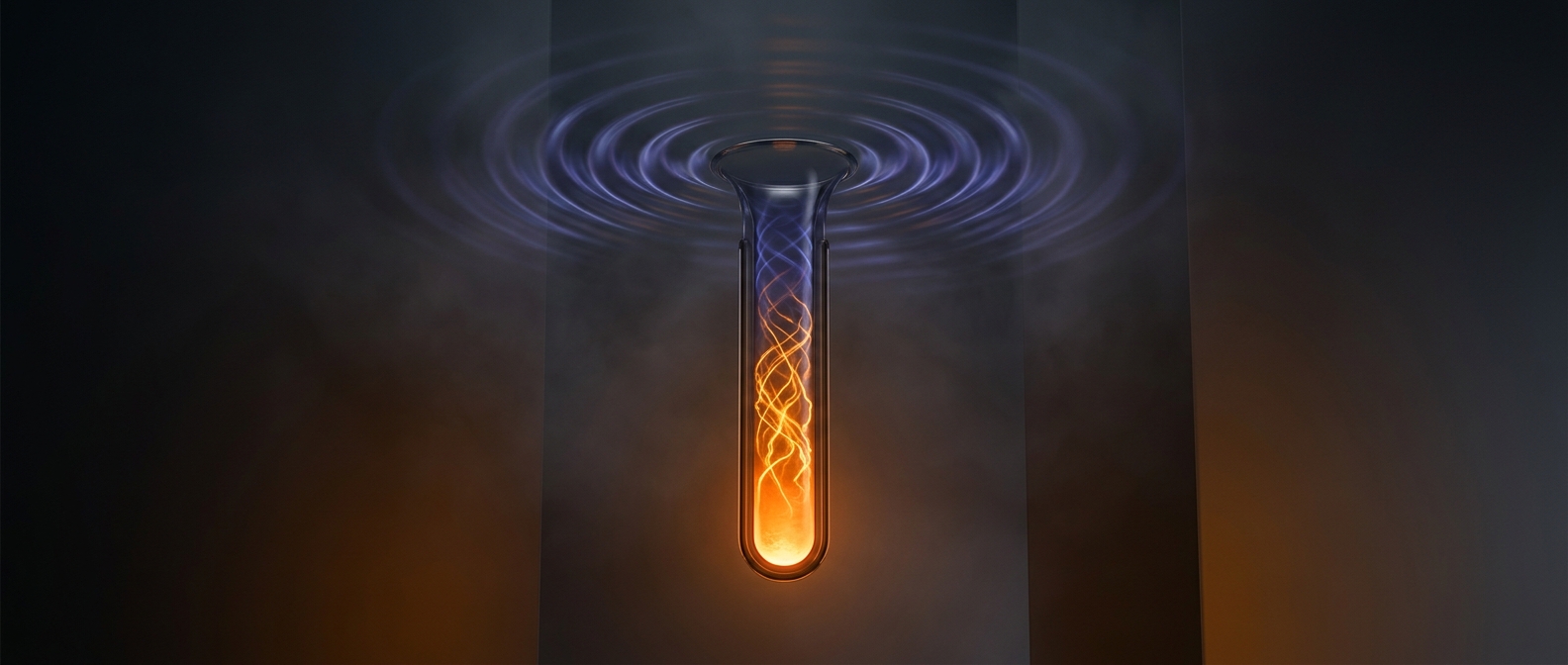
Sound is a pressure wave: moving air pushes and pulls on a surface, then on the eardrum. As the waves slow down, their pitch drops. Below roughly 20 cycles per second—about 20 hertz—sound is usually called infrasound. People may not hear it as a clear note, but sufficiently strong pressure changes can still be felt, or can set a window, wall, or loose object trembling.
The sensation depends on more than pitch. A weak low-frequency sound may go unnoticed, while a stronger one can produce a fluttering or throbbing feeling. And an object’s response depends on its shape and stiffness: if the sound pulses arrive near the frequency at which a panel naturally vibrates, that panel may move more noticeably. This is resonance, the same basic effect that lets a small repeated push build a larger swing.
Why a vibration can feel mysterious
Low frequencies can travel through walls and buildings differently from higher-pitched sounds, which are often easier to locate by ear. The result may be a diffuse rumble with no obvious source. A person might feel pressure or vibration without being able to identify a matching sound, while a nearby fixture or pane may reveal that something is moving.
Those clues do not point to one cause. Machinery, ventilation equipment, traffic, and other ordinary sources can produce low-frequency sound, and buildings can amplify some frequencies while muting others. The sensation alone cannot distinguish among them. Finding the cause means checking the surroundings and, when needed, measuring sound or vibration with suitable instruments. A strange rumble can be real and unsettling; it is still a clue to investigate, not a diagnosis of what made it.