Why a hiccup can keep restarting
A hiccup is a reflex, not simply air caught in the throat. A signal triggers the diaphragm—the broad muscle beneath the lungs—to contract abruptly; the voice box then closes briefly, producing the familiar sound. Nerves carry signals between the diaphragm and the brainstem, which helps coordinate breathing. Irritation anywhere along this pathway can sometimes keep the reflex going.
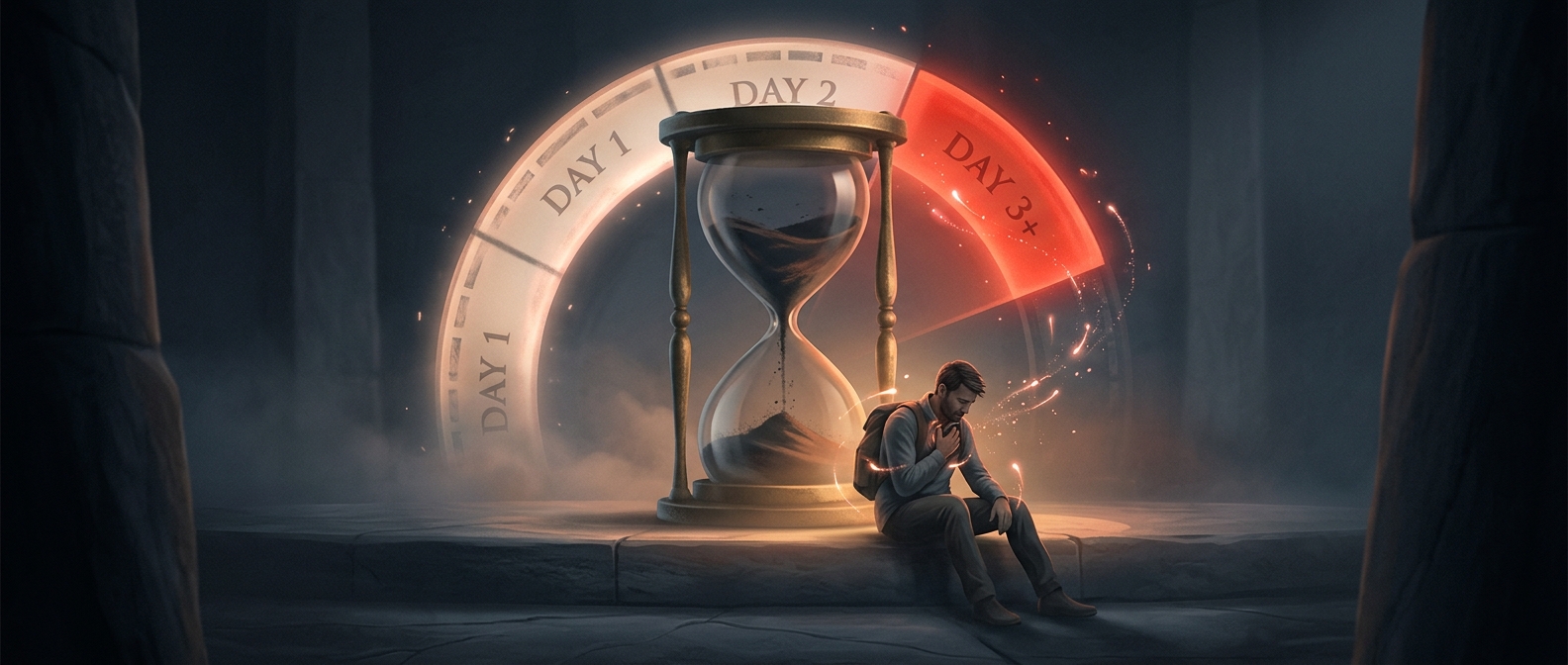
A bout that continues beyond 48 hours is called persistent hiccups. That duration does not, by itself, prove a dangerous illness, but it is a reason to contact a clinician rather than treating the episode as an ordinary brief annoyance. The reflex can disrupt sleep and make eating or drinking difficult, while its persistence may point to a problem that needs attention.
What a clinician may look for
The cause can be as simple as irritation in the digestive tract, but persistent hiccups can also accompany problems affecting the nerves or brain, or changes in the body’s chemistry. A clinician will consider the person’s symptoms, health history, and medicines to decide whether an underlying cause should be investigated. Treatment depends on that cause; stopping the sound alone may not address what is sustaining the reflex.
Seek urgent medical care if hiccups come with symptoms such as trouble breathing, chest pain, severe headache, weakness, confusion, or difficulty swallowing. These symptoms warrant attention in their own right, whether or not the hiccups are responsible. The key distinction is not how loud the hiccup is, but whether it persists, disrupts basic functions, or appears alongside other concerning symptoms.