A Tool Upgrade Is Also a Map
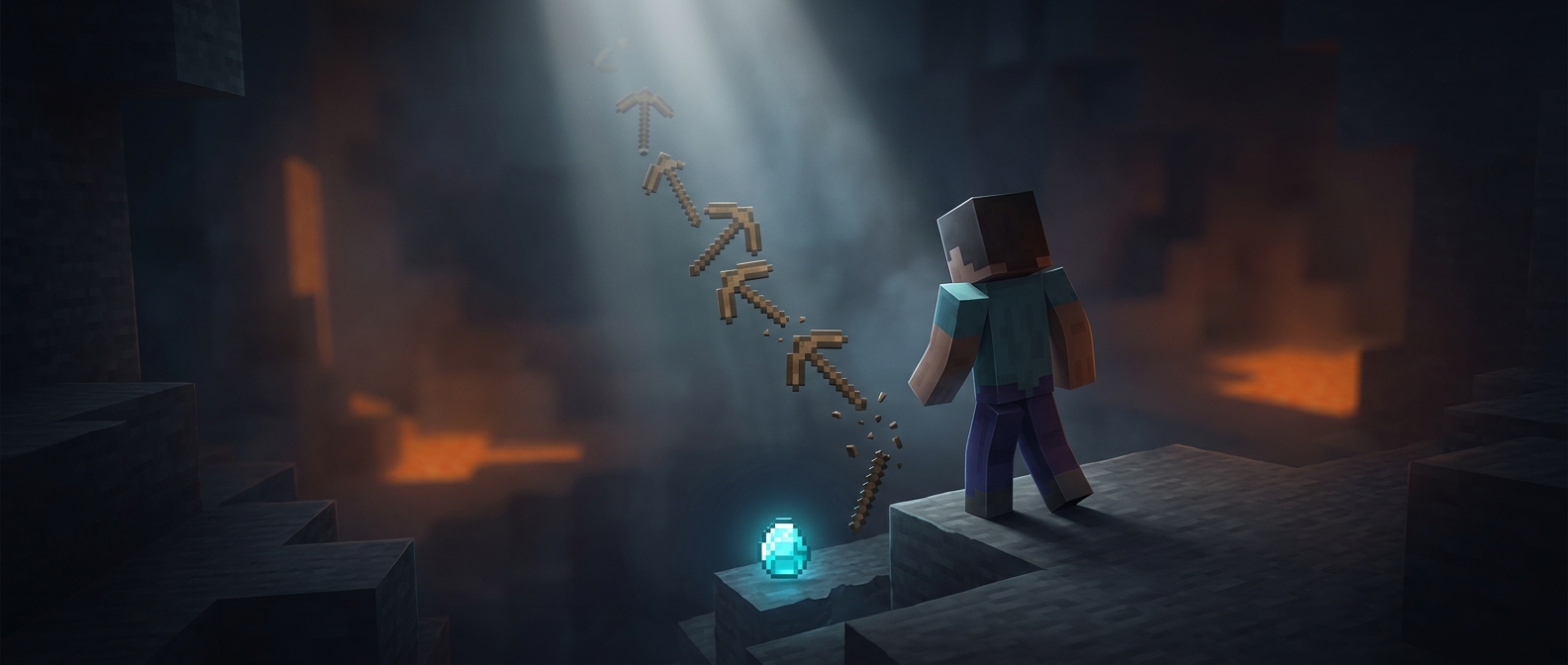
Minecraft’s early tools do more than make mining faster: each one points toward a material the current tool cannot collect. A wooden pickaxe can break stone, but it cannot harvest many of the valuable ores found deeper underground. Stone tools, in turn, make it easier to gather iron, which can be smelted into stronger equipment.
That creates a simple chain of goals. You do not need a long tutorial to learn what to do next; the world itself presents the obstacle, and the next tool offers a way through it.
Why Each Step Feels Within Reach
The loop works because upgrades are close enough to pursue but meaningful enough to notice. Wood is immediately available, and stone is usually just beneath the surface. Once you have a stone pickaxe, iron becomes a practical target. Each short trip pays off with a tool that opens up more of the world.
The materials also make the player plan ahead. A pickaxe is not just a stronger version of the last one: it determines which blocks can be harvested. Using the wrong tool may break a block without yielding its resource, so choosing what to make—and what to save—matters.
Progress Through Constraints
Minecraft turns a basic limitation into momentum. The player keeps encountering resources that are visible but not yet obtainable, then works backward to identify the tool needed to reach them. That makes exploration and crafting part of the same puzzle: a promising ore vein can become the reason to gather wood, build a furnace, or return with better equipment.
The next upgrade is compelling because it is not merely a bigger number. It changes what the player can bring home.