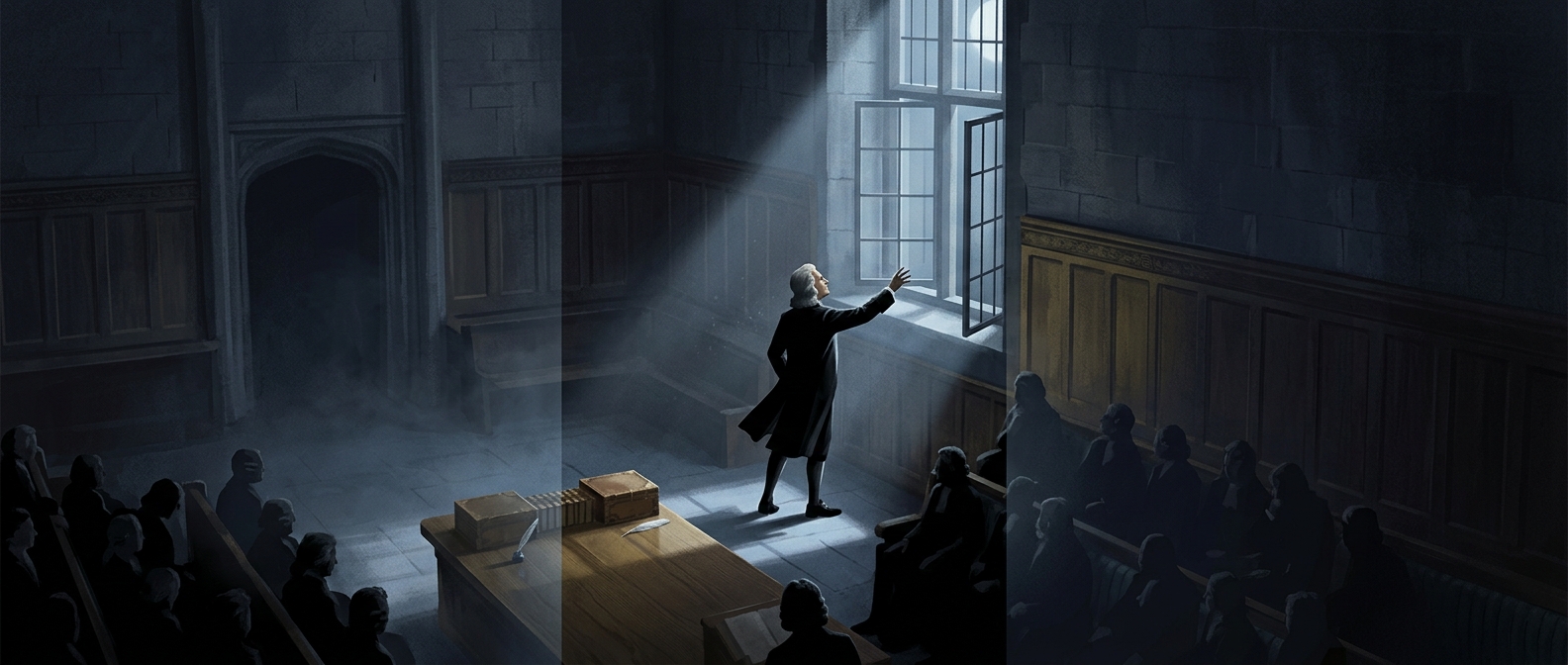
Newton’s Only Recorded Speech Was About a Window
Isaac Newton’s brief parliamentary career came during a moment of political upheaval. In 1689, the University of Cambridge elected him as one of its representatives to the Convention Parliament, the assembly that recognized William and Mary as monarchs after James II’s flight. Newton served until Parliament was dissolved in 1690.
A story later attached to that year says he spoke only once: rather than offer an argument on public affairs, he asked a clerk to shut a window because a draft was bothering him. The anecdote is commonly repeated, though “reportedly” matters: the surviving record does not establish it as a verbatim, documented speech.
A Quiet Member Wasn’t an Unusual Role
Parliamentary work did not require every member to deliver speeches. Members could take part through votes, committee work, and private discussions, and a short or silent tenure did not necessarily mean they had no influence. Newton’s academic post, not a career in politics, was the basis for his seat: university constituencies sent representatives to speak for their institutions.
The window story endures because it makes the contrast so sharp. The man remembered for describing the laws of motion supposedly used his one public utterance in Parliament to address a very ordinary problem: a cold room. It turns a vast reputation into a small, human scene—and suggests how little the Commons became part of Newton’s public identity.