A film’s workforce keeps expanding after the story ends
A large production is not made by one crew working in one place. Visual effects, animation, postproduction, and other tasks can be divided among many specialist teams and companies. Each handoff adds people whose work may be invisible in the finished image but still helped create it.
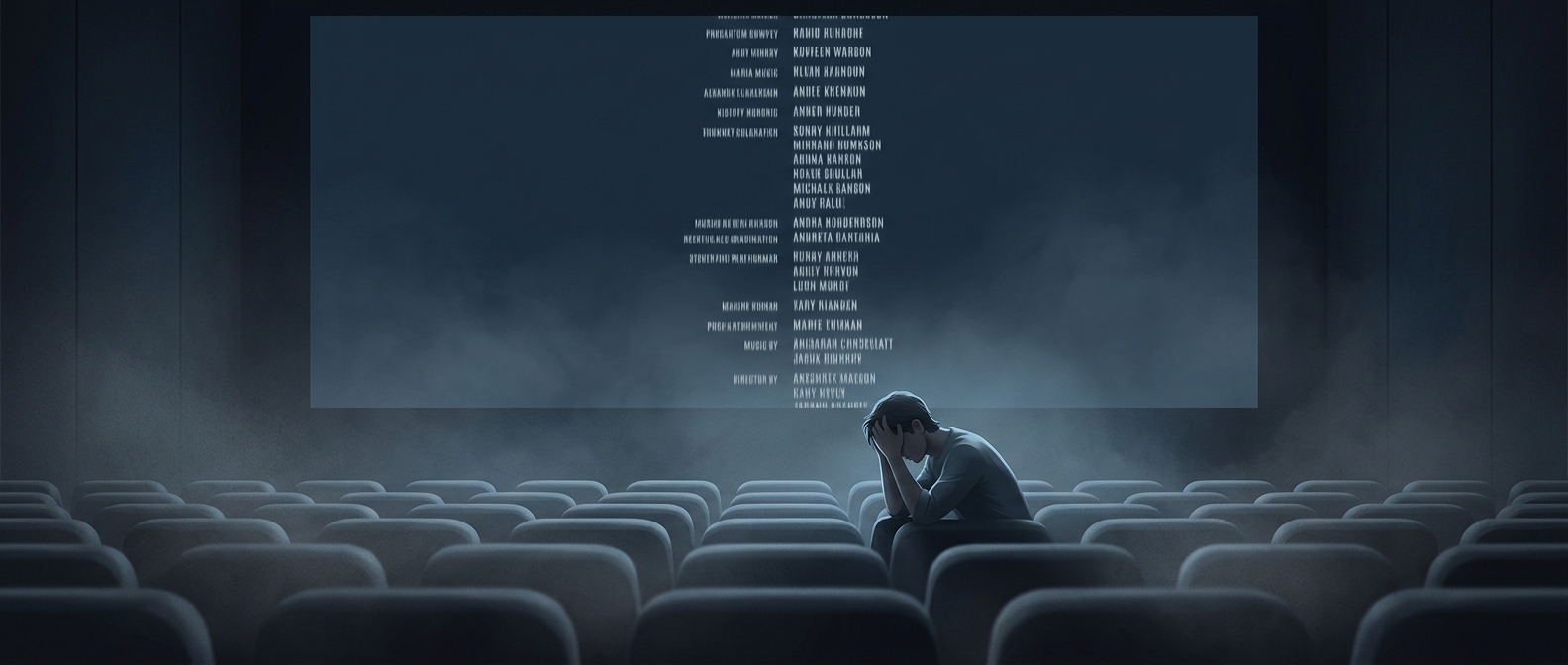
That makes the end credits a record of a complicated production network. They can include not only artists and performers but also the people who coordinated teams, supported shoots, and kept daily operations running. When the workforce stretches across departments and outside vendors, even a fast-moving list can take a long time to pass.
Why names take so long to scroll
Credits are usually organized into sections, such as cast, production departments, and visual effects, rather than presented as one undifferentiated roster. The names still need enough screen time to be read, and a long list can contain far more people than the audience saw on set or recognizes from the film’s central creative team.
The result reflects a tradeoff: compressing the credits saves viewing time, while giving them room makes the scale of the labor more visible. A credits sequence that outlasts the feature turns that tradeoff into a striking measure of how much work—and how many separate roles—can sit behind a single movie.