How a glacier’s retreat revealed the stripes
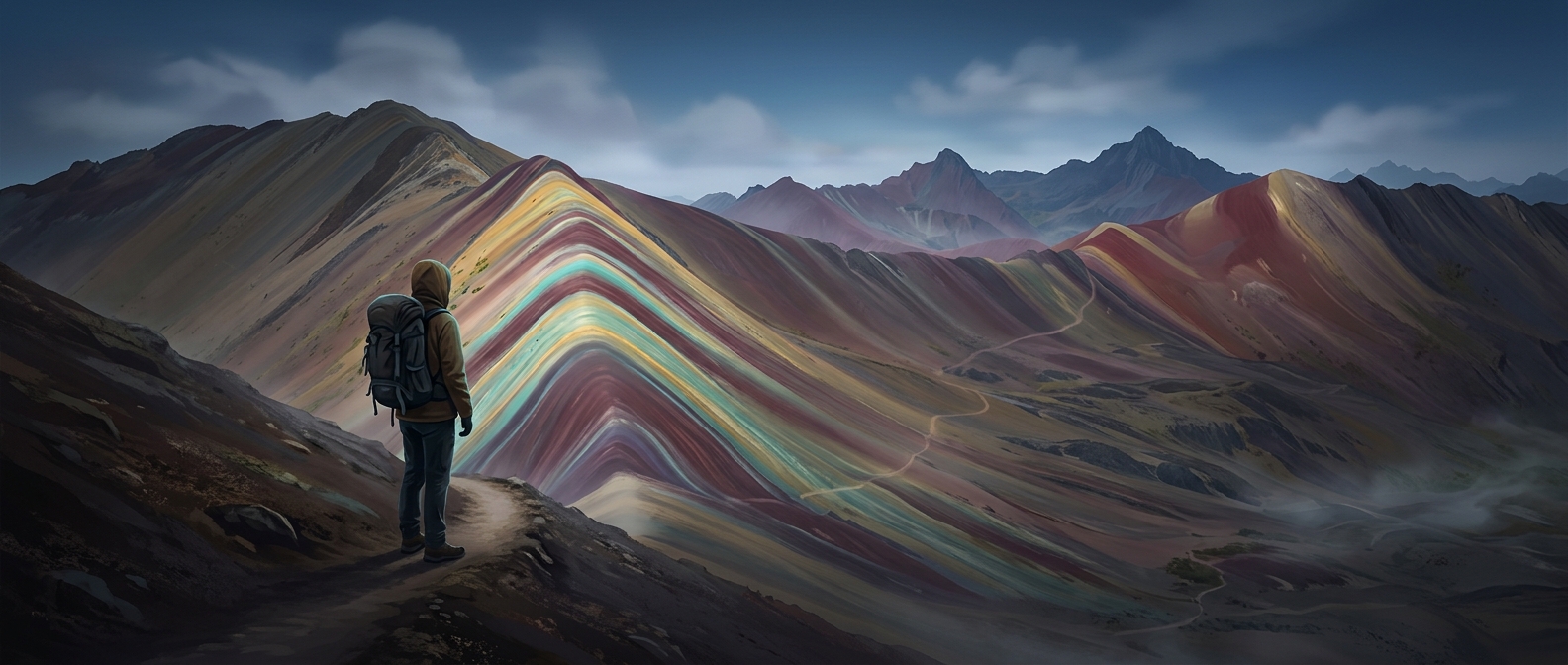
The bands on Peru’s Vinicunca, often called Rainbow Mountain, are layers of sedimentary rock: material that settled in successive deposits and later hardened. Over geological time, tectonic forces tilted and lifted those layers high into the Andes. Glaciers then scoured the slopes; as the ice retreated, erosion exposed the colored bands at the surface.
The hues come from differences in the minerals within the layers. Iron-bearing minerals can produce reds and yellows as they weather, while other mineral mixtures contribute greens and darker tones. The stripes are therefore not a surface coating or a pattern painted by the glacier. They are a cross-section through rock, made visible by the landscape’s long history of burial, uplift, and erosion.
The view comes with a high-altitude cost
The viewpoint is roughly 17,000 feet above sea level. At that elevation, each step demands more effort because the air contains less oxygen than it does near sea level. Visitors may feel breathless, tired, or light-headed, and the climb can make the approach as memorable as the colors themselves.
That thin air is a practical reminder to take the landscape slowly: the vivid bands are the result of processes unfolding over immense spans of time, while the hike to see them is a demanding trip into the present-day Andes.