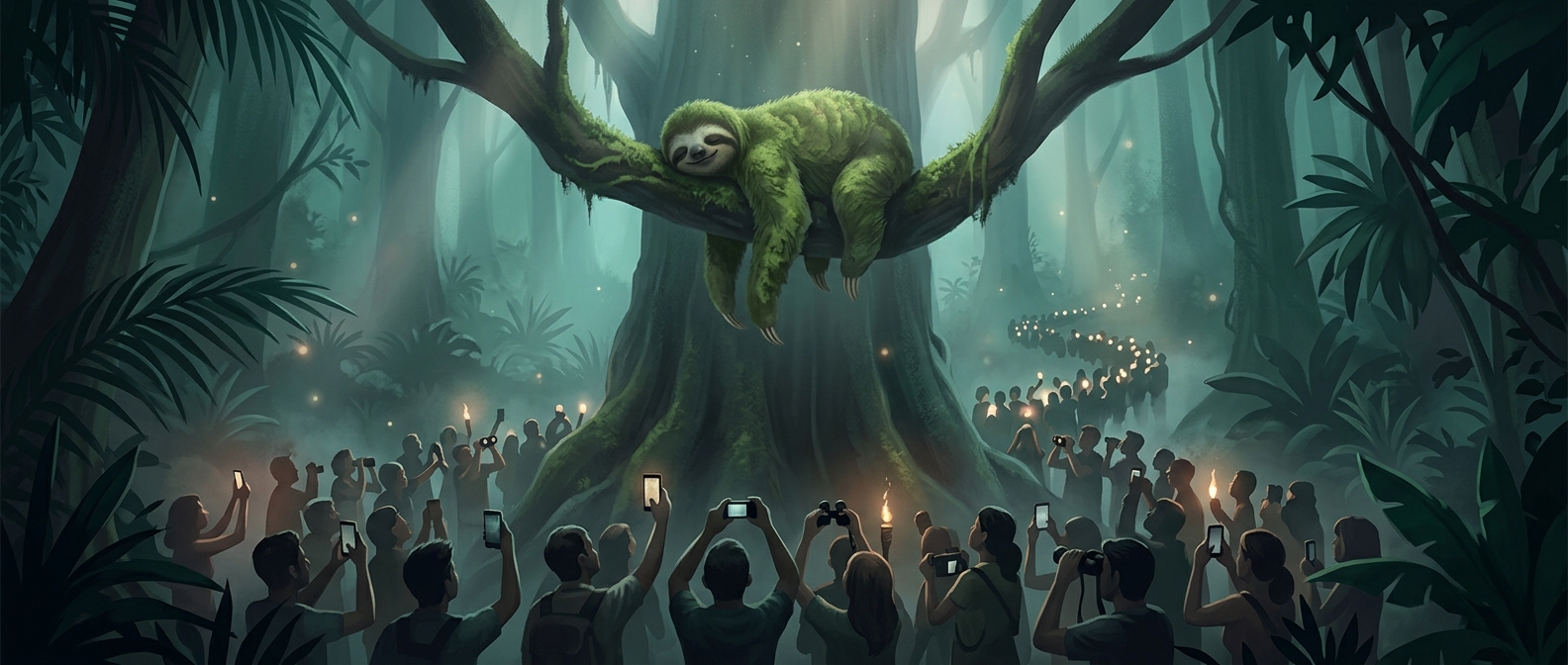
The canopy rewards a slower kind of sightseeing
In Costa Rica’s forests, sloths are easiest to appreciate when visitors stop expecting a chase. They spend much of their time high in the trees, where leaves provide both food and cover. Their slow movements are not a performance for tourists: a leaf-based diet supplies relatively little energy, so conserving it is part of how sloths live.
That makes a sighting a different sort of wildlife encounter. A guide may scan branches for a curved silhouette or a patch of fur that seems to belong to the tree, then give the group time to pick out the animal. In dense foliage, patience and a practiced eye can matter more than covering ground quickly.
A coat that belongs in the forest
Sloths’ fur can host algae and other organisms, giving it a greenish cast that helps them blend into the canopy. Their long limbs and hooked claws also let them hang securely among branches. These traits make them well suited to a life spent above the forest floor—and make them easy to overlook, even when they are nearby.
The same stillness that frustrates anyone hoping for a dramatic animal display is what gives the encounter its appeal. Visitors get a chance to notice how a quiet shape fits into the foliage, rather than watching a brief burst of action. In sloth country, the memorable part may be the moment the “branch” blinks.