Why a Swan’s Calm Surface Tells Only Half the Story
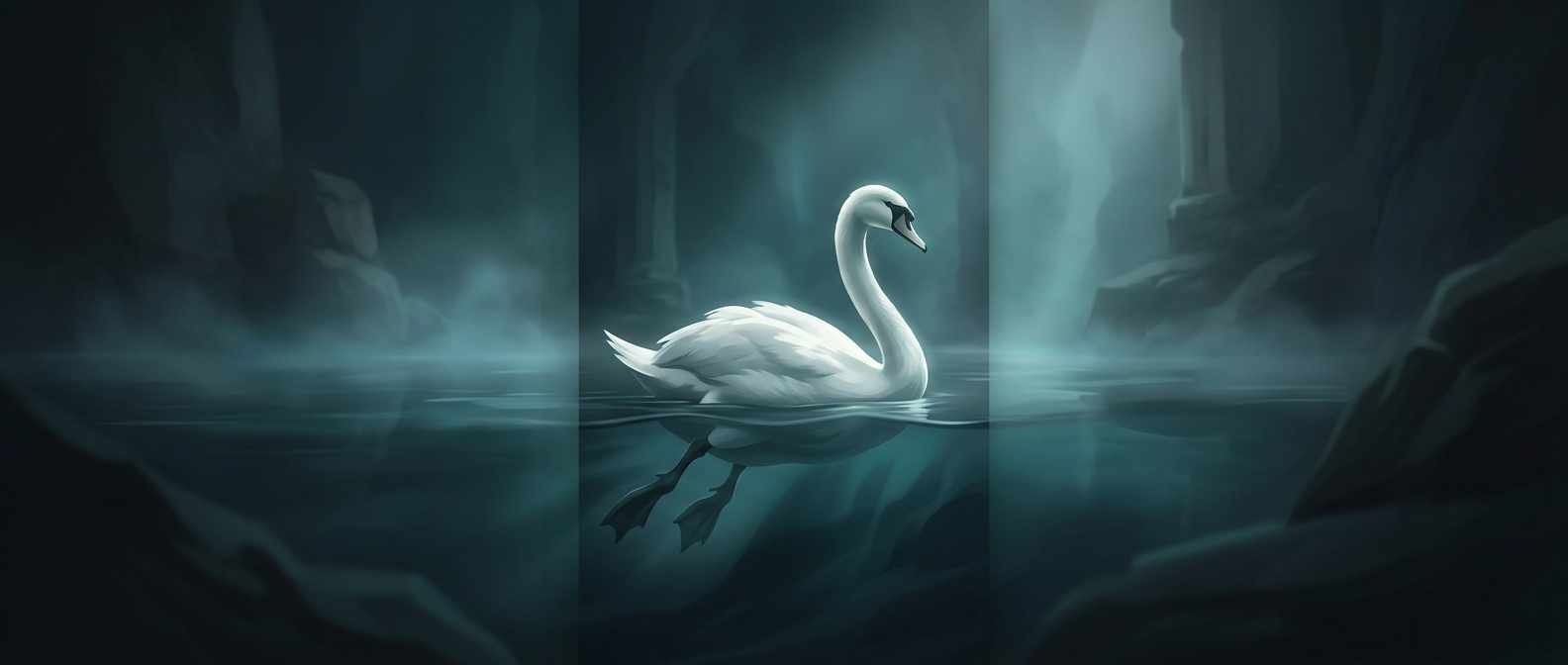
A swan moves forward through a quiet-looking scene, but its motion depends on work hidden from view. Its webbed feet push against the water beneath its body, while its long neck and steady posture help preserve the smooth outline people notice from shore. The effort is real; it simply does not look like struggle from every angle.
That mismatch makes the swan a useful image for composure under pressure. The point is not that calm people feel no strain. It is that visible steadiness can be the result of managing strain without letting it dictate every outward movement.
The Meaning Is in the Contrast
As a symbol, the swan joins two things that are often mistaken for opposites: grace and effort. Its glide can suggest poise, while the unseen paddling stands for the concentration, repetition, or self-control that poise may require. The image works because viewers can see the smooth result and imagine the labor supporting it.
That makes the swan less a picture of effortless elegance than of effort kept out of the spotlight. In a difficult conversation, a demanding performance, or a tense moment, composure may likewise be something a person actively maintains. The swan’s calm passage across the water turns that hidden work into a simple, memorable picture.