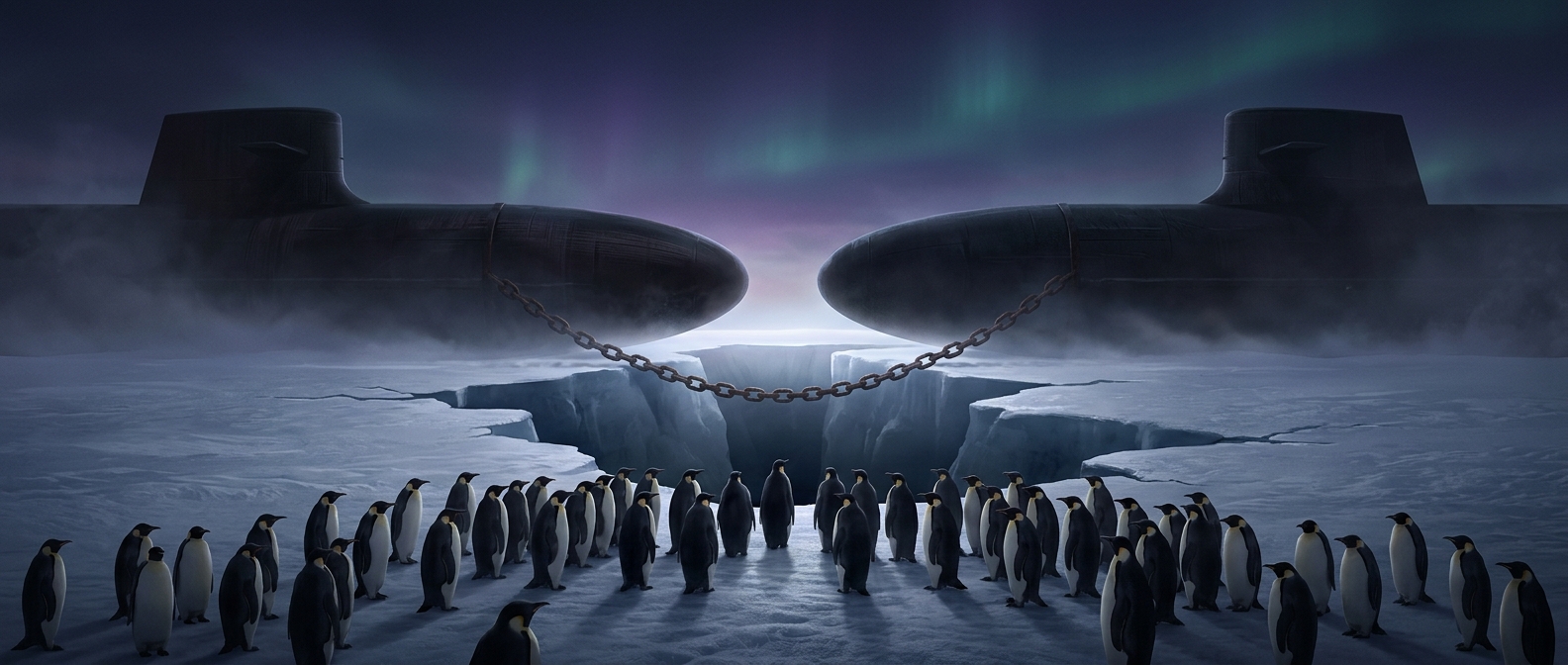
A treaty made disagreement manageable
Antarctica posed a problem the rival powers could not easily solve: several countries claimed parts of the continent, while others—including the United States and Soviet Union—did not recognize those claims. The 1959 Antarctic Treaty did not decide who owned what. Instead, it kept the dispute from blocking an agreement: existing positions were preserved, but the treaty did not allow countries to use their time as signatories to press new claims or enlarge old ones.
That distinction mattered. Governments could join a shared set of rules without first conceding their arguments about sovereignty. The treaty neither erased the claims nor made them universally accepted; it put them to one side.
Limits that could be checked
The treaty required Antarctica to be used for peaceful purposes. It barred military bases, maneuvers, and weapons testing, while allowing military personnel or equipment when used for peaceful work. It also prohibited nuclear explosions and the disposal of radioactive waste there.
To make the restrictions more than promises on paper, the agreement provided for inspections of stations, installations, and equipment. A country could therefore check whether another was turning a research presence into something more threatening. That visibility helped make restraint more credible in a place where a remote outpost could otherwise be difficult to monitor.
Science as common ground
The treaty protected the exchange of scientific personnel, observations, and results. Research could continue across national lines even while governments disagreed about territory. Scientists gained room to work; governments gained a way to maintain a presence without converting it into a military foothold.
The bargain did not resolve the rival claims. It changed their immediate consequences: in Antarctica, a station could serve as a place to conduct research and be inspected, rather than a step toward settling sovereignty by force.