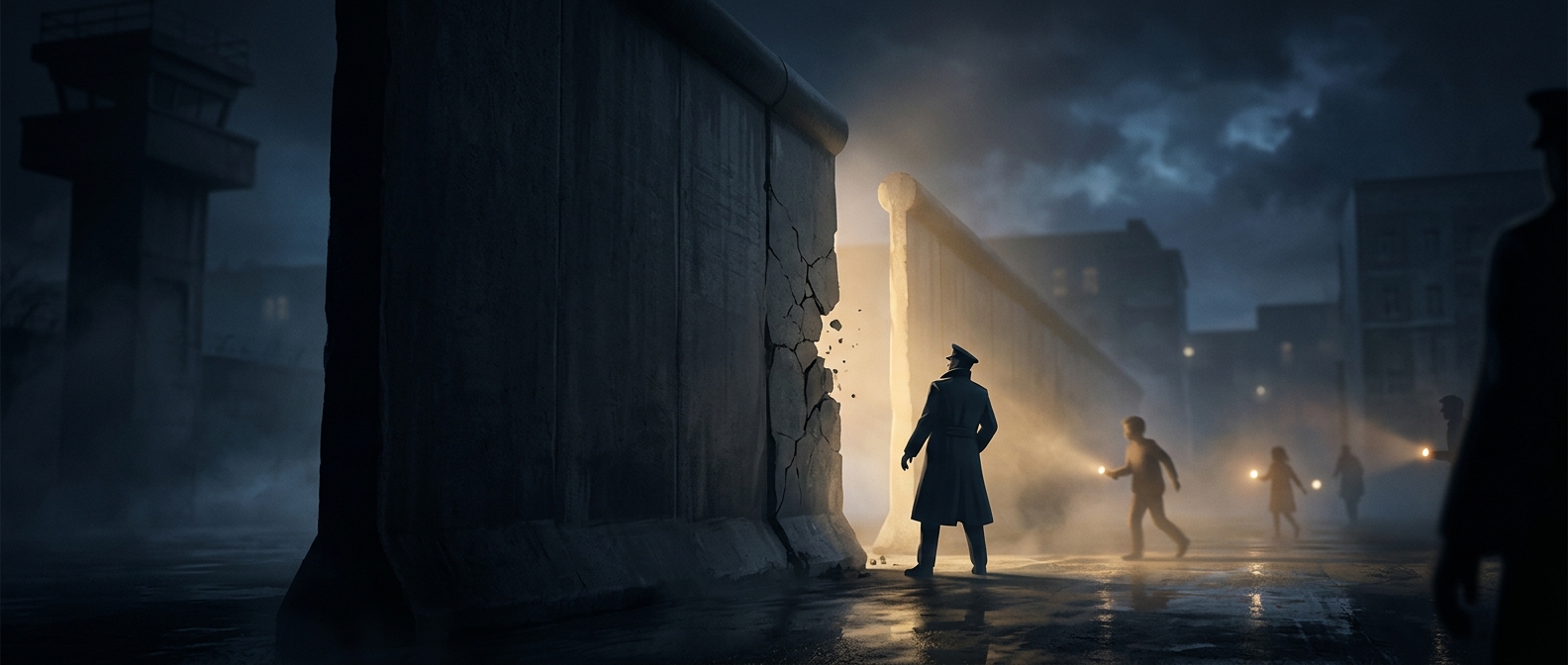
A rushed answer turned a travel rule into a border crisis
On November 9, 1989, East German spokesman Günter Schabowski read out a new set of rules easing travel to the West. The policy had been prepared as a controlled change: people would apply for permission, and officials would process crossings. At a televised news conference, a reporter asked when the rules would take effect. Schabowski checked his notes and answered, “immediately, without delay.”
That answer made a complicated administrative change sound like an open invitation to leave at once. News broadcasts carried it across East Berlin, and people headed for nearby checkpoints expecting to be let through. The announcement did not include clear instructions for the guards, who had neither a new procedure nor orders to open the gates.
The crowd forced a decision at the checkpoint
At the Bornholmer Strasse crossing, the pressure grew as more people gathered and demanded passage. The guards tried to manage the crowd, but could not reconcile what they had heard on television with the orders they had received. With no workable way to hold everyone back, they eventually let people cross. Other checkpoints followed.
The Wall did not fall because a single official formally ordered its gates opened. It began to open because a public announcement outran the government’s plan, and the people who controlled the gates faced an expanding crowd with no clear instructions. A hurried answer on live television had made an intended bureaucratic change immediate in the minds of thousands—and, within hours, the border was no longer functioning as before.