How Fungi Eat Without a Mouth
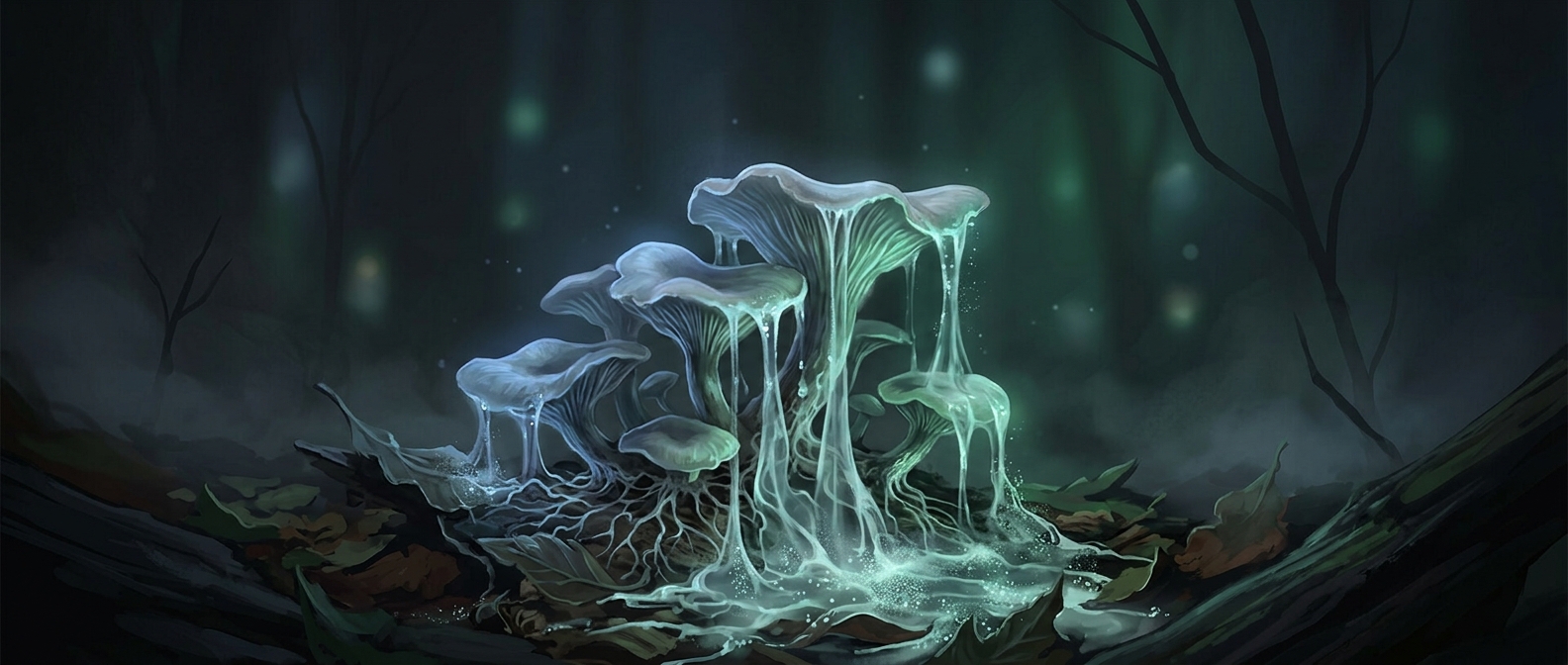
A fungus does not swallow a meal and digest it inside a stomach. Instead, it grows a network of fine filaments called hyphae across or into its food. The network—known collectively as a mycelium—puts the fungus in close contact with a large feeding surface.
Digestion Happens Outside the Cells
Hyphae release enzymes, molecules that speed up chemical reactions, into the surrounding material. Different enzymes cut large food molecules into smaller, soluble pieces: proteins into amino acids, for example, and complex carbohydrates into simpler sugars. Those small molecules can then pass through the hyphal walls and into the fungal cells, where the fungus uses them for energy and growth.
This outside-in approach works especially well on solid food such as fallen wood. The fungus can send hyphae into tiny spaces and release enzymes right beside the material they act on. As the wood’s tough components are broken down, nutrients become available that animals generally cannot extract on their own. Fungi are therefore among the organisms that return matter locked in dead plants to the wider ecosystem.
A Meal That Spreads
The feeding network can keep extending as it finds new material, while older parts of it absorb the products of digestion. The fungus does not need to bring a whole piece of food to a central digestive organ; its feeding surface grows around the meal. That is why a small patch of mold can turn into a much larger web—and why, for fungi, dinner is not just something to eat but territory to colonize.