How Dust Charges a Helicopter
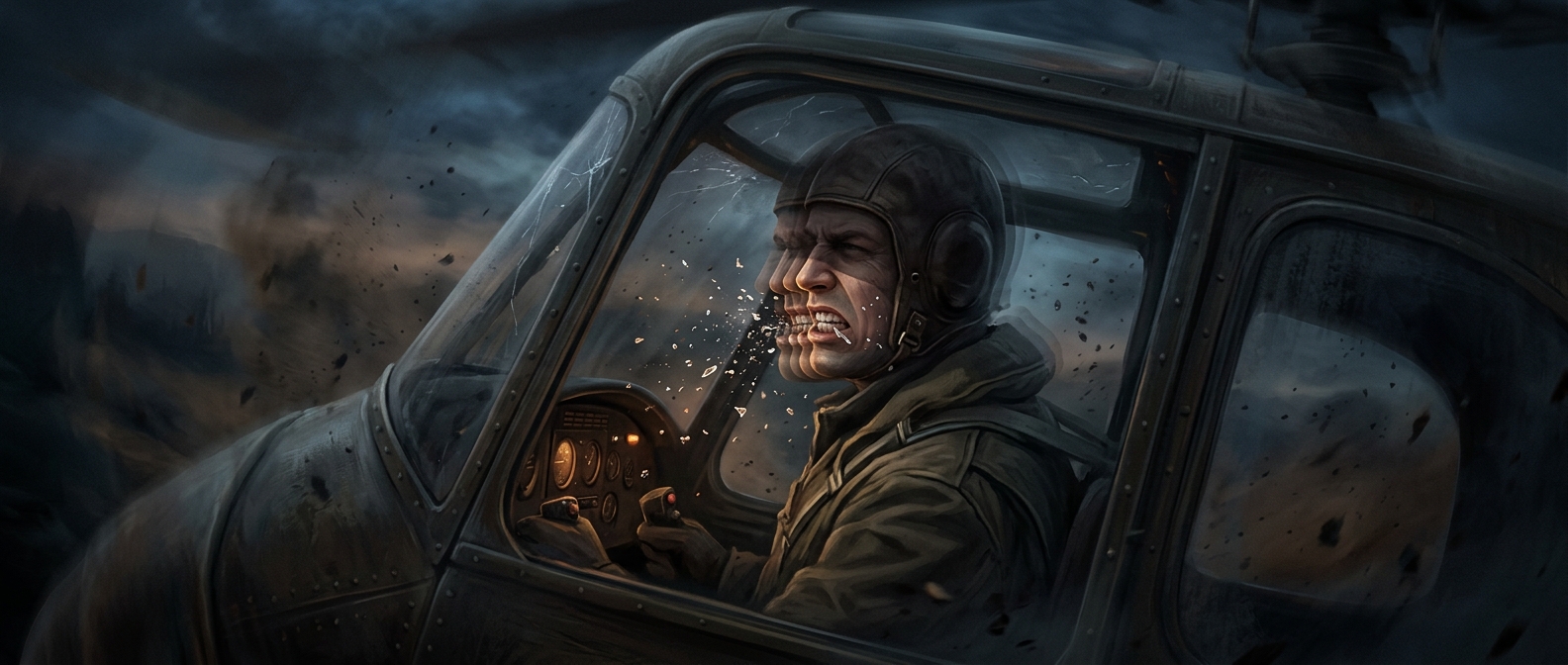
A helicopter rotor does more than push air downward. Its fast-moving blades also sweep through suspended dust, where tiny particles can strike the blades, the fuselage, and one another. These repeated contacts can transfer electric charge, much as rubbing a balloon on fabric does. Because dry air and dry sand conduct electricity poorly, the charge may build up instead of leaking away quickly.
The helicopter is not literally charged by sand alone: its overall electrical state depends on where charge moves and what the aircraft is touching. But in a dusty, dry environment, particle impacts can contribute to a voltage difference between parts of the aircraft or between the aircraft and nearby objects.
Why a Spark Appears
Air normally insulates, but only up to a point. If enough charge accumulates, the electric field can become strong enough to make a small region of air conductive. Charge then jumps across that gap in a brief discharge, producing the flash we see as a spark.
A spark is therefore the visible end of a process that begins with countless tiny collisions. It may occur when a charged helicopter approaches a person, equipment, or another conductive object that offers a path for the charge to escape. The discharge can be sudden even though the charge built gradually.
The Practical Risk on the Ground
The key hazard is not that sand makes the rotor itself ignite; it is that a static discharge can occur at the wrong time, near fuel or other flammable vapors. Ground crews manage that possibility by controlling how charge is dissipated before handling the aircraft or fueling it. In a desert landing, the cloud of dust thrown up by the rotor is not just a visibility problem—it can also be part of the electrical environment around the helicopter.