A Mars drive was a sequence of cautious decisions
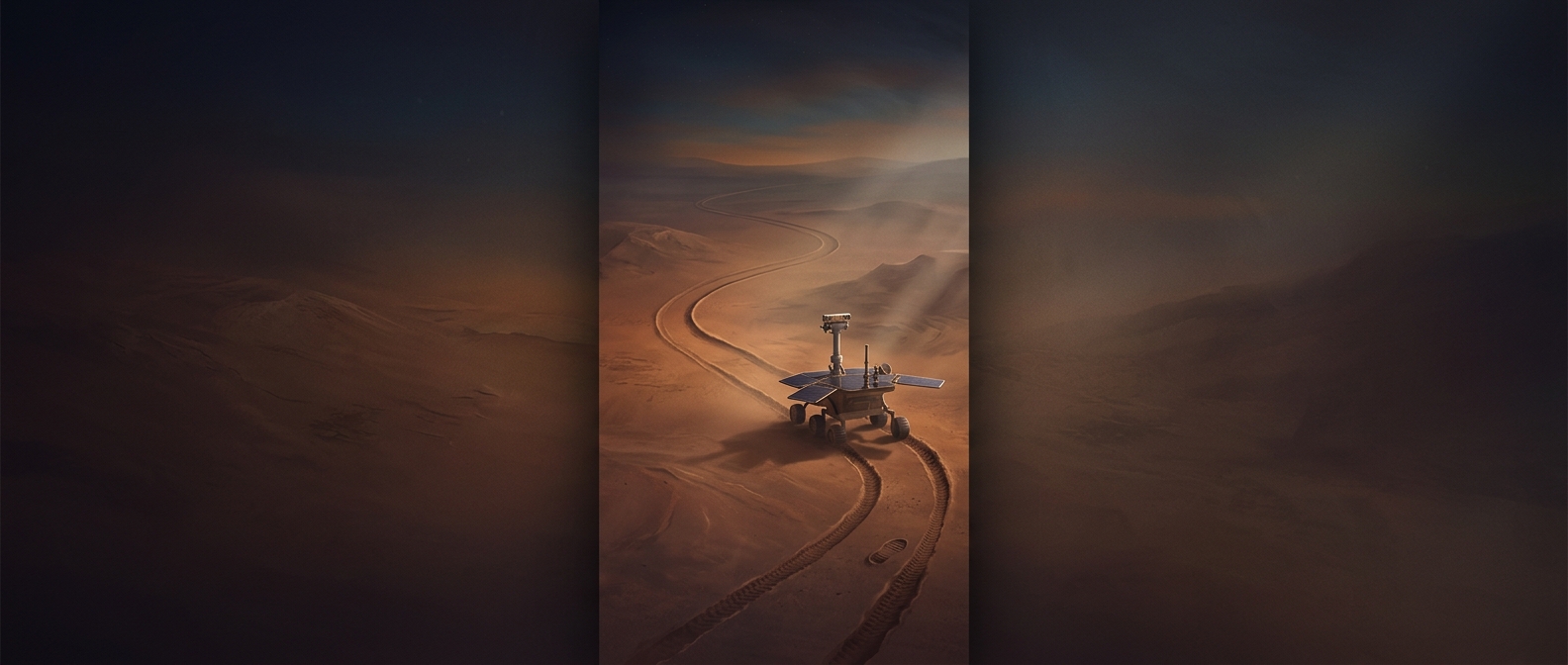
Opportunity did not travel like a car following a road. Its route had to be built from images: rover cameras showed scientists what lay ahead, and commands sent from Earth directed the next stretch. Because signals take time to travel between planets, the team could not steer it continuously. Each drive was planned as a bounded move, with room for the rover to stop rather than press blindly into uncertain terrain.
That made navigation part of the engineering. The rover’s six wheels and articulated suspension helped it handle uneven ground, but they could not make every patch safe. Loose soil could trap a wheel; rocks could threaten the underside. A route that looked shorter on an image might therefore be a worse choice than a winding path around hazards.
Distance came from repetition, not speed
The practical unit of progress was not a long, uninterrupted journey but a succession of small traverses. After a move, the team could inspect new images, revise the route, and decide whether another drive was worthwhile. That rhythm turned remote driving into a loop: observe, plan, move, check.
The result was a remarkable distance accumulated at a pace set by power, terrain, and communication—not by the rover’s top speed. Opportunity’s mileage records years of careful, repeatable work across a landscape where every new stretch had to be assessed before the next one began.