Turning Bach into moving shapes
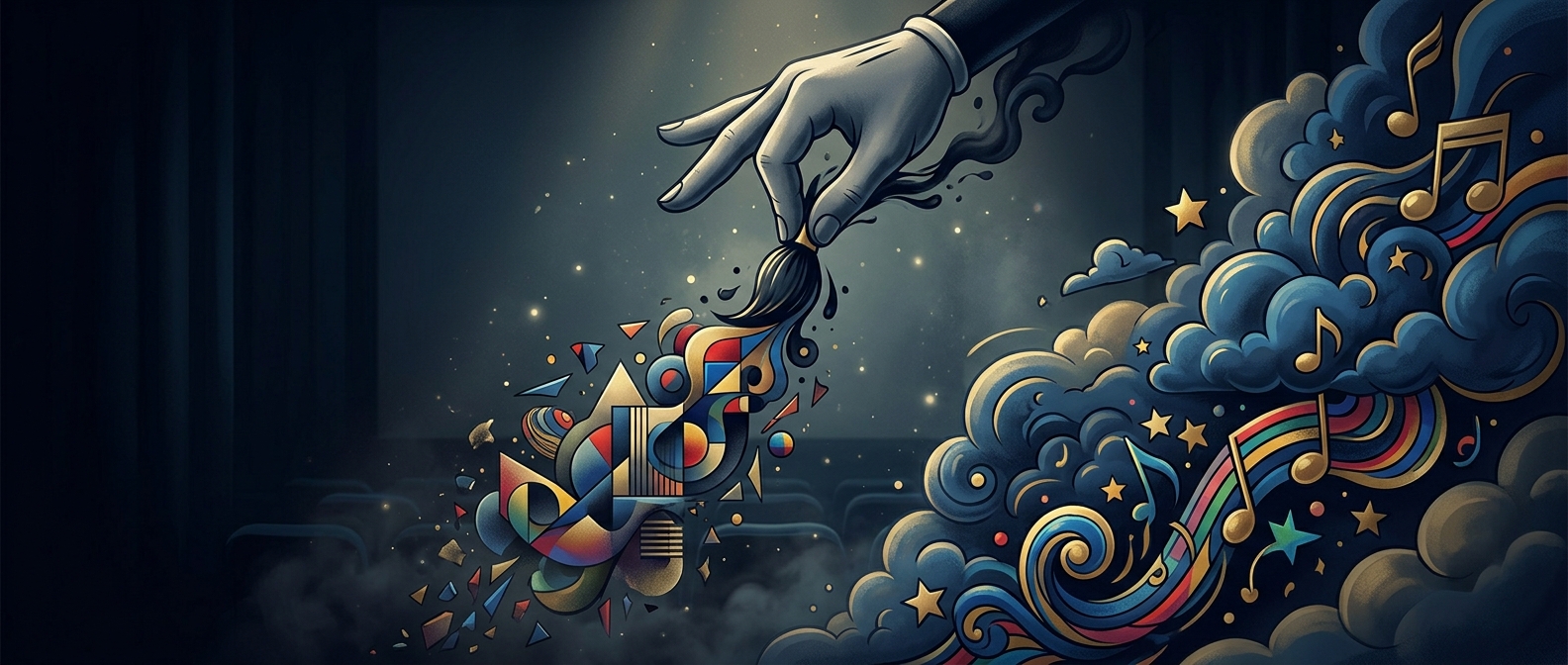
Oskar Fischinger’s idea for Fantasia treated music as something animation could make visible without illustrating a literal story. Geometric forms could change shape, position, and rhythm in response to the music, giving viewers a visual counterpart to its structure. That approach asks an audience to follow patterns rather than characters or recognizable scenery.
From abstraction to familiar images
Disney’s team shifted the designs toward forms viewers could identify, including clouds and waves. The change offered a foothold: a cloud or wave still moves in a way that can echo music, but it carries an immediate visual meaning. Instead of asking viewers to interpret pure geometry, the animation could connect musical motion to things they already knew how to see.
That choice reflects a basic tradeoff in animated music: the more abstract the image, the more directly it can suggest sound and rhythm; the more recognizable the image, the easier it may be to read, but the less purely abstract the experience becomes. The finished direction kept music-driven movement while making the imagery more familiar.
An idea without a screen credit
Fischinger left the project without receiving a screen credit. His departure is part of the story of how the sequence’s visual approach changed, but it does not by itself establish why he left. The contrast remains visible in the underlying design problem: whether to let music become shapes in its own right, or to give those shapes a recognizable world to inhabit.