A caravan became a diplomatic crisis
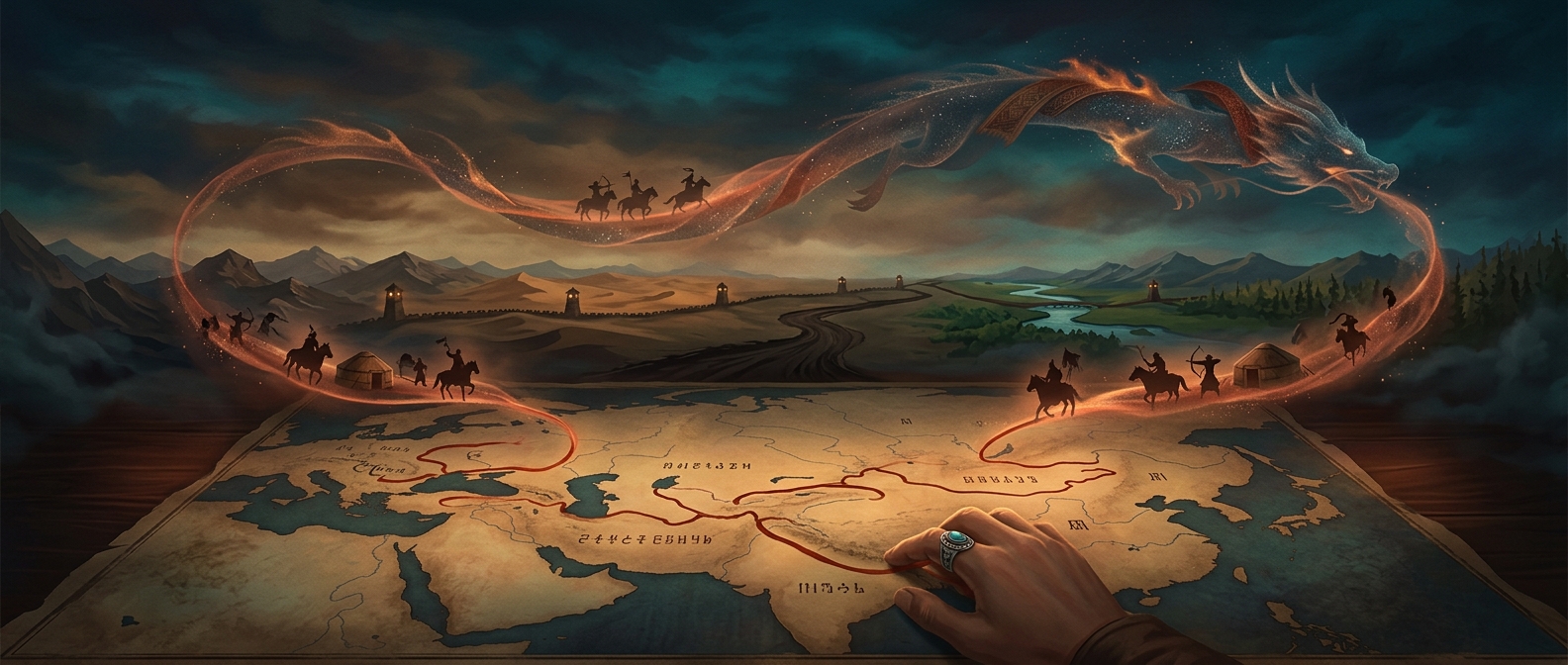
Around 1218, Genghis Khan sent a large merchant caravan into the Khwarezmid Empire, a powerful state spanning parts of Central Asia and Iran. The proposed trade could bring wealth to both sides, but it also depended on safe passage through territory ruled by Sultan Muhammad II.
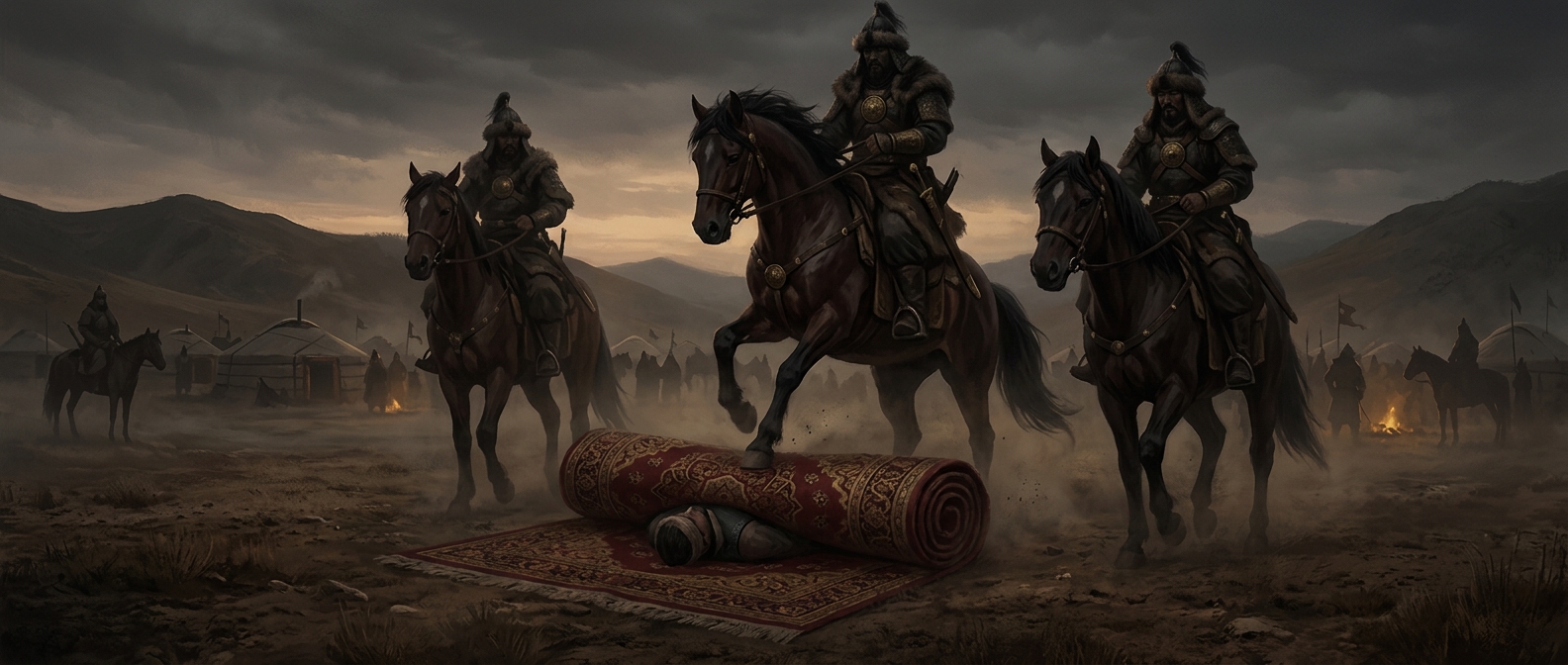
At Otrar, a frontier city, the governor Inalchuq accused the merchants of spying. He detained them, and the caravan was seized; the merchants were killed. Genghis then sent envoys to demand redress. The sultan’s officials killed one envoy and humiliated the others. What might have remained a dispute over a caravan had become an attack on Mongol diplomatic authority.
Why the response became a conquest
Genghis did not answer with a limited raid. In 1219, Mongol forces invaded the empire on several fronts. The campaign combined speed, careful coordination, and the use of local knowledge to strike cities and disrupt the sultan’s ability to respond. The invasion devastated major urban centers and drove Muhammad II into flight.
The episode was not simply a governor’s mistake: the sultan’s handling of the envoys made the crisis a state-level confrontation. Trade had created a reason for contact, but the murder of messengers turned negotiation into a question of whether Mongol threats could be ignored.
A river turned against a city
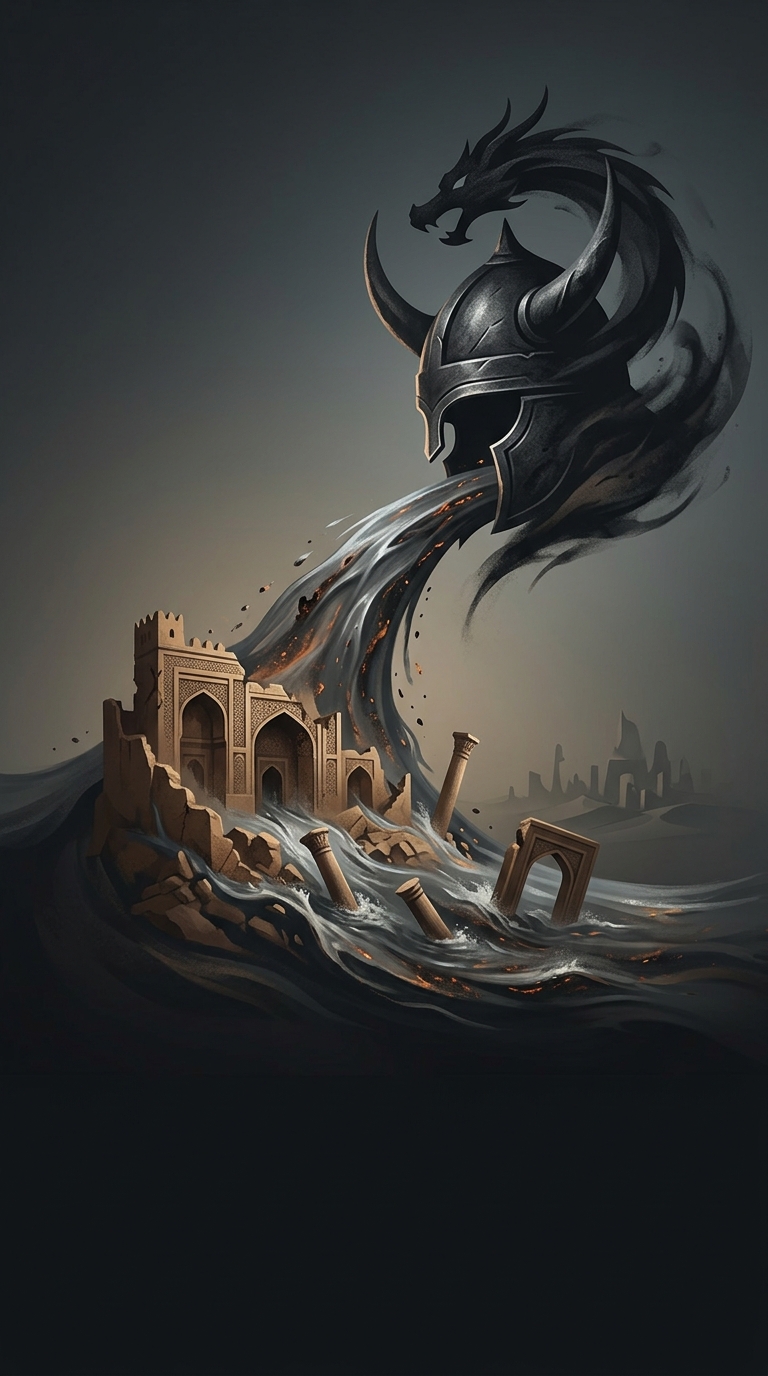
The campaign’s destruction became especially stark at Gurganj, the Khwarezmid capital associated with the sultan. Accounts describe the Mongols breaching or altering waterways to inundate parts of the city. The detail is often retold as the Oxus River being diverted through the sultan’s birthplace; the underlying point is less a neat engineering feat than the scale of the assault on a major center.
A mission meant to open a commercial corridor thus helped trigger a war that wrecked the very cities and routes that corridor would have connected.