How the Mongols Made Distance Governable
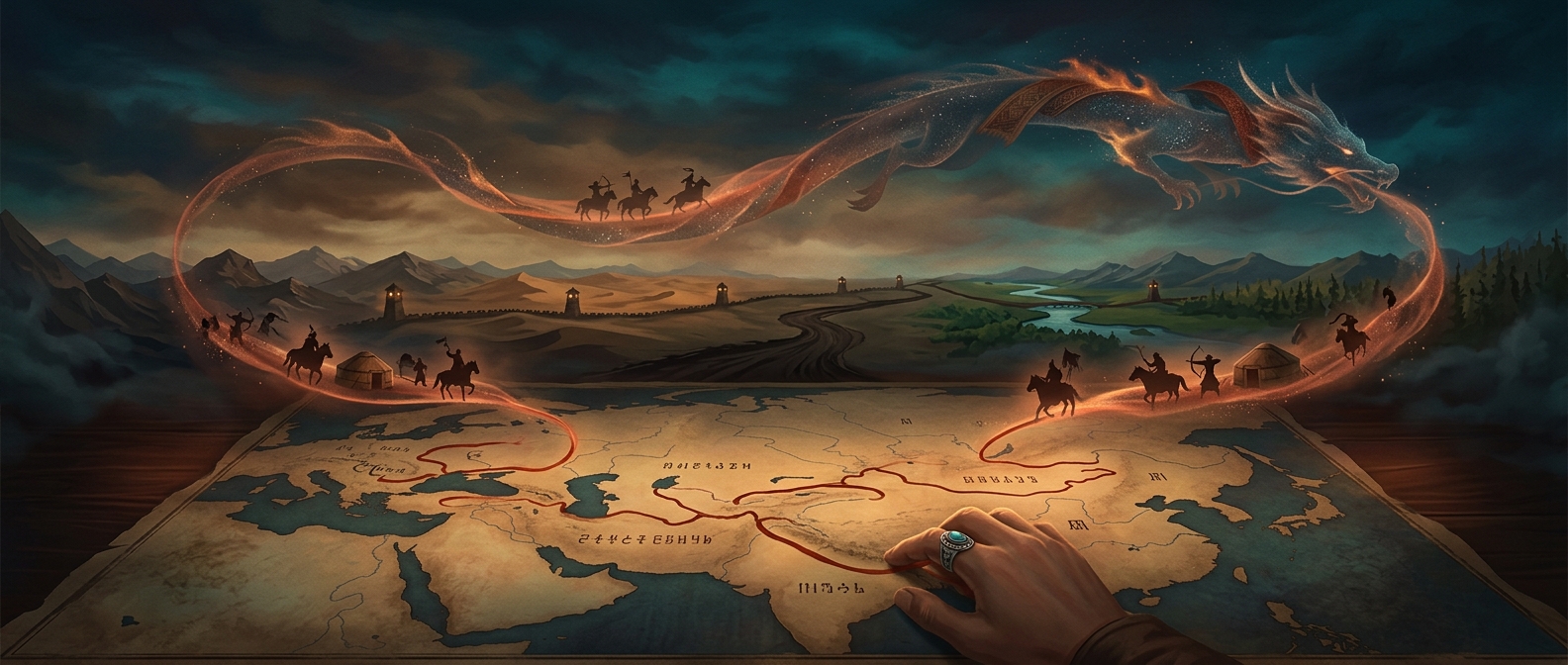
Conquest could bring far-flung territories under Mongol rule, but holding them together required more than speed on horseback. The empire’s rulers relied on a relay network commonly called the yam: stations along major routes where official messengers could obtain fresh horses and continue toward their destination. By replacing a tired mount rather than pushing one horse across the whole journey, a message could travel much faster than an ordinary traveler.
The system helped the khans communicate orders, gather news, and move officials across enormous distances. It also made established routes more useful to merchants and other travelers, although access and security depended on the period and the authorities controlling each region. The empire’s land connections were therefore not simply empty miles crossed by raiders; they depended on stations, local resources, and cooperation from communities along the way.
A Connected Empire, Not One Permanent State
The same mobility that helped Mongol armies expand also made it possible for rulers to coordinate a realm spanning much of Eurasia. Yet distance remained a political challenge. After the empire’s expansion, it divided into competing khanates—regions ruled by Mongol dynasties—which became increasingly independent. The great land empire was not a single, uniformly administered state that endured unchanged.
Its scale mattered because the connections it created could carry more than armies. People, goods, and information could move between regions that had previously been separated by formidable overland journeys. For a time, a decision made by a Mongol ruler could travel across a continent by a chain of horses and stations—not by ship, but through a working network on land.