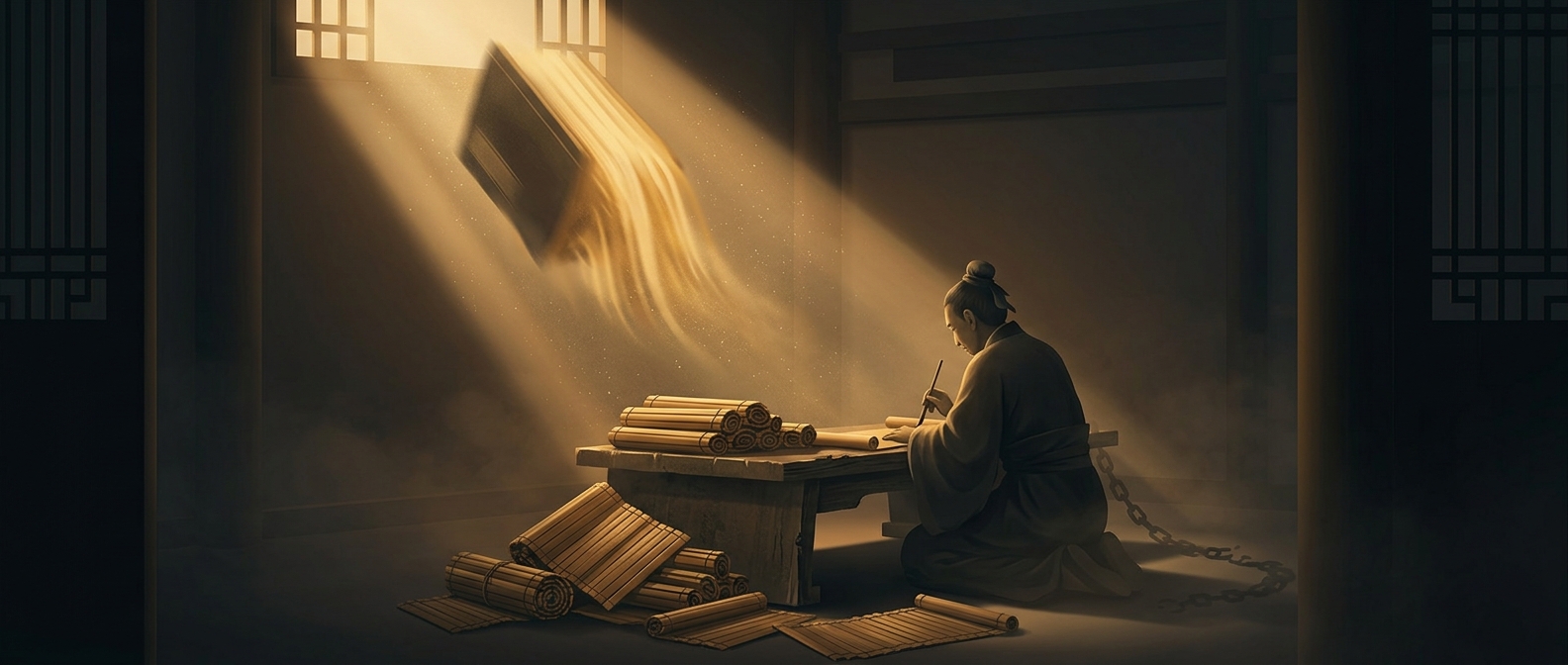
A punishment that left one task unfinished
Sima Qian was serving as court historian under Emperor Wu of Han when he defended Li Ling, a general who had surrendered after being defeated by the Xiongnu, Han China’s northern rivals. The defense angered the emperor. Sima faced execution or castration, a punishment that removed him from ordinary social and political life and carried profound shame in his society.
He chose castration rather than death. The choice was not simply a way to stay alive: Sima believed he had a work he was responsible for completing. His father, Sima Tan, had begun a sweeping history of China and urged his son to carry it on. Sima Qian had inherited the post of court historian as well as that unfinished project.
Why survival mattered to the history
Sima later explained that he endured the punishment because dying before the work was done would leave his purpose unfulfilled. The decision came at an enormous personal cost. In the political culture of the Han court, castration was not a private medical ordeal; it marked a person as disgraced and could end his prospects for a conventional public life.
Afterward, Sima returned to service and continued writing. His Records of the Grand Historian brought together accounts of rulers, states, wars, officials, and individuals across many centuries. Rather than merely list events, it organized the past into different kinds of narratives, making room for the actions and choices of people beyond the reigning emperors.
The work endured because Sima finished it, but its survival came through a decision that bound historical memory to personal sacrifice. The book he completed became a foundational model for later Chinese histories; the punishment he accepted is inseparable from the story of how that book came to be.