A refugee city became a seat of power
Sayyida al-Hurra’s authority grew out of a political world reshaped by the conquest of Muslim Granada in 1492. Her family settled in northern Morocco, where Muslim refugees from Iberia helped rebuild Tetouan. The city was not merely a refuge: its location near the Strait of Gibraltar made it a strategic base for trade, diplomacy, and attacks on ships crossing between the Atlantic and Mediterranean.
Al-Hurra became Tetouan’s ruler after the death of her husband, the city’s governor. In an era when women’s formal political authority was unusual, she governed through the institutions and alliances available to her: local leadership, family ties, diplomacy, and control of maritime force.
Raiding was also a tool of statecraft
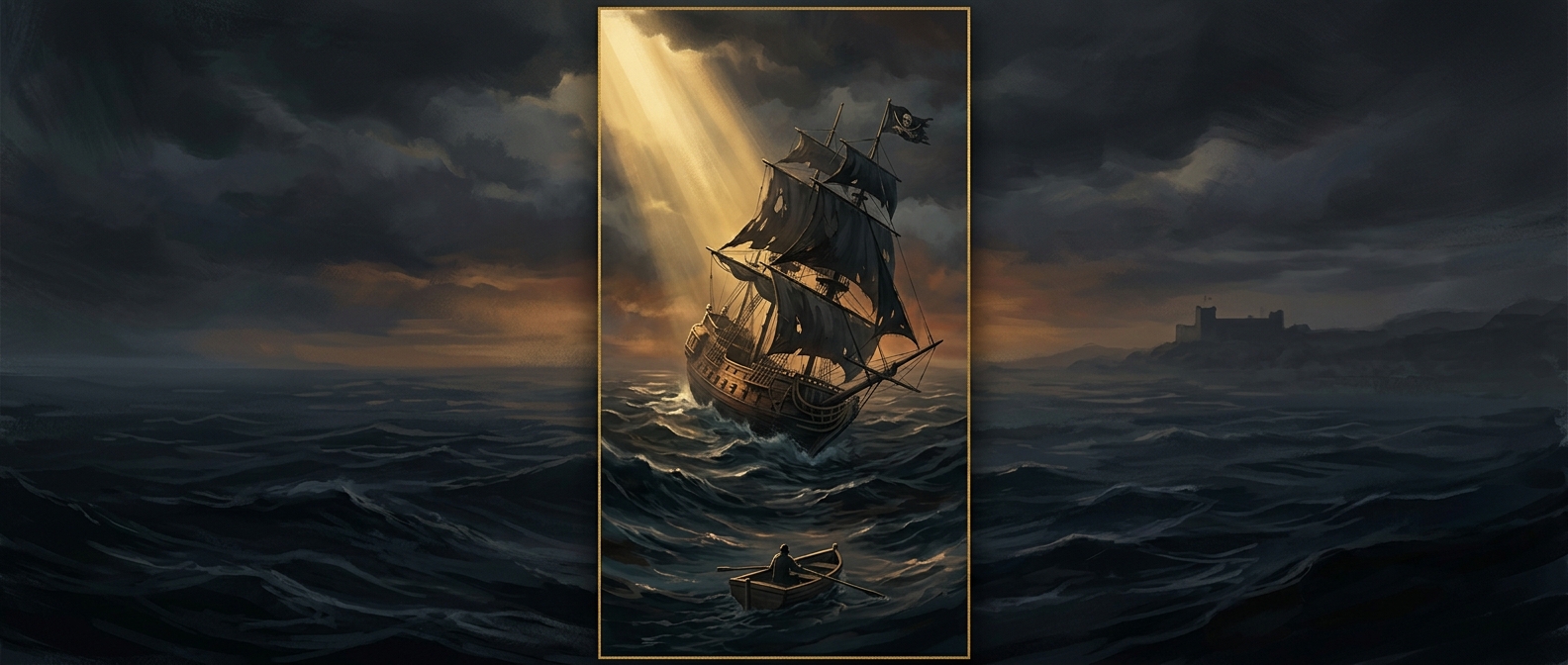
European accounts often described Muslim maritime raiders as pirates. In practice, corsairing—the seizure of enemy ships and goods by armed crews operating with political backing—could serve several purposes at once. It brought wealth and captives, pressured rival powers, and gave rulers leverage in negotiations. Al-Hurra’s dealings with Spain and Portugal, and her alliance with the Ottoman corsair Hayreddin Barbarossa, placed Tetouan within a wider contest over control of the sea.
That did not make every raid a carefully directed act of policy. It does show why maritime force could matter to a relatively small North African city: ships could reach far beyond its walls, making its ruler a consequential interlocutor for powers that might otherwise have ignored it.
A marriage that came to her city
When Morocco’s Wattasid sultan, Ahmad al-Wattasi, married al-Hurra in 1541, he traveled to Tetouan for the ceremony rather than requiring her to leave her base. The choice is a striking measure of her standing. She was not simply a consort brought into a ruler’s household; she remained a powerful political figure in her own territory. Her career shows how control of a strategically placed city and its maritime connections could give a woman leverage in a world dominated by male rulers.