Why a Submersible Needed a Liquid Float
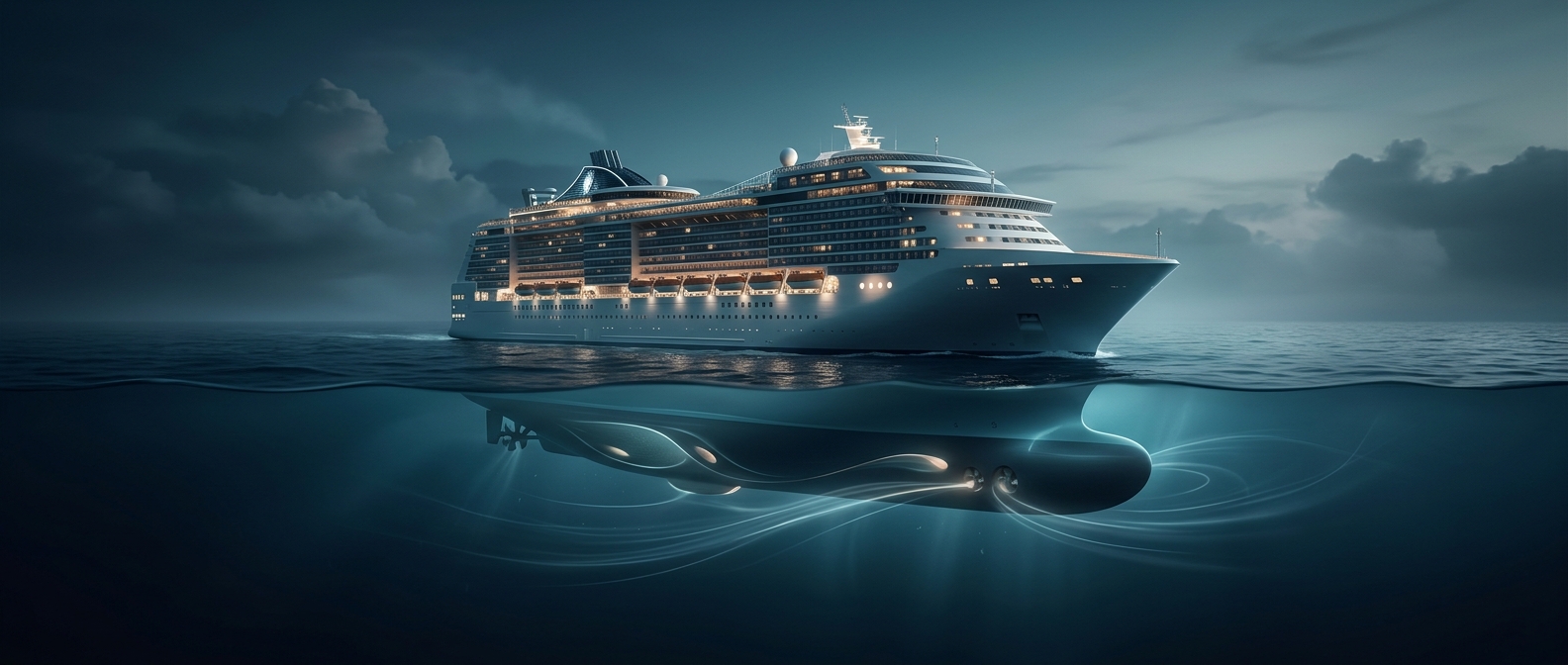
A deep-sea craft has to solve two opposing problems: it needs to be heavy enough to sink, yet able to rise again on command. Ordinary air-filled floats become less useful as a vehicle descends. Water pressure squeezes the air into a smaller volume, reducing the float’s displacement—and therefore the upward force it provides.
Gasoline offered a different tradeoff. It is less dense than seawater, so a tank of it contributes buoyancy, but as a liquid it changes volume far less under pressure than a pocket of air. The surrounding water could press hard on the float without shrinking its contents enough to erase the lift.
Buoyancy by Displacement
A float rises because it pushes aside water that weighs more than the float and its contents. The difference creates an upward force. Gasoline let designers create a large, relatively light volume without relying on compressed air to hold its shape deep below the surface.
The submersible still needed a way to control its overall weight. In bathyscaphes, heavy ballast helped the craft descend; releasing ballast made it lighter and allowed the gasoline-filled float to pull it upward. The gasoline supplied steady lift, while ballast provided the adjustable part of the system.
A Useful Material, Not a Safe One
Gasoline was chosen for its physical properties, not because it was harmless. It is highly flammable, so using it demanded careful containment and kept the float separate from the occupied pressure sphere, where the crew rode. The arrangement turned an everyday fuel into part of an unusual piece of deep-sea engineering: a liquid could act like a float even where an air-filled one would be crushed.