Why Mario’s Coins Matter Without Buying Anything
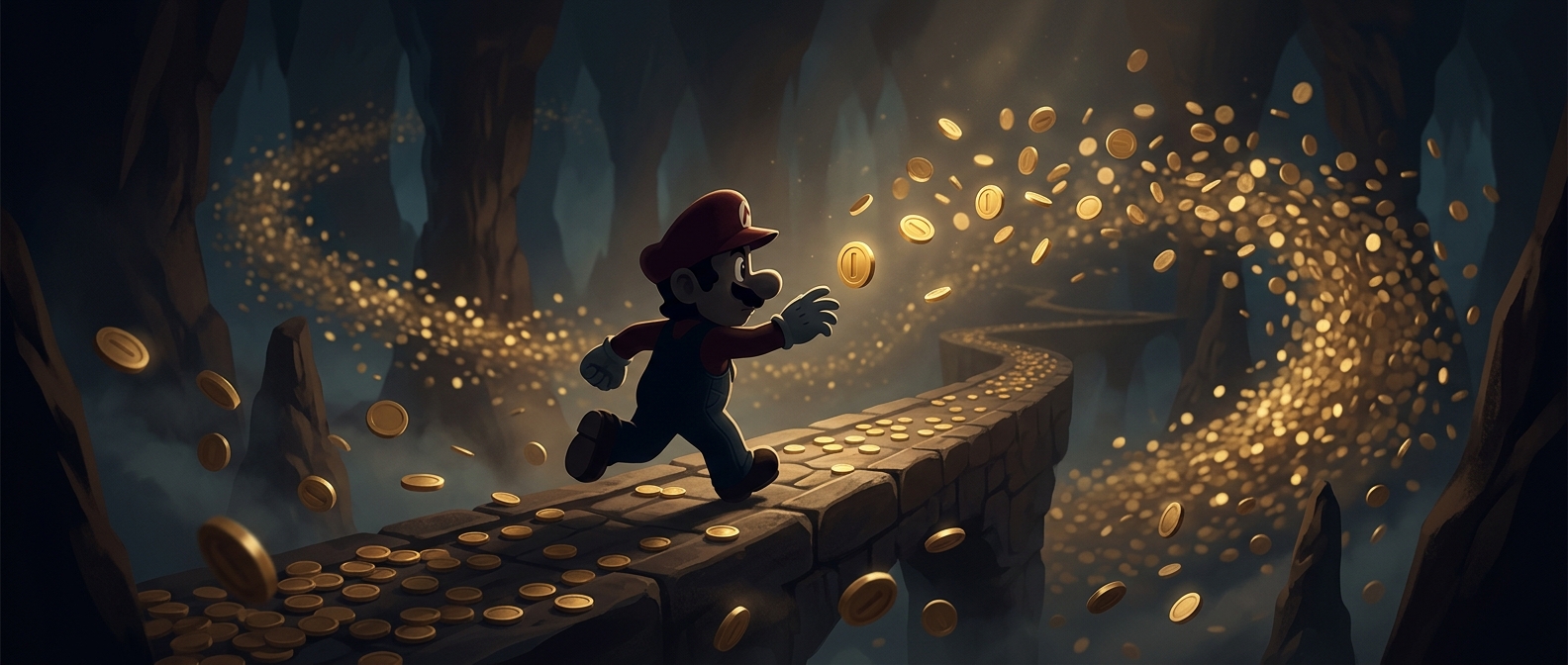
In many classic Super Mario games, coins work less like money than like a running counter toward another chance. Collect 100, and Mario earns an extra life—a spare attempt after a mistake. He does not spend the coins at a shop; the game rewards gathering enough of them by extending the player’s supply of tries.
A Small Detour Becomes a Clear Choice
Coins also help shape how a level is played. A line of them can guide Mario toward a platform, mark a jump’s path, or tempt the player to leave a safer route for a riskier one. Because each coin makes progress visible and gives a quick sound and animation, even a brief detour feels immediately rewarding.
That creates a simple tradeoff: take the time and risk to collect more now, or keep moving toward the exit. The extra life gives that choice a practical consequence, especially for someone still learning a level.
The Reward Depends on the Game
The exact rules vary across Mario games, and coins do not always lead to an extra life in the same way. But their broader role is consistent: they turn exploration into a tangible reward without requiring a complicated economy. A coin can matter even when it cannot be spent: enough of them can buy the player one more attempt.