A strange birth becomes a public warning
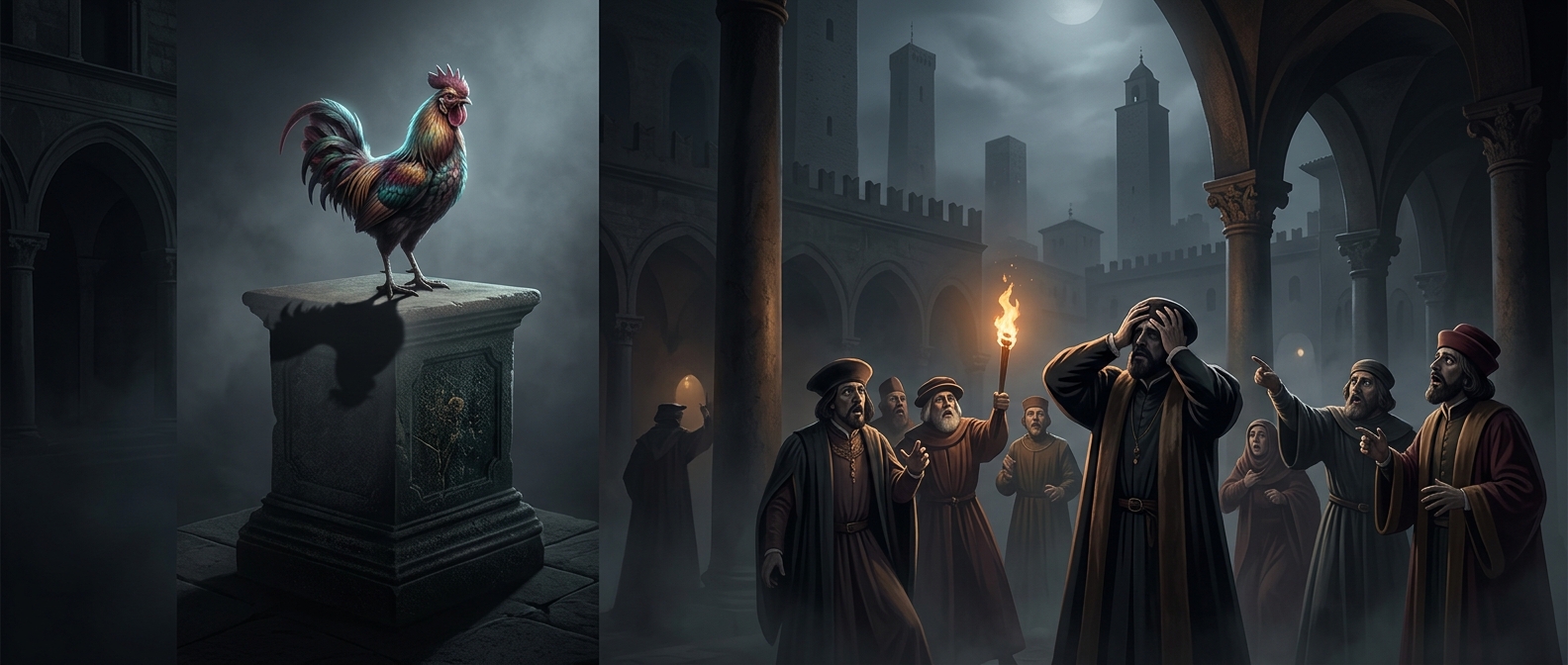
A chicken with two heads and four legs was more than a curiosity to people who believed unusual events could carry divine meaning. In that worldview, a creature born outside the ordinary order might be read as a prodigy: a sign that the community had lost favor or that catastrophe was near. Officials’ interpretation turned an isolated birth into a warning about Rome’s fate.
The omen did not explain what would happen or when. Its force came from the fear it expressed—and from the authority of those who interpreted it. Once framed as an apocalypse warning, the malformed chicken could make wider anxieties feel like evidence of impending disaster.
Disaster gives the omen its date
Rome was sacked in 1527 by troops serving the Holy Roman Emperor Charles V. The violence followed amid political and military conflict; the chicken did not cause it. But after the city was attacked, the earlier warning gained a grimly persuasive place in the story. People could look back and connect an ambiguous sign to a catastrophe that had now happened.
That is why the episode endured: the omen seemed to predict the sack most clearly after the sack supplied its meaning. A strange birth became, in retrospect, a warning whose timing appeared uncannily exact.