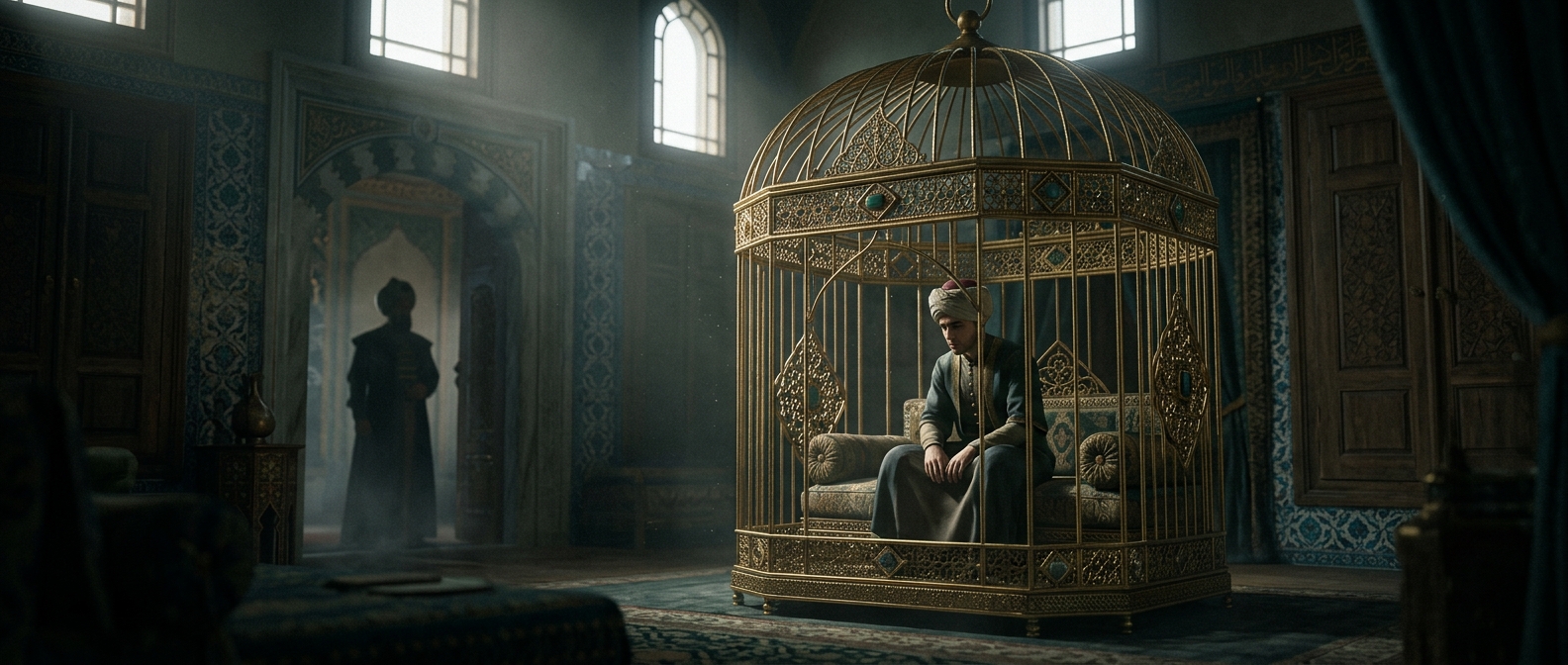
A palace room designed to contain a rival
The Ottoman Kafes—literally “cage”—was not usually a barred cell. It referred to palace quarters where princes could be kept under close supervision and largely cut off from the political world beyond. A prince with access to provincial officials, soldiers, and money could become the center of a competing faction. Confinement made that harder without requiring his immediate execution.
The arrangement addressed a dangerous problem in dynastic rule: a new sultan’s male relatives might be treated as threats simply because they had a claim to the throne. Keeping them alive preserved possible successors, but palace walls also kept them from gathering the resources and allies needed to challenge the ruler.
Security came at the price of experience
A prince raised in seclusion could reach the throne without having governed a province, built a public following, or dealt freely with the military and administration. The system protected the succession by limiting the very experience that could prepare a successor to rule. Years of restricted contact could also make the outside world unfamiliar and palace factions unusually influential in a new sultan’s early decisions.
The Kafes was therefore a political compromise, not a humane alternative in any simple sense. It spared some princes’ lives while making their freedom—and often their preparation for power—conditional on the fortunes of the throne.