Cells can renew, but renewal is not unlimited
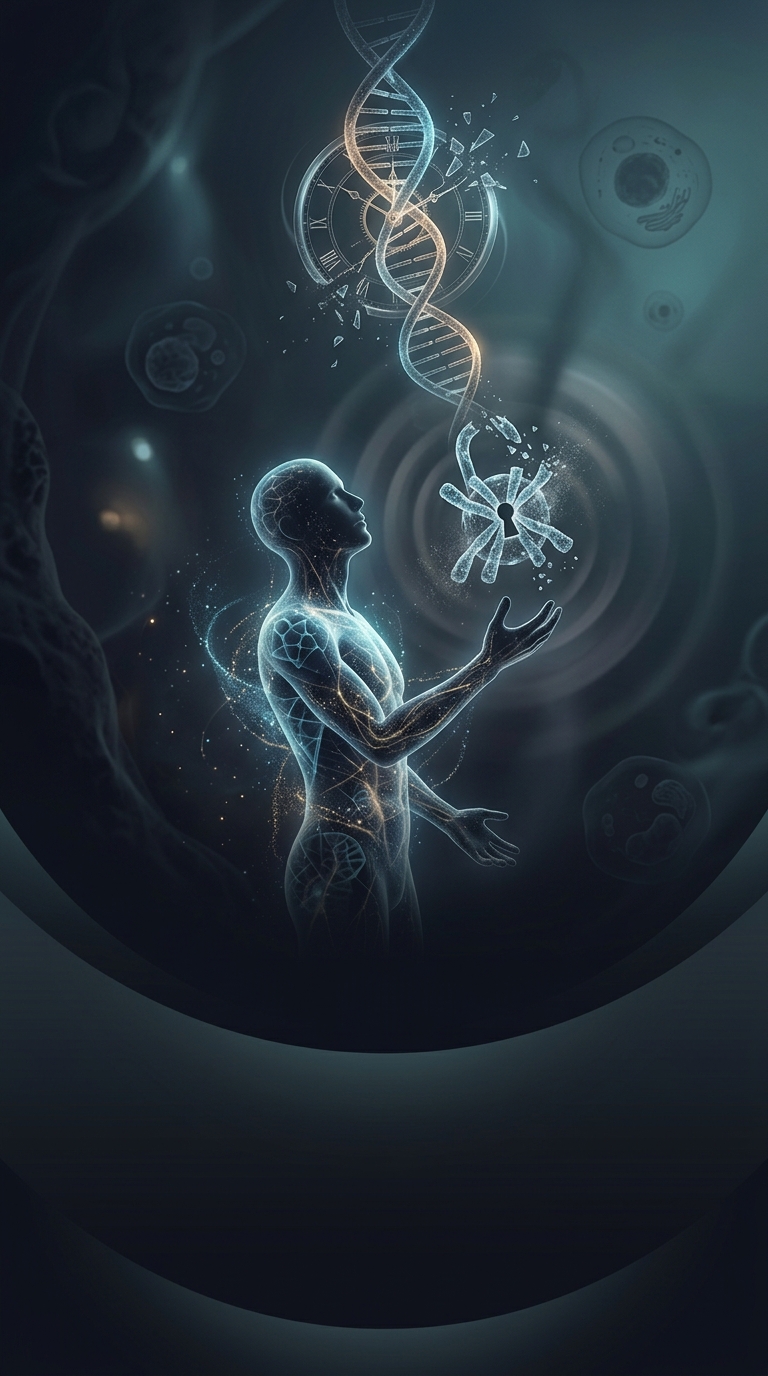
Many human cells divide to replace cells that wear out or are injured. Each division requires copying DNA, and copying is highly accurate—not perfect. Over time, mutations and other forms of cellular damage accumulate. Cells also face a built-in limit: in many dividing cells, protective DNA caps called telomeres become shorter with each division. When they grow too short, the cell usually stops dividing or dies rather than risk copying damaged genetic material.
This limit is not a universal countdown for every cell. Some cells divide rarely, while certain stem cells can maintain their telomeres and keep producing replacements for much longer. But even long-lived cells are vulnerable to damage, and the body’s capacity to repair and replace them can decline with age.
The safety system has a cost
A cell that stops dividing in response to damage can help prevent cancer. A cell that keeps dividing despite damaged DNA may pass along mutations and eventually grow out of control. The body therefore relies on defenses such as cell-cycle checkpoints, programmed cell death, and cellular senescence—a state in which a damaged cell remains alive but no longer divides.
Those defenses are protective, but they are not a perfect reset. Senescent cells can accumulate, and their chemical signals may disrupt nearby tissue. Meanwhile, repeatedly replacing cells places demands on stem-cell reserves. The same safeguards that reduce the danger of unchecked growth can therefore contribute to declining tissue repair over time.
Why one “immortal” cell would not make a person immortal
Some cells, including many cancer cells grown in laboratories, can divide indefinitely under suitable conditions. They evade the usual limits, often by maintaining telomeres, but that is not the same as keeping a healthy body functioning forever. A human being depends on many kinds of cells, tissues, and organs working together; bypassing a division limit in one cell type can create a cancer risk rather than restore the whole system.
From the cellular standpoint, the obstacle is not simply that cells run out of divisions. It is the accumulating damage—and the tradeoff between replacing damaged cells and preventing dangerous ones from multiplying.