The music Chopin wanted erased
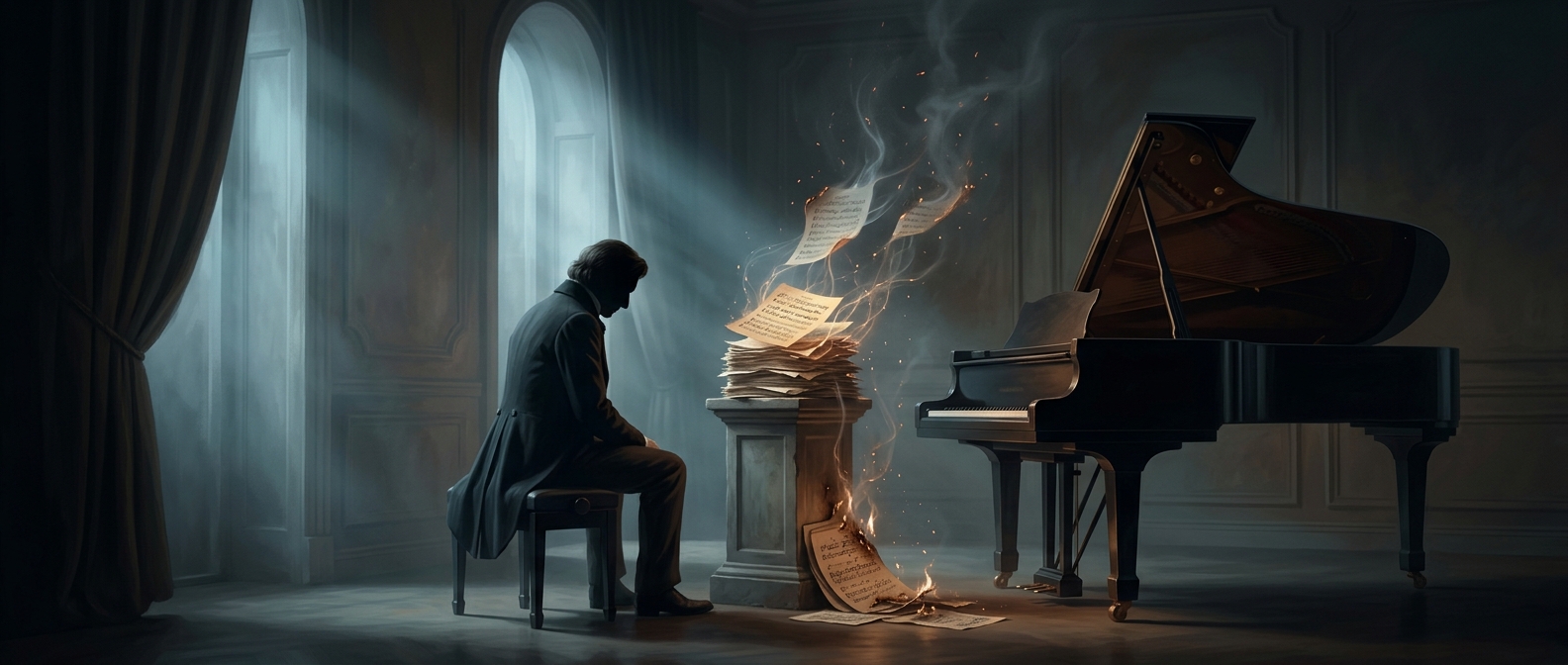
Near the end of his life, Frédéric Chopin asked his family to destroy his unpublished, unfinished compositions. The request reflected a severe standard for what counted as a finished work: a sketch or incomplete piece was not, in his eyes, necessarily something the public should hear. He feared that music still in progress would represent him poorly.
That distinction matters. An unfinished draft is not simply a lesser version of a polished composition; it may contain unresolved passages, alternate ideas, or gaps that the composer never decided how to fill. Chopin’s request was about controlling what survived as his work, not merely tidying up papers.
A family’s decision changed what survived
His family did not carry out the request completely. They saved some of the music, leaving later listeners and musicians with material Chopin himself had judged unworthy of preservation. That choice made the archive less tidy than he wanted—but richer than it would have been if every draft had been burned.
The surviving pieces offer a glimpse of composition as a process rather than a finished performance: decisions still open, musical ideas not yet settled. Their preservation also leaves an uncomfortable question at the heart of the story: when an artist asks for unfinished work to disappear, does honoring that wish protect the artist’s standards—or erase evidence of how the art was made?