How a Little “Dust” Builds a Haunted Past
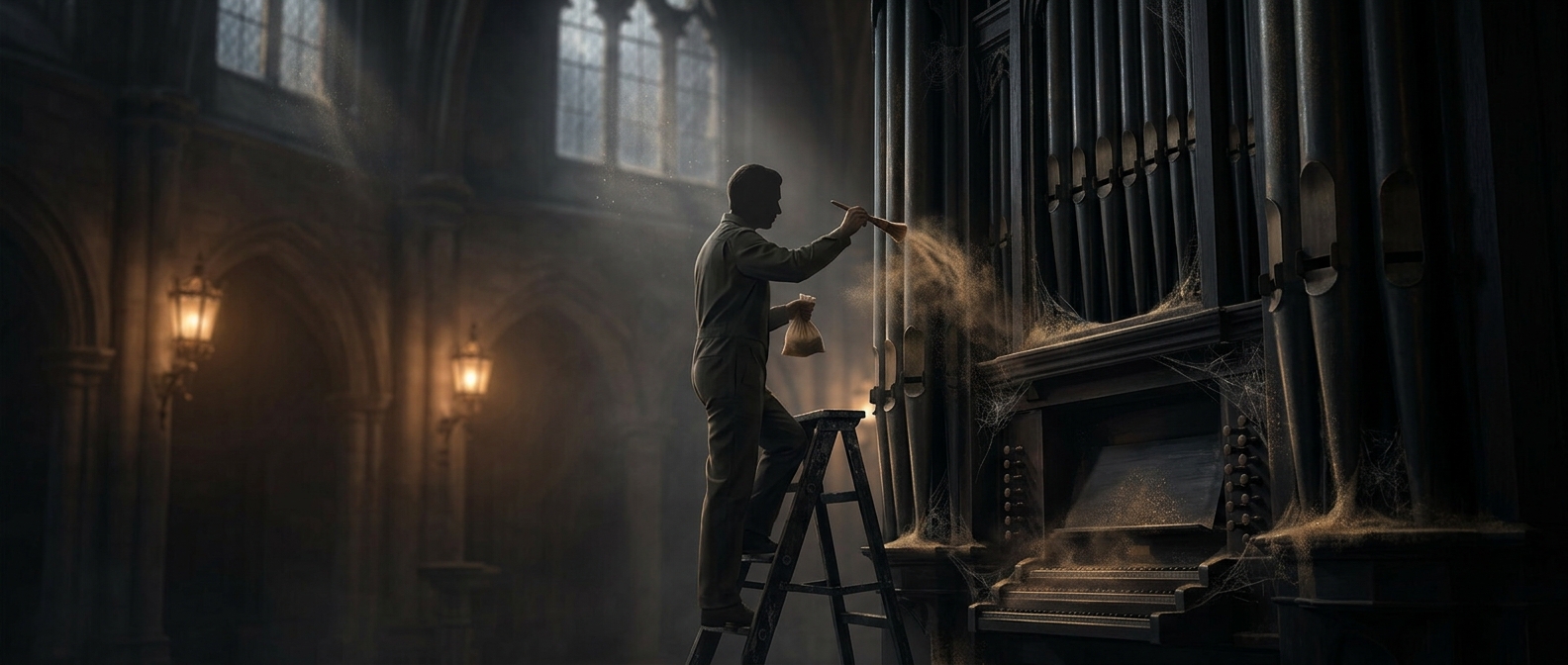
A haunted room can feel more convincing when it seems to have been waiting untouched for years. Dust helps tell that story: it suggests time, neglect, and a history that guests have arrived too late to witness. In a carefully maintained attraction, however, actual grime would signal poor upkeep, not purposeful age. Staged dust lets designers create the visual clue without letting the setting deteriorate on its own.
The Difference Between Age and Neglect
The effect depends on what visitors notice at a glance. A pristine surface can make a supposedly abandoned room feel newly built; a dusty-looking one suggests that nobody has cared for it. Yet a real attraction still has to operate reliably and remain presentable. Artificial aging separates those goals: the scene can look worn while the attraction itself stays under control.
That contrast is part of the storytelling. Guests read the room as a place with a past, even though its appearance is deliberately maintained in the present. The dust is not merely decoration; it is a small cue that helps make a designed environment feel like a discovered one.