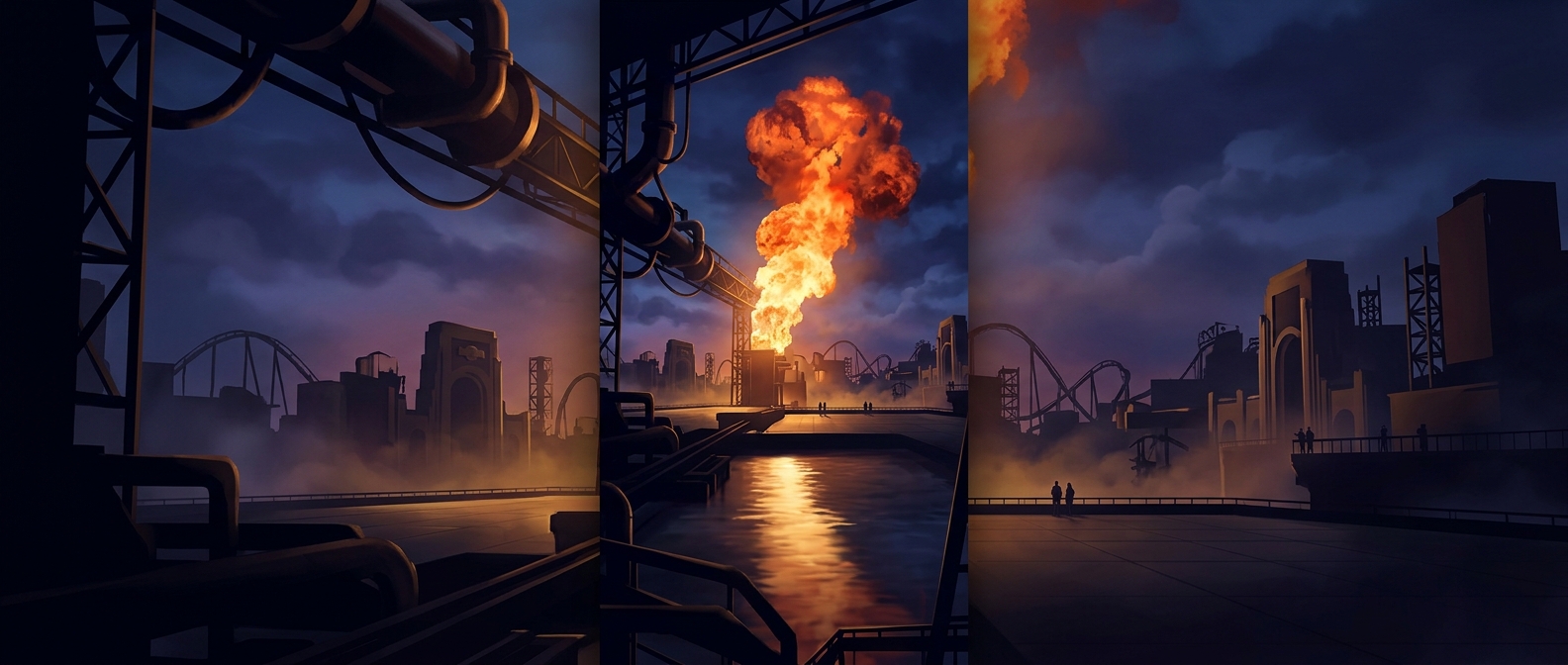
A burst of flame, timed like a stage cue
At Universal Studios Florida, fireballs are part of the daily pyrotechnics used in stunt shows. Their purpose is theatrical: a sudden bloom of flame makes an onstage impact feel immediate and gives a large outdoor performance a visual jolt that sound or acting alone may not convey.
The effect is brief, but it has to be repeatable. In a scripted show, a flame burst is coordinated with performers’ movements and other cues so the action appears to happen at just the right moment. That timing is what turns a dangerous material into a controlled piece of stagecraft rather than an unpredictable fire.
The empty space is part of the effect
The flame is only one part of the setup. A safety perimeter keeps spectators far enough away from the intense heat, while performers and crew work within a planned performance area. That separation is not merely a precaution around an impressive-looking prop; it is a basic condition for making the effect suitable for a show that runs repeatedly.
The result is a useful theme-park tradeoff: the audience gets the shock and scale of a sudden fireball, while the action remains confined to a rehearsed zone. The spectacle lasts seconds, but the distance around it is built into every performance.