Why beer narrowed the Mayflower’s choices
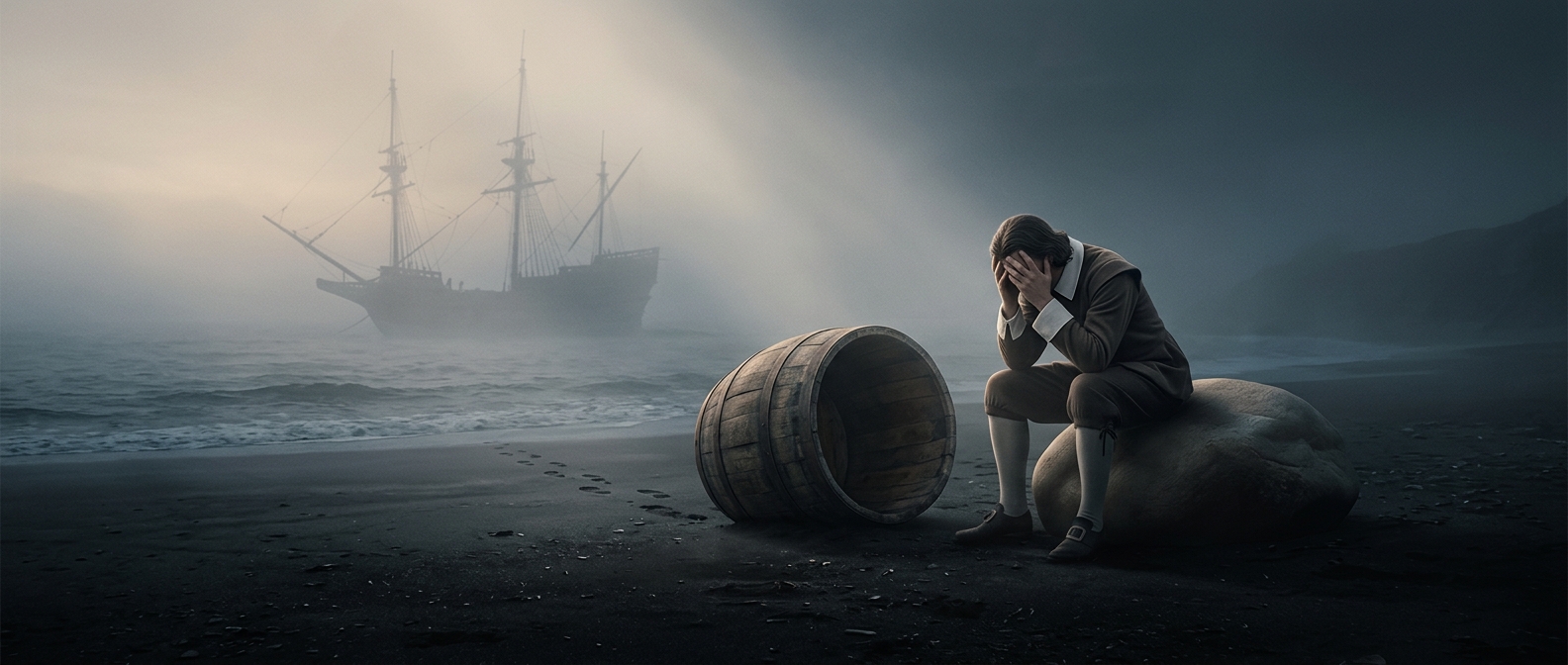
The passengers’ reference to dwindling beer was a practical warning about the voyage’s supplies, not a complaint that the ship lacked a festive drink. In early 17th-century maritime life, beer was a routine part of provisions: it could be stored in barrels and served as a familiar drink alongside food and other supplies. It also took up cargo space, and once the barrels were running low, the ship could not simply replenish them while searching the coast.
A search made riskier by every delay
The Mayflower had been bound for the English colony of Virginia, but it reached Cape Cod in November 1620, north of its intended destination. The company considered whether to continue looking for a suitable place to settle. That meant more time aboard in uncertain conditions, with provisions already being consumed. The account’s emphasis on beer makes the pressure concrete: the question was not only where land might be best, but whether the passengers could afford to keep looking.
Beer was one part of a broader shortage, not the sole cause of the decision. Food, weather, and the hazards of coastal travel mattered too. But a dwindling staple could turn an open-ended search into a choice that had to be made soon. The eventual settlement at Plymouth was shaped, in part, by the limits of what the ship could still carry and supply.