From radar equipment to a kitchen appliance
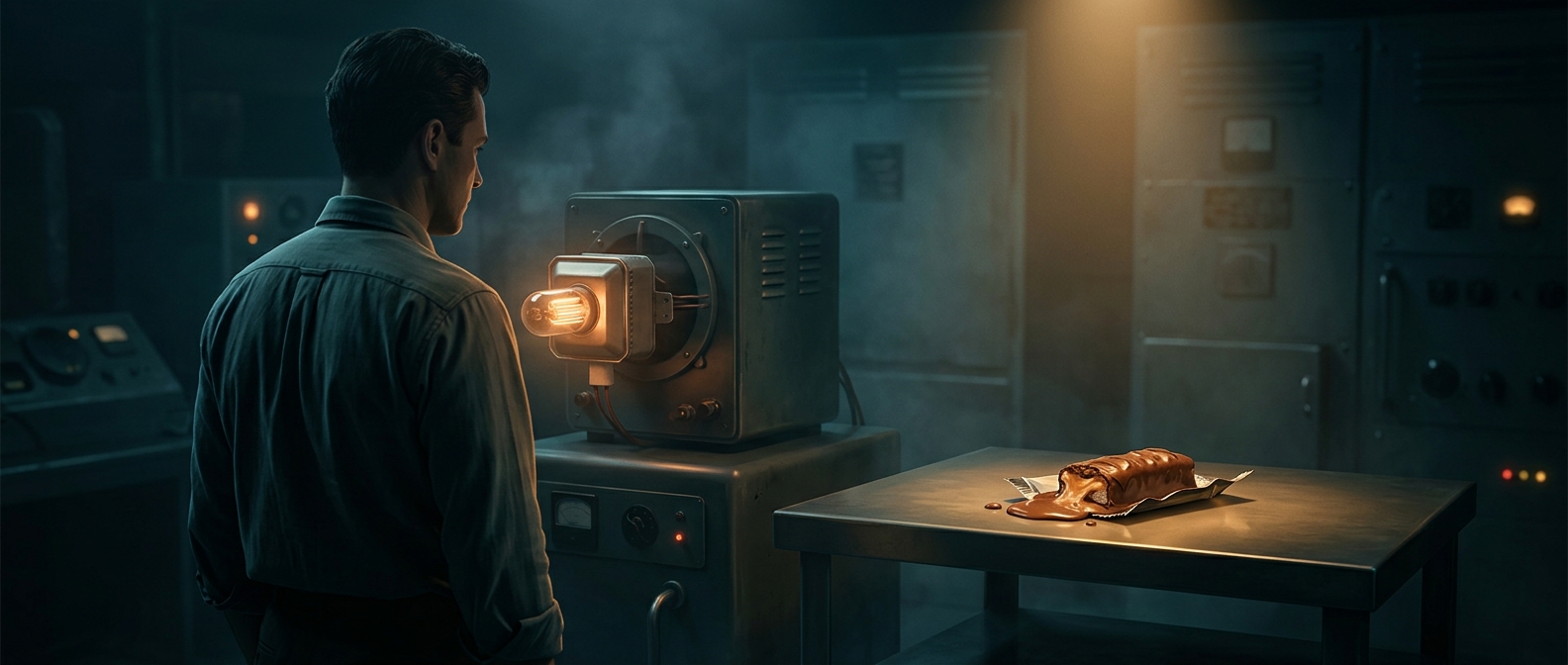
The candy bar was a clue, not a ready-made invention. The engineer who noticed it, Percy Spencer, was working with radar equipment that used a magnetron—a device that generates microwave energy. The observation suggested that the energy could heat food, not just serve radar systems.
Spencer explored the effect with other foods, including popcorn kernels. The practical challenge was to turn a powerful, bulky radar component into a controlled way to warm a meal. Microwave energy had to be contained, directed into a cooking space, and switched on safely; a magnetron by itself was not a household oven.
Why the first ovens were nothing like today’s
Early commercial microwave ovens were large and costly, suited more to institutions than home kitchens. Over time, engineers made the magnetron and the rest of the appliance smaller and more practical, while adding a metal cooking chamber that keeps the microwaves from escaping. The familiar glass turntable came later as a simple way to move food through uneven hot spots inside that chamber.
The result was a different kind of cooking tradeoff: instead of heating a pan and waiting for heat to travel into the food, a microwave sends energy into food directly, though not uniformly. That is why stirring, rotating, or letting food stand can matter—and why the candy bar’s surprise eventually became an appliance built around managing, rather than merely producing, microwave energy.