How speech can emerge from a sleeping brain
Talking requires several operations: forming language, coordinating the muscles of the mouth and throat, and producing sound. Sleep does not switch every operation off at once. During sleep talking, speech-related activity can briefly break through even though the systems that support conscious awareness and deliberate control remain largely in a sleeping state.
That is why a sleeping person may utter a word, mumble, or produce a short string of speech without waking up or knowing it happened. The words can sound conversational, but that does not mean the person is consciously choosing them or communicating a considered thought.
Sleep is a changing set of brain states
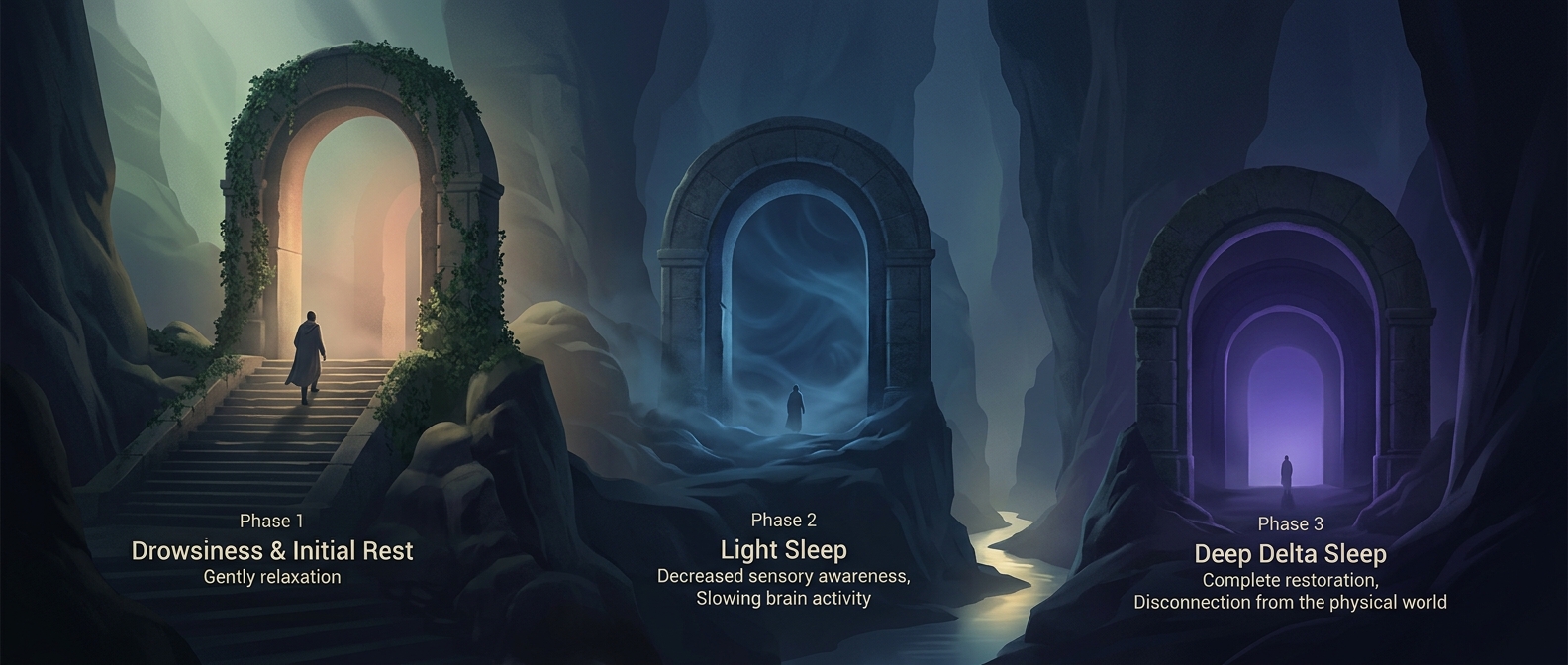
Sleep moves through stages, from lighter sleep into deeper non-REM sleep and periods of REM sleep, when vivid dreaming is common. These stages differ in brain activity and muscle control, but they are not sealed compartments in which every function behaves identically. A brief vocalization can occur while the brain is in different stages because the capacity to make sound and the capacity to be consciously awake are not perfectly linked.
The result is a small mismatch: some machinery for speech becomes active enough to produce sound, while the person remains asleep. The episode may be too brief or disconnected to leave a memory when they wake. To someone nearby, it can sound like a message; to the sleeper, it may have been no more than a fleeting burst of activity that never reached awareness.