A flash can outrun visible motion
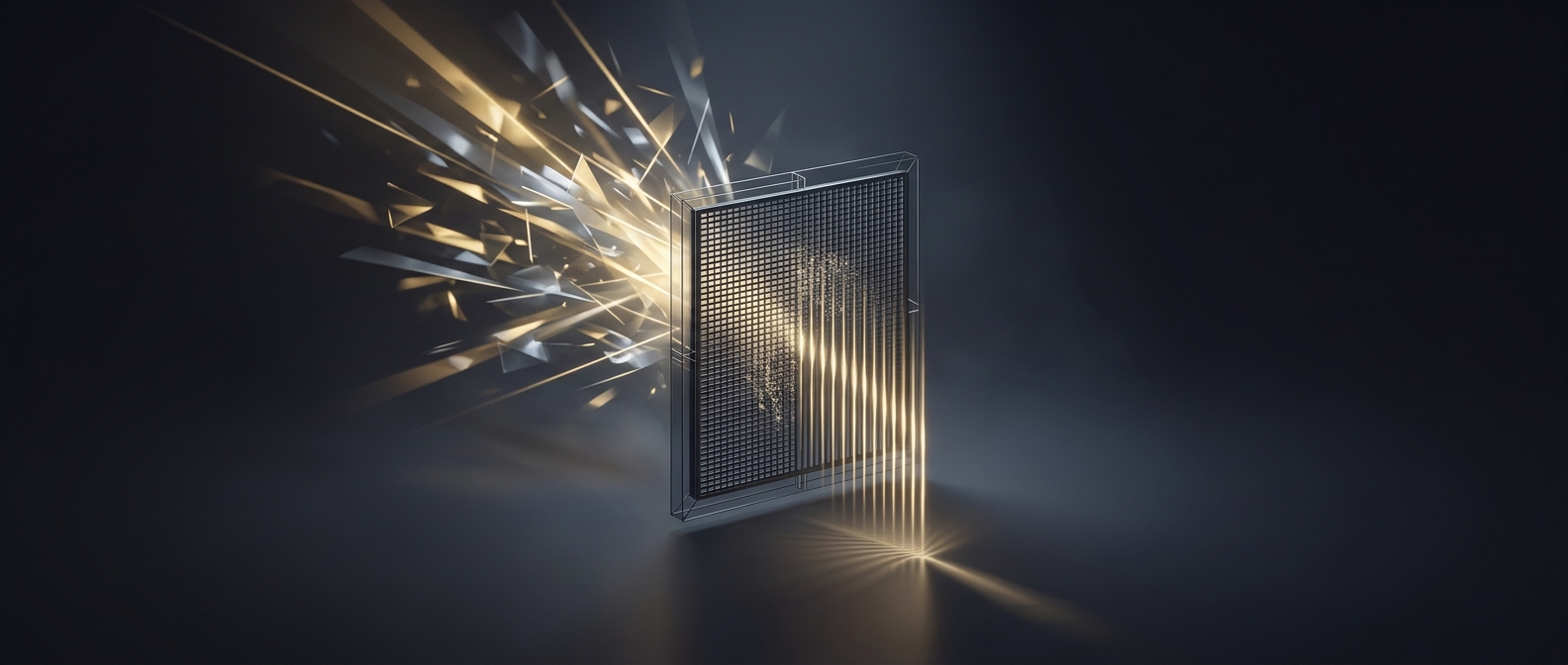
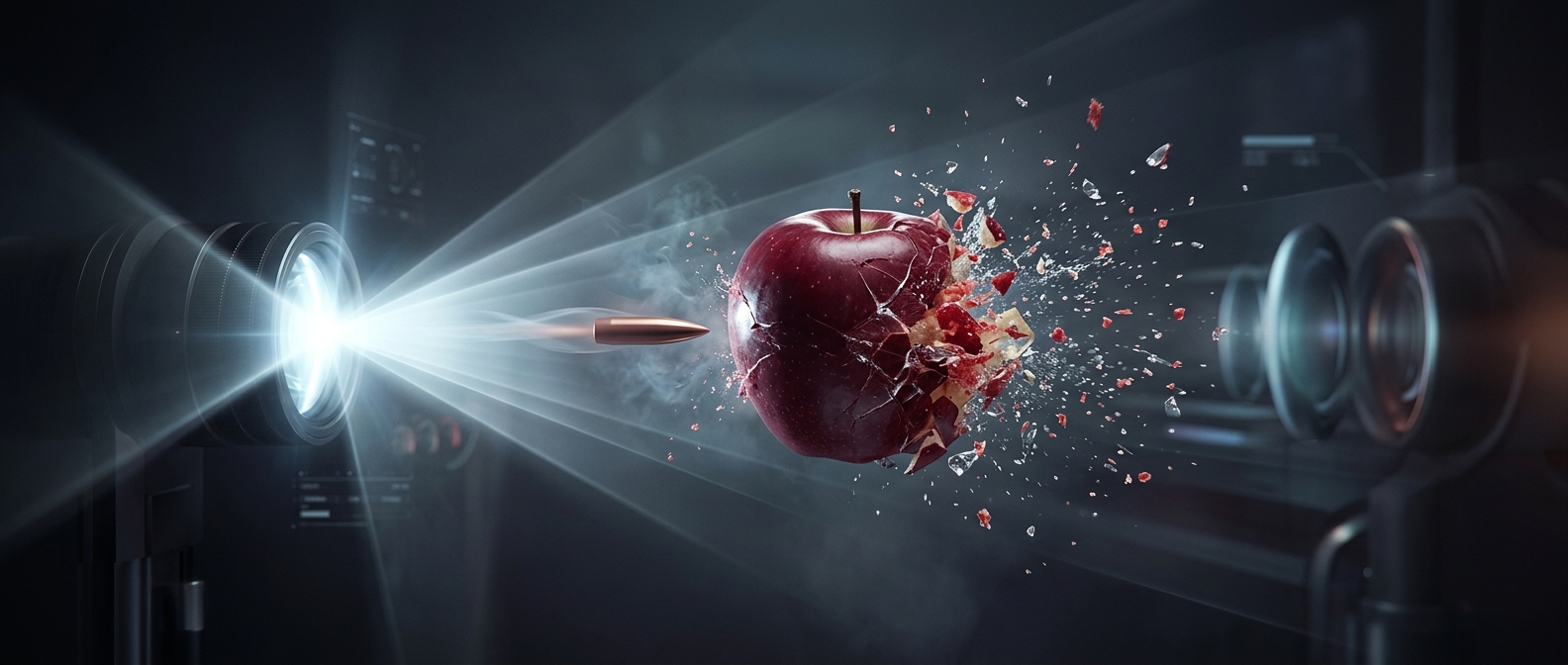
A camera does not need to stop a bullet to make it look sharp. It needs to expose the image for less time than the bullet takes to move far enough to blur. A strobe—a lamp that emits very brief pulses of light—can provide that short exposure even when the camera’s shutter stays open longer.
While a pulse is on, the bullet reflects light toward the camera. Between pulses, it contributes almost no image. The resulting photograph therefore records the bullet’s position during a narrow slice of time, rather than smearing together its positions across a longer exposure. The bullet is still moving; the light simply captures too little of that movement for the blur to show clearly.
Timing turns a moving object into a still image
The flash must occur while the bullet is in the part of the scene the camera can see. Repeating the flash at a steady rhythm can make the bullet appear at several positions in one photograph. Each bright pulse briefly illuminates a different moment, creating a sequence of sharp images across the frame.
Those positions are not necessarily evenly spaced in time just because they look evenly spaced in the picture. The gaps depend on the flash interval and on how far the bullet travels between pulses. Change the timing, and the same continuous flight can appear as a different arrangement of stills.
The photograph is a timed sample
This is a form of stroboscopic imaging: rapid flashes sample motion at separated instants. It reveals where an object was when the light arrived, not every detail of its path between flashes. A photograph can make motion seem frozen, but the apparent stillness comes from brief illumination—not from the bullet stopping.