How air pressure made a heart beat
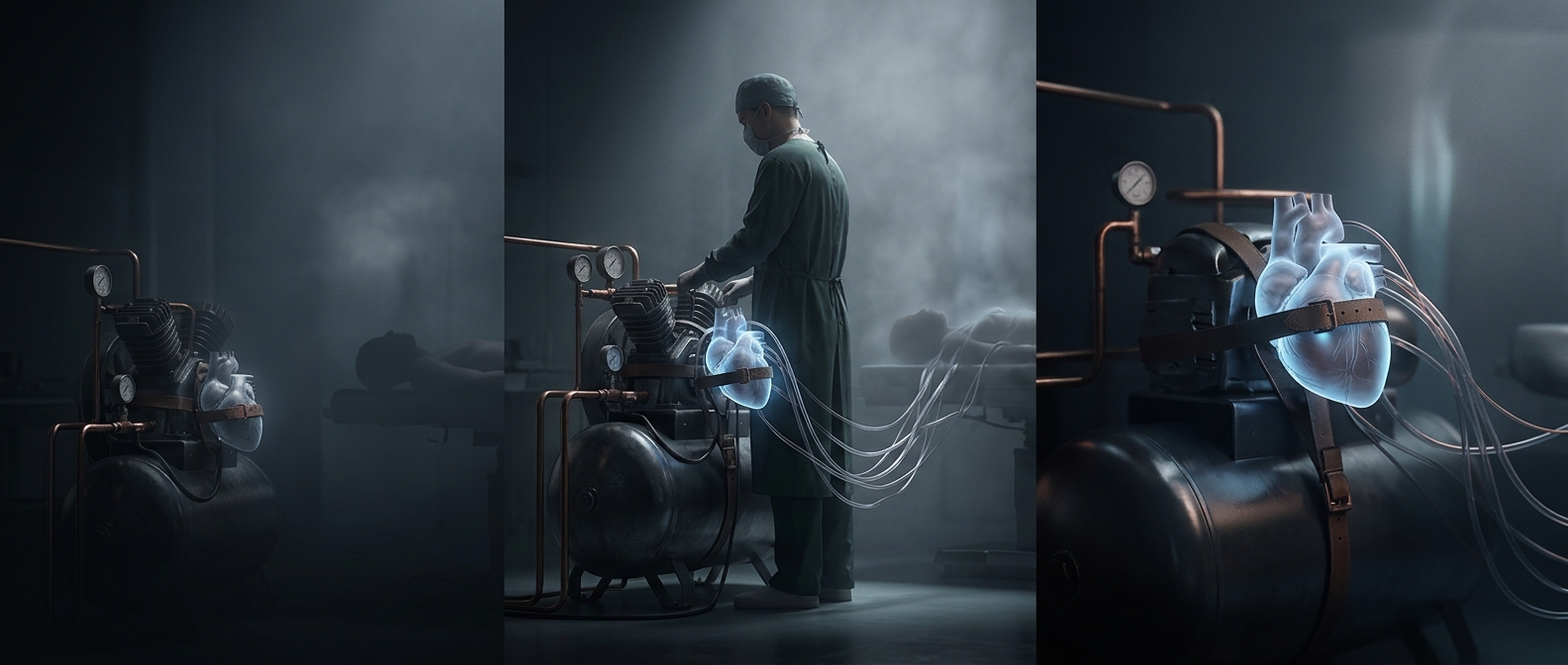
An artificial heart has to do more than move blood once: it must keep circulating it, beat after beat. Clark’s device used pneumatic power, meaning it relied on pressurized air. Tubes carried air from an external compressor to the implanted heart, where pressure moved flexible diaphragms. Those diaphragms pushed blood through the chambers and onward into the body and lungs.
The compressor was not simply a backup. It was the power source that made the heart pump. That arrangement let the implanted device do the work of the heart’s pumping chambers while leaving the machinery that drove it outside the body.
The tradeoff: a working pump, a tethered patient
Keeping the power system outside avoided placing a large motor and energy supply inside the body. But pneumatic power required a physical connection between the compressor and the heart. The tubes passed through Clark’s abdomen, linking an implanted organ substitute to a machine that was too heavy to carry around.
That connection also shaped daily life and medical care. The artificial heart could sustain circulation, but it could not make Clark independent of the external equipment. The tubes crossing the skin created a route where infection could become a serious danger, while the underlying illness and major surgery added further risks.
What the machine demonstrated—and what it could not solve
The device showed that an artificial heart could keep a person alive for an extended period by mechanically replacing the heart’s pumping action. But making the pump work was only one part of the challenge. A useful artificial heart would also need a practical power source, durable connections, and a way to reduce complications over time.
Clark’s experience made that engineering tradeoff tangible: the heart could be inside the body, but its ability to beat still depended on a room-sized machine outside it.