An unfamiliar staircase turns every step into a guess
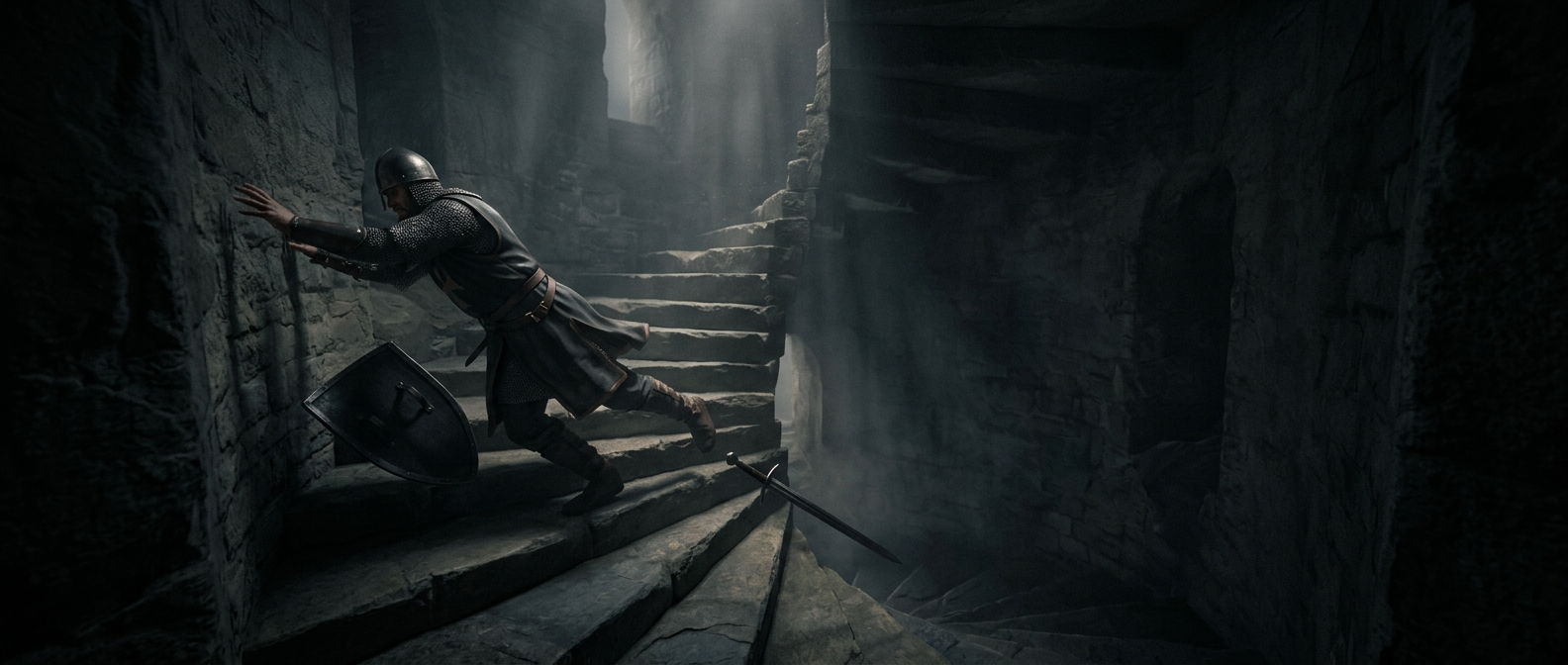
A defender moving through a castle knew where the stairs rose, dipped, or narrowed. An attacker coming up in poor light had no such map. If the steps were uneven, the climber could not rely on the previous one to predict the next: a foot might land sooner or lower than expected, interrupting a steady rhythm and making a stumble more likely.
That mattered because climbing already demanded attention. A person ascending a tight stair had limited room to adjust balance or move past someone ahead. A pause or fall could slow those behind, while defenders at the upper end had a chance to exploit the delay. The staircase did not have to be a trap in the mechanical sense; unfamiliar footing could itself become an obstacle.
Familiarity was part of the defense
The advantage was not that every castle stair was deliberately built crooked. Stone stairs could vary because of construction, wear, or repairs, and layouts differed from one building to another. But irregular steps combined with darkness and an unfamiliar route favored the people who knew the passage. The same staircase could feel routine to its defenders and treacherous to an intruder.
That small difference captures a broader feature of castle defense: architecture could make an attacker spend time and attention simply getting through the building. In a narrow stairwell, one unexpected step could turn a confident advance into a bottleneck.