A slate had to work for both camera and sound
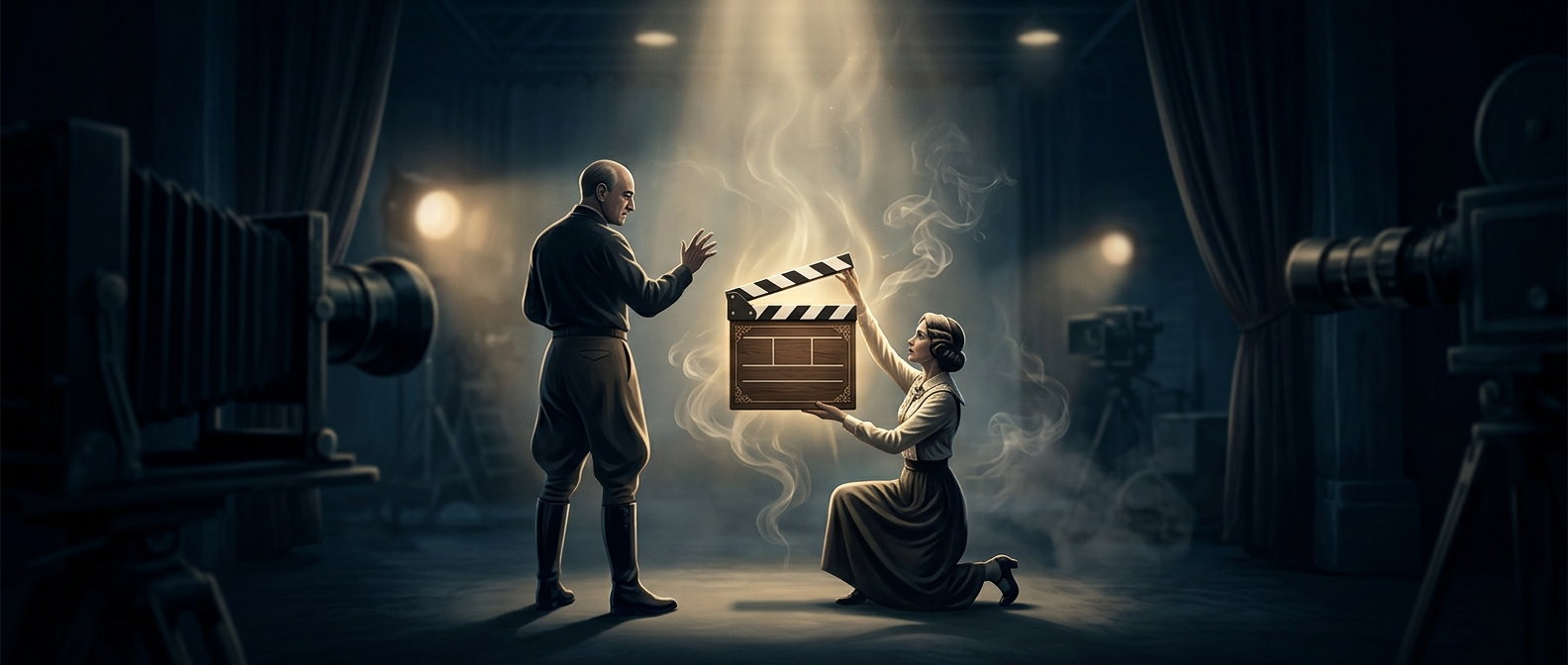
A clapperboard may look like a simple label, but on a film set it serves two jobs. The written slate identifies the scene and take for the crew, while the sharp clap gives editors a clear moment to match the picture with the separately recorded sound. In the finished footage, the instant the hinged sticks meet can be lined up with the clap in the audio.
That only works if the slate is visible and the clap is usable. Tilt it badly and the camera may not capture the information; put it in poor light and the writing can be hard to read. A weak or mistimed clap can also make the audio cue less distinct. The slate’s position and timing were practical parts of making the footage easy to organize and synchronize later.
DeMille made a small task a test of precision
Cecil B. DeMille’s reported standard turned that practical task into a strict performance. The slate boys—crew members responsible for presenting the board—had to place it at the right angle in the frame and make sure it was properly lit before clapping. A mistake could cost them their jobs.
The pressure was disproportionate to the few seconds the board appeared on screen, but the consequences of a bad slate could outlast the take: editors might have to work around unclear scene information or a less reliable sync point. The ritual is memorable because it shows how a tiny object, held in view for a moment, could carry the burden of orderly filmmaking—and how exacting DeMille expected that work to be.