How Doom Metal Changes Nosferatu
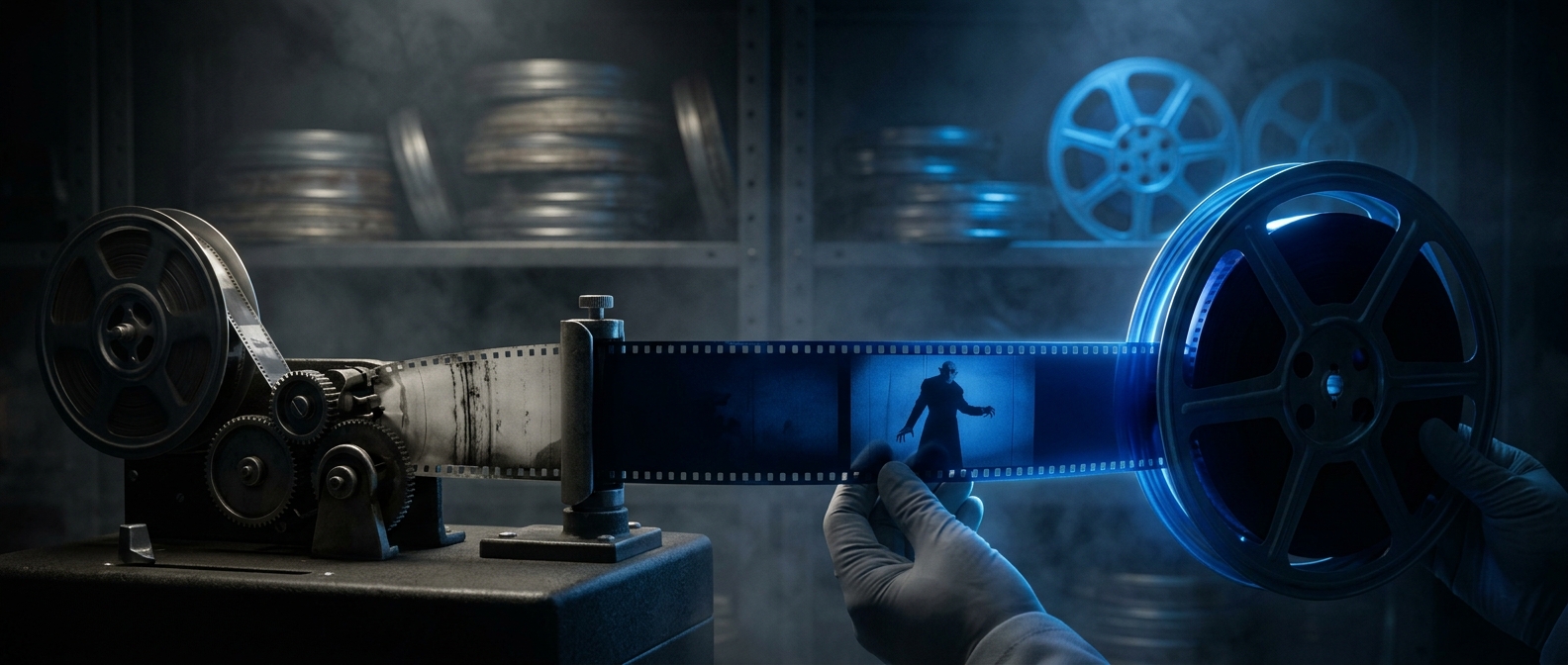
F. W. Murnau’s Nosferatu was made in 1922, before recorded dialogue and music could be synchronized with a film as a standard theatrical feature. Silent did not mean that every screening was meant to be quiet: theaters could provide live accompaniment, and what audiences heard varied by venue. There is no single sound track that a modern band can simply recover.
A doom-metal performance makes that absence part of the interpretation. Slow, weighty guitar tones can stretch the suspense of a vampire’s approach; a sudden crash can make a cut or gesture feel like an attack. The musicians are not merely adding volume. By choosing when to build, pause, or overwhelm the image, they guide attention and shape the film’s emotional rhythm.
A New Score, Not a Historical Reconstruction
The contrast is the point. Distorted amplification gives the images a physical pressure that a quieter accompaniment might not: the audience hears menace as much as it sees it. That can make the film feel immediate and frightening rather than like an artifact viewed at a distance.
The tradeoff is that the band’s sound inevitably competes with the film’s period style. This is a contemporary performance laid over an old movie, not a claim to reproduce what a particular 1922 audience heard. Its success depends on the musicians treating the images as cues—letting the music intensify a scene without burying the action. The result turns a screening into a live event, while making clear that silent cinema was never necessarily an experience without sound.