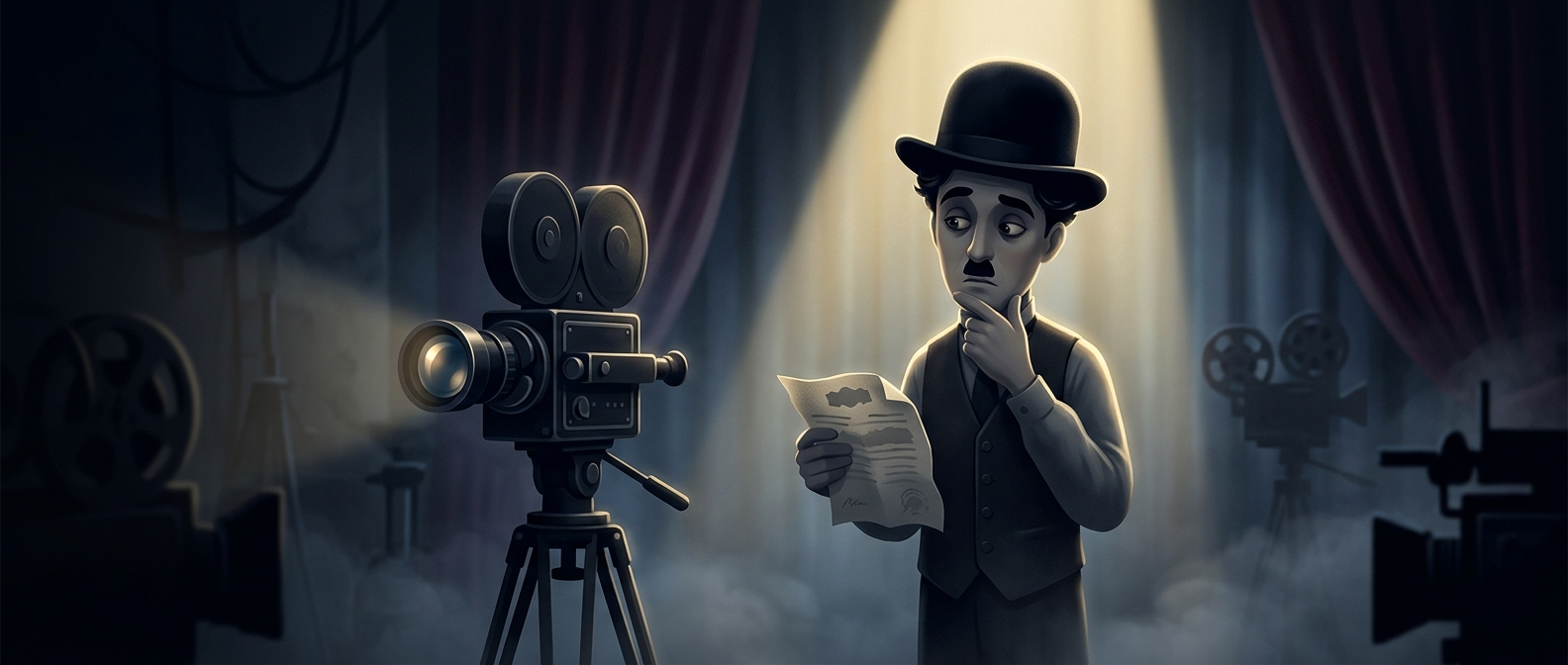
A comic feature became part of the act
In silent comedy, a performer had to communicate quickly without dialogue. Ben Turpin’s crossed eyes made his face recognizable at a glance, giving audiences an immediate visual cue before a gag even began. They were not just an unusual feature; they were part of the comic image audiences associated with him.
That made the possibility of his eyes straightening a professional concern. If the change weakened that instantly recognizable look, it could affect the appeal of the persona on which his act depended.
Insuring a source of income
Insurance turns a potential loss into a financial risk that can be covered under a policy. In Turpin’s case, the unusual thing being protected was not a tool or a building but a physical trait tied to his work. The policy could not preserve his crossed eyes; it could provide compensation if the specified change threatened his earning power.
The story captures a practical side of show business: a distinctive feature can function like valuable equipment when a performer’s livelihood depends on it. For Turpin, even the possibility of losing that feature was worth treating as a business risk.